
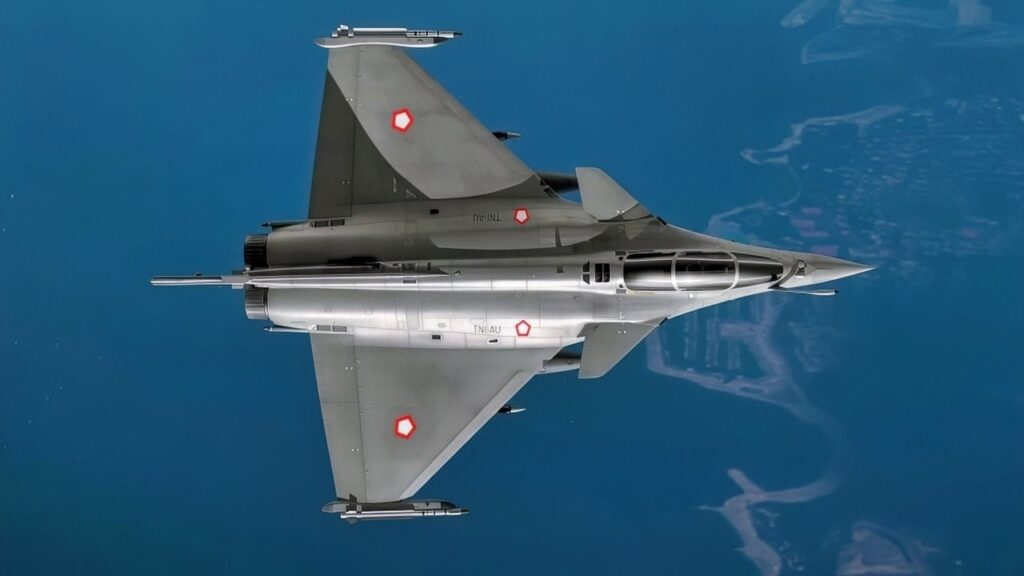
India’s long-running effort to acquire 114 additional Dassault Rafale fighter jets has stalled, with a contract that was expected to be signed in early 2026 now delayed amid a dispute over software control and system access. The agreement, part of India’s Multi-Role Fighter Aircraft (MRFA) program, was widely anticipated to move forward during French President Emmanuel Macron’s February visit to India. As of April, however, no deal has been finalized.
The delay appears to be driven by India’s demand for access to the Rafale’s source code and an insistence on the ability to independently modify and upgrade the aircraft. France has resisted those demands, citing both intellectual property concerns and national security risks. The dispute seems to reflect growing global discontent with the standard practice in fighter jet procurement, with European leaders and even Canada expressing concern over increased dependence on U.S. aerospace systems.
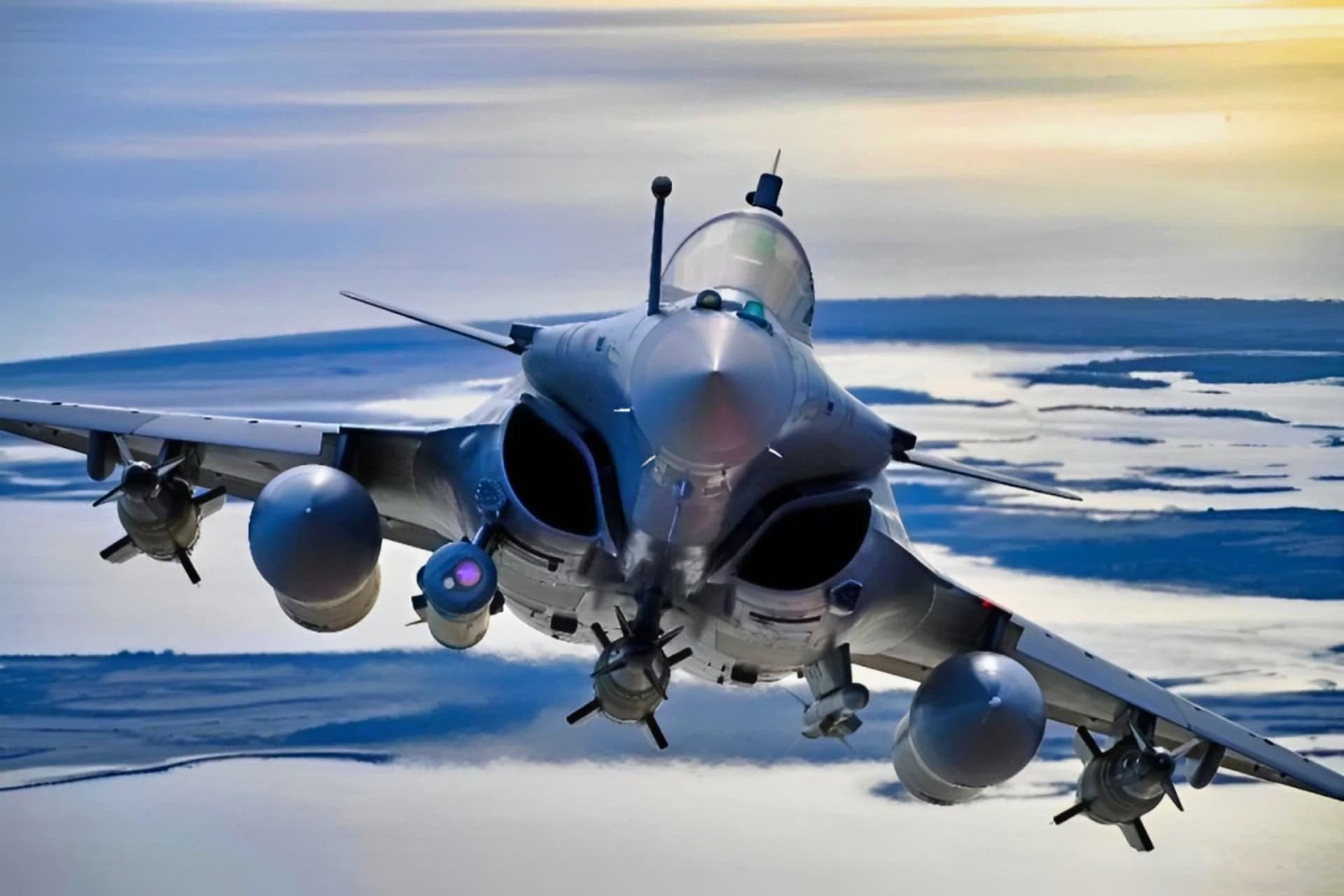
Dassault Rafale Fighter. Image Credit: Creative Commons.
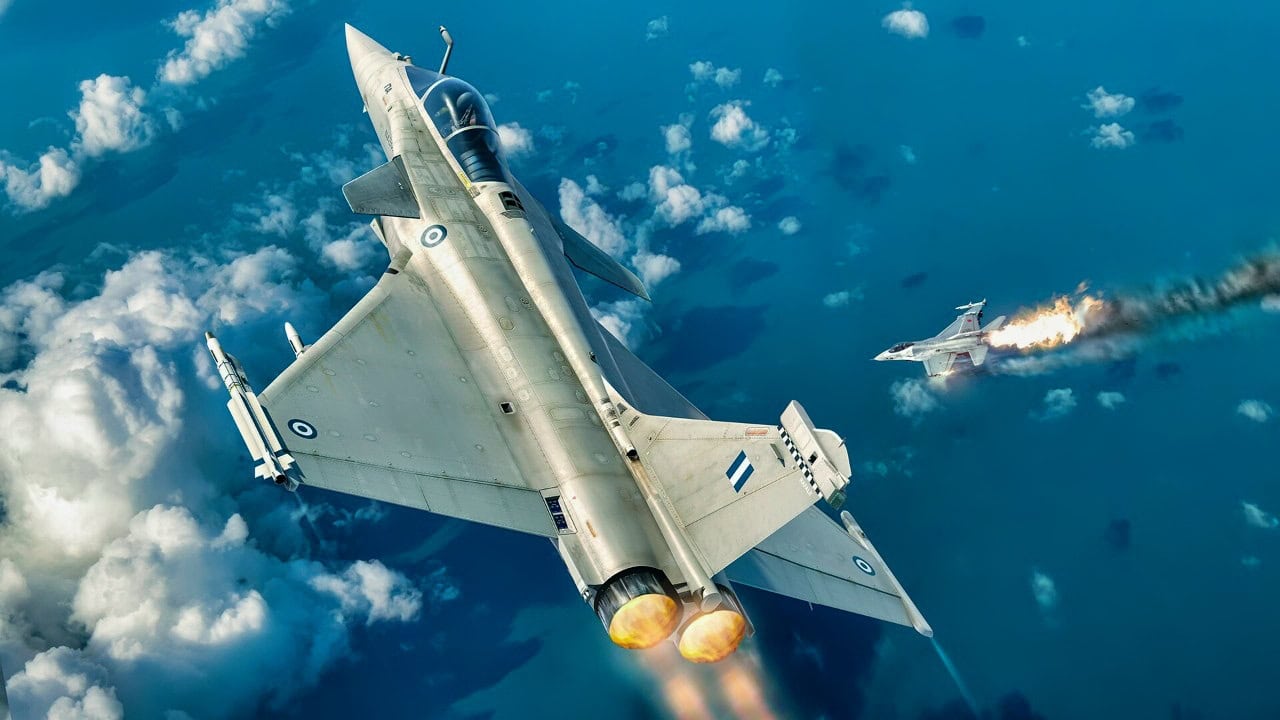
Dassault Rafale Fighter. Artist Created Image/Creative Commons.
The Origins of the Dassault Rafale Deal
India has been pursuing multirole fighter jets for the last two decades. In 2007, the Indian Air Force launched the Medium Multi-Role Combat Aircraft (MMRCA) competition to acquire 126 fighters to replace its aging Soviet-era aircraft, including the MiG-21 and MiG-27.
The competition drew bids from multiple manufacturers, including Boeing’s F/A-18, Lockheed Martin’s F-16, Saab’s Gripen, the Eurofighter Typhoon, and the Rafale.
In 2012, Dassault’s Rafale was selected as the lowest bidder following technical evaluations, marking a major breakthrough for the French defense industry. However, negotiations soon ran into difficulties, with disputes over cost escalation and liability for aircraft produced in India by Hindustan Aeronautics Limited (HAL).
There were also disagreements over the scope of technology transfer, which appears to still be central to the delays we’re seeing now. The problems led to the collapse of the original MMRCA deal.
Then, in 2015, Indian Prime Minister Narendra Modi announced a government-to-government agreement with France for 26 Rafale jets.
The deal, which would be signed in 2016 and valued at approximately €7.8 billion (around $8.7 billion), provided India with a limited number of aircraft but did not address its broader requirement for a much larger fleet.
To fill that gap, India then launched the MRFA program, seeking 114 additional fighters. Given the existing Rafale fleet already in Indian service, the aircraft quickly became a leading contender for that new requirement.
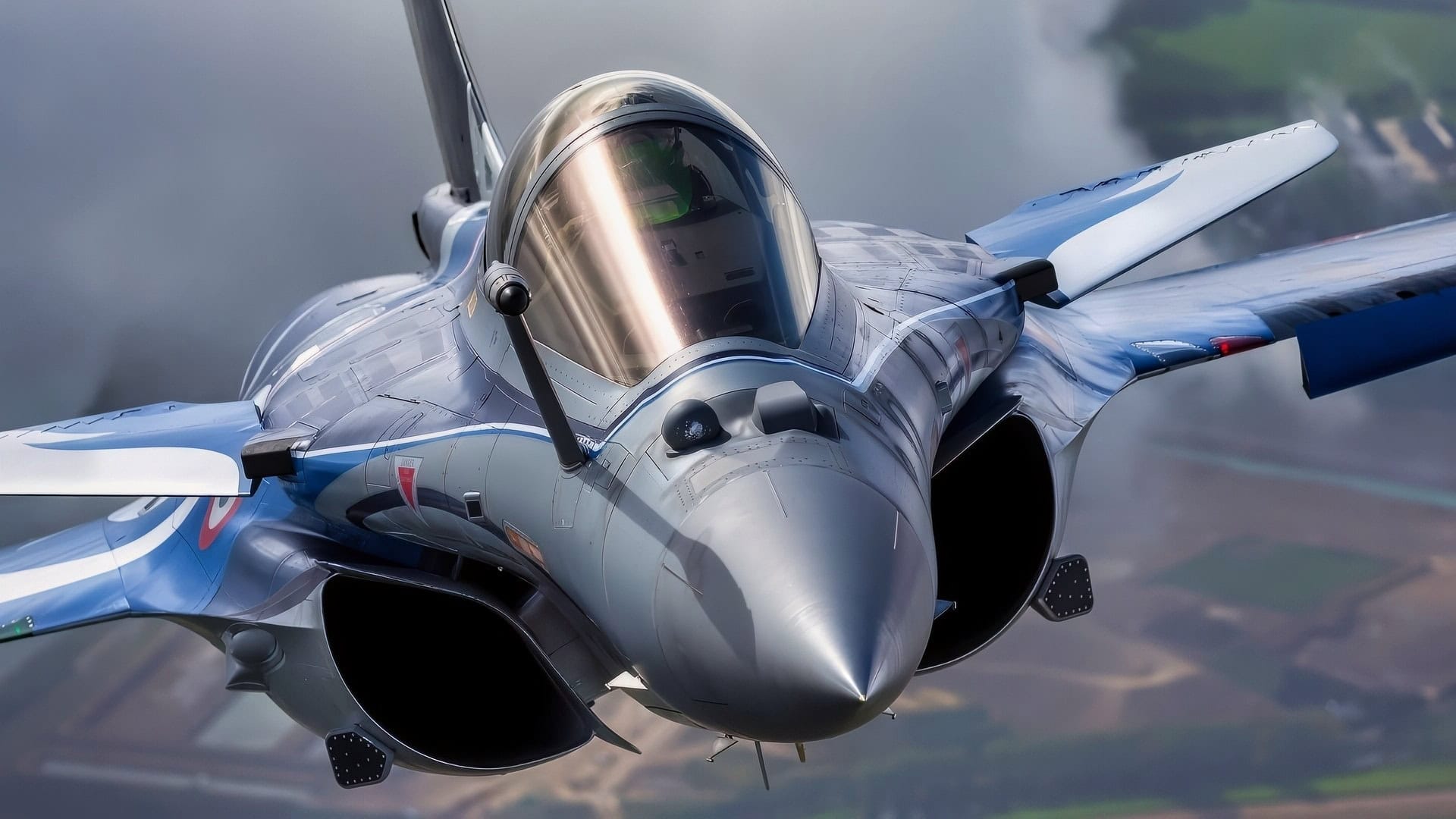
Dassault Rafale Fighter from France. Image Credit: Creative Commons.
The 114-Aircraft Deal
The proposed MRFA deal would be one of the largest fighter acquisitions in recent history, with an estimated value of $18-20 billion depending on configuration and support packages.
The deal is intended to support India’s “Made in India” policy, which requires significant domestic industrial participation for the deal to go ahead.
Under the existing framework, approximately 18 aircraft would be delivered in flyaway conditions, while the remaining 96 would be assembled in India. Local production would initially involve around 30 percent indigenous components, rising to roughly 60 percent over time.
The deal is intended to expand India’s fighter fleet and to build domestic aerospace capability – and for France, it represents a potential long-term production opportunity to sustain Rafale manufacturing well into the next decade.
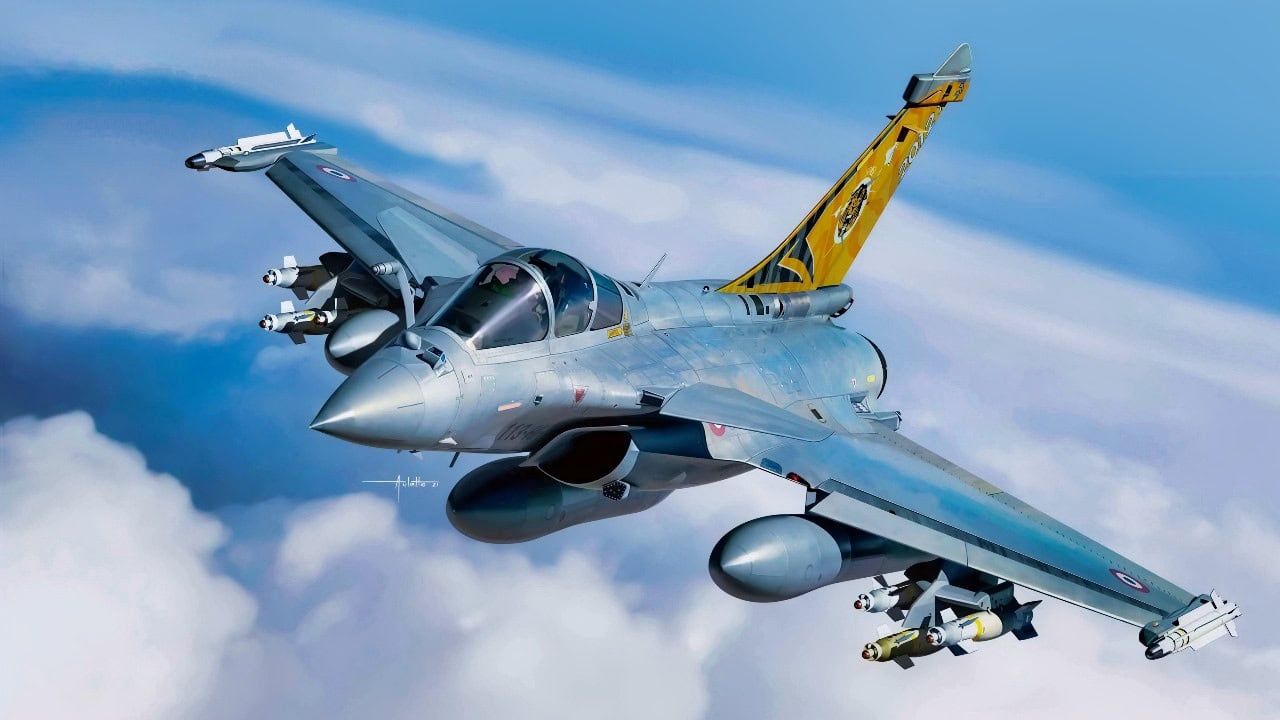
Dassault Rafale. Image Credit: Creative Commons.
Why India Needs Rafale
India’s requirement for new fighters is driven by a declining squadron strength and an increasingly complex threat environment.
The Indian Air Force currently operates around 30 squadrons, well below its stated requirement of 42 to handle a potential two-front conflict involving China and Pakistan.
At the same time, China has fielded advanced platforms such as the J-20 stealth fighter, while Pakistan continues to modernize its fleet with upgraded F-16s and the JF-17. India needs a multirole aircraft capable of performing air superiority, deep-strike, and nuclear-delivery missions across multiple theaters.
The Rafale is a good fit for those requirements, particularly given its operational track record and integration into the Indian Air Force following the 2016 deal.
Why the Deal Has Run Into More Problems
The most recent delays are due to Indian demands for access to the Rafale’s source code and the ability to independently modify the aircraft’s systems. If France were to grant that access, it would allow India to integrate its own weapons systems, update the mission software, and even adapt or modify the platform without French approval.
France has pushed back against the demands. While Paris is reportedly open to integrating Indian systems, it insists that any such work be conducted under Dassault’s supervision and control.
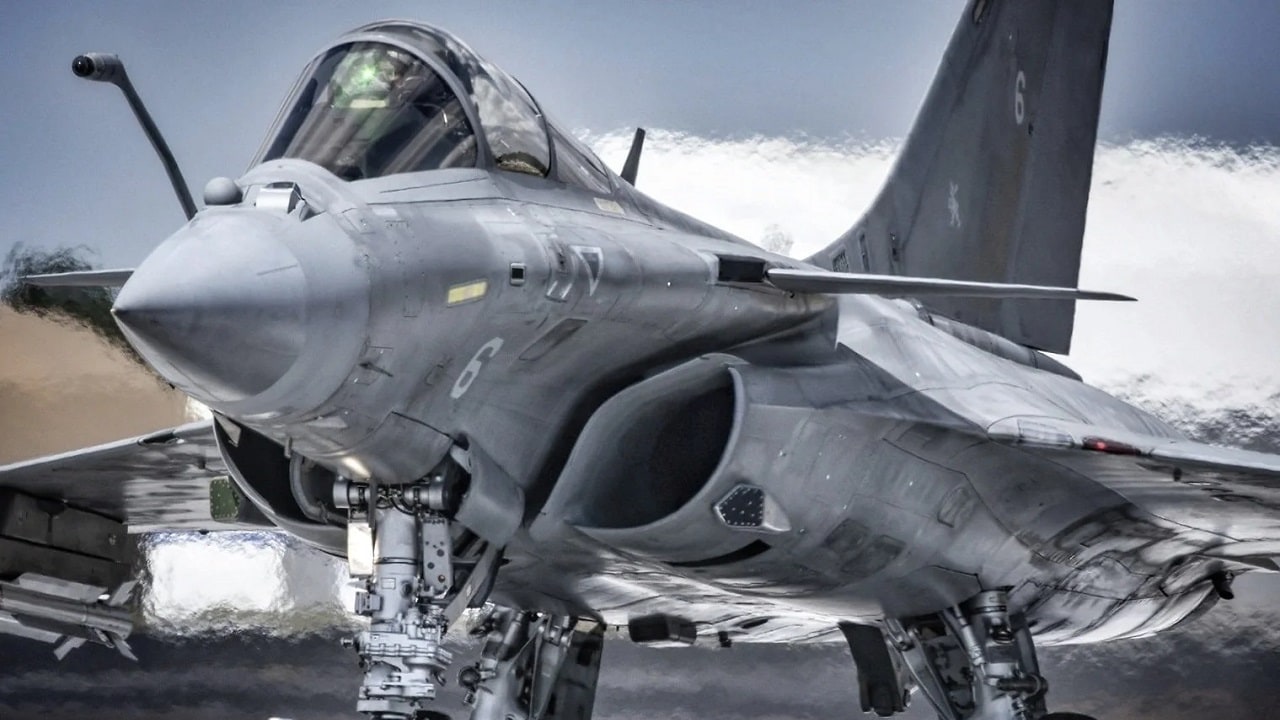
Dassault Rafale. Image Credit: Creative Commons.
From the French perspective, granting full access would effectively give Indian engineers and officials access to sensitive data on French aerospace technology. It would also undermine future revenue streams tied to upgrades and maintenance, rendering Dassault redundant if India decides to go its own way.
Among the reasons the French are hesitant to grant access to software architecture is India’s longstanding defense relationship with Russia. India continues to operate a large number of Russian-origin systems, including the Su-30MKI fighter and the S-400 air defense system.
Of particular concern is the BrahMos missile, a joint India-Russia project based on Russian technology.
If India were able to integrate BrahMos or similar systems independently, French officials fear that Russian engineers could gain indirect access to Rafale software and integration frameworks.
The risk also extends beyond individual weapons, as modern fighter aircraft rely heavily on software for sensor fusion and electronic warfare. If that software is exposed, it could compromise capabilities not just for India’s fleet but for all Rafale operators.
France’s Position in the Global Fighter Market
France occupies a unique position as one of the few countries capable of designing, producing, and exporting a complete fighter aircraft without reliance on foreign partners.
The Rafale has become a cornerstone of that strategy, with export deals signed with countries including Egypt, Qatar, Greece, Croatia, Indonesia, and the United Arab Emirates. Unlike U.S. systems, which are subject to strict export controls, the Rafale is often marketed as a more flexible alternative. That has allowed France to compete effectively in markets where political constraints limit access to American platforms.
French President Emmanuel Macron has repeatedly stressed the importance of defense exports as part of his ongoing effort to strengthen France’s industrial base and strategic autonomy, not necessarily as part of a Europe-wide structure but as an individual military-industrial base that serves the continent and beyond.
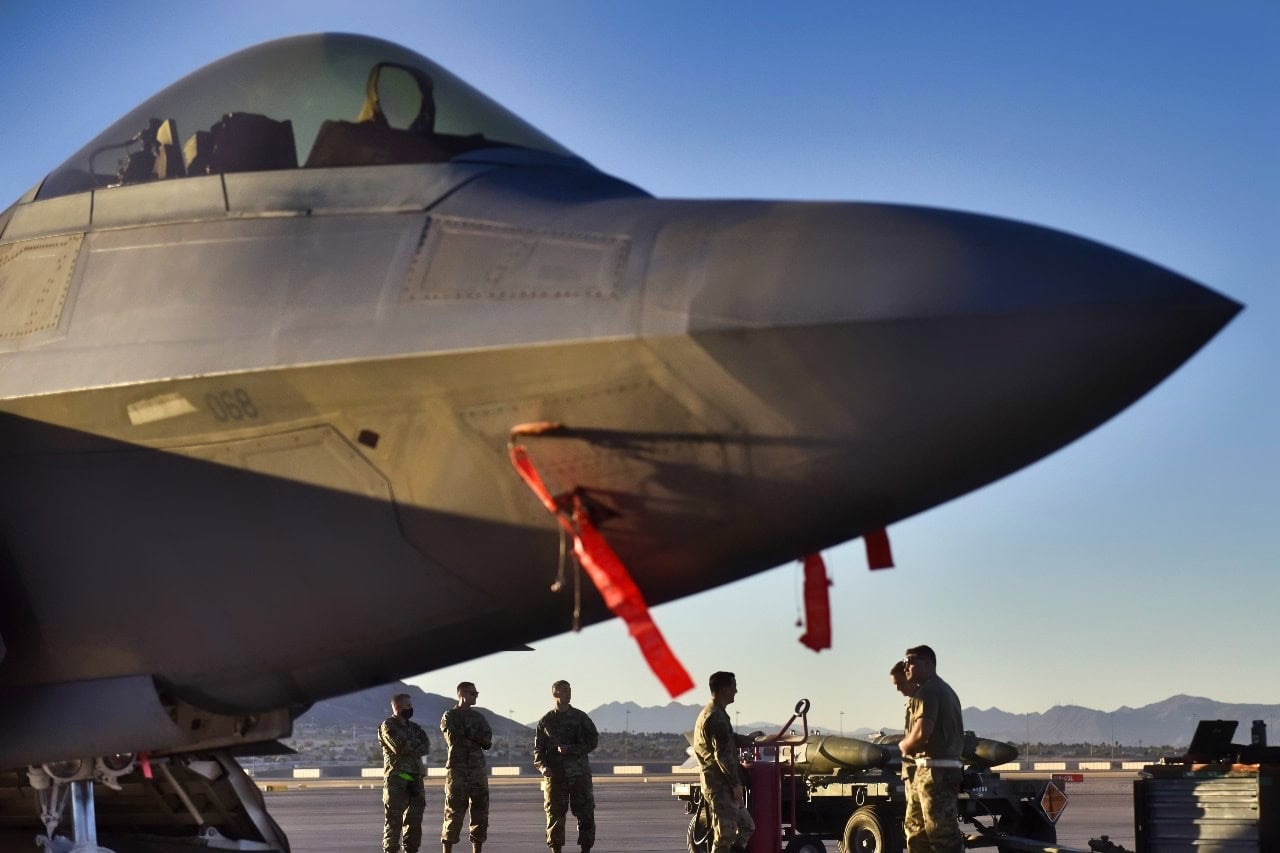
Airmen from the 757th Aircraft Maintenance Squadron talk about their execution plan next to an F-35 Lightning prior to the start of weapons load crew competition at Nellis Air Force Base, Nevada, Oct. 16, 2020. Throughout the year weapons crews are put to the test of safely loading and unloading ordinance to their respective aircraft in front of their peers while being timed. At the end of the year, the winners from each event are pitted against each other to see which team is the best. (U.S. Air Force photo by Tech. Sgt. Alexandre Montes)
A deal with India would represent the largest Rafale export to date and reinforce France’s position as a leading supplier of advanced combat aircraft, making dealing with the Russia risk particularly important.
The chances of France accepting India’s demands seem slim. Even among close allies, access to this kind of sensitive information is tightly controlled.
The F-35 Lightning II program, for example, does not provide partner nations with full control over its core software systems – and India’s demands go well beyond what is typically granted in international defense agreements.
About the Author: Jack Buckby
Jack Buckby is a British researcher and analyst specializing in defense and national security, based in New York. His work focuses on military capability, procurement, and strategic competition, producing and editing analysis for policy and defense audiences. He brings extensive editorial experience, with a career output spanning over 1,000 articles at 19FortyFive and National Security Journal, and has previously authored books and papers on extremism and deradicalization.