
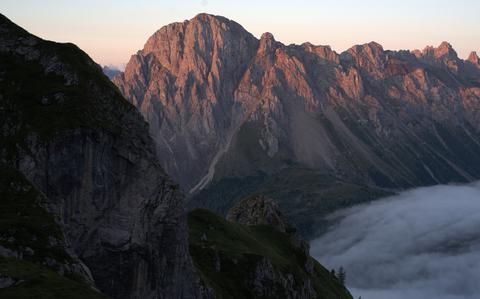
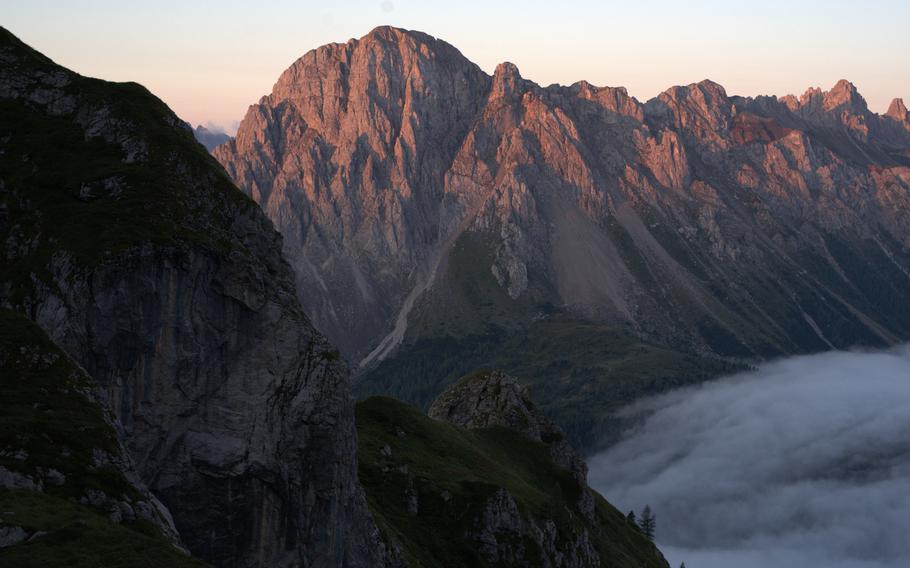
The MADE Trek offers a quieter way to experience Italy’s mountains. (Kimberly Kephart)
In Italy’s northeastern Carnic Alps, a little-known hiking route follows paths shaped by World War I. Known as the MADE trek, this long-distance trail stretches 200 kilometers from Cima Sappada to Tarvisio, tracing landscapes once defined by Alpine warfare, subsistence farming and survival at altitude.
Unlike the crowded trails of the Dolomites, the MADE Trek offers a quieter way to experience Italy’s mountains. Short for “Malga and Alm Desired Experience” the route emphasizes slow hiking and connection to local communities, linking malgas and alpine farms across the Italian Austrian border. For Americans stationed in Europe, the trail presents an accessible, historically rich alternative to more heavily trafficked alpine destinations.
The Carnic Alps were a key theater during World War I, when Italian and Austro-Hungarian forces fought across high mountain terrain under extreme conditions. Soldiers built trenches, cableways, and lookout posts at elevation, many of which remain visible along the trail today. In some areas, memorials and stone ruins sit just off the hiking path, offering quiet reminders of the region’s past.
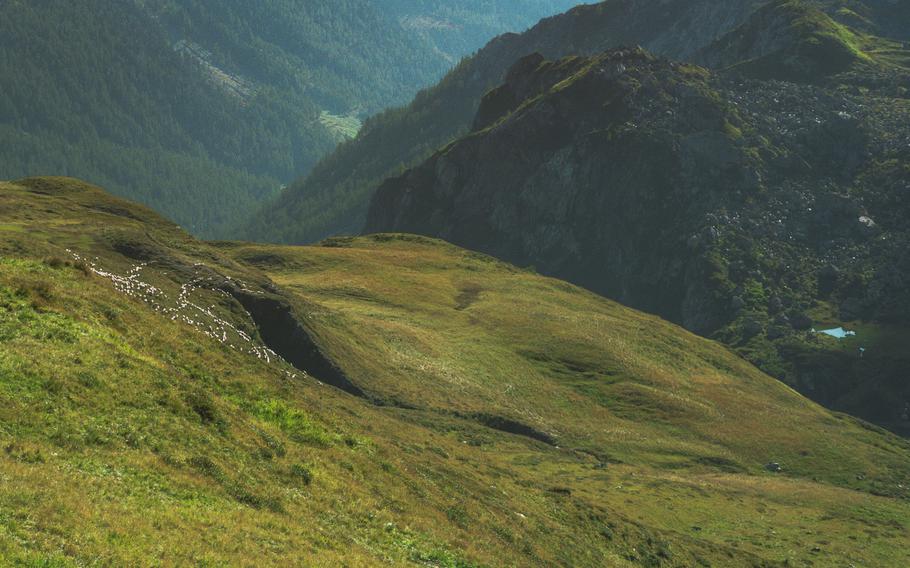
Today, the MADE trek is promoted as a route that values heritage and sustainability as much as scenery. (Kimberly Kephart)
One lesser-known aspect of this history involves the Carnic Porters, local women who carried food, ammunition and supplies to frontline troops. Often traveling on foot through snow and avalanche terrain, they played a critical logistical role in sustaining military positions. Their story is now recognized as an important part of the region’s wartime legacy.
Today, the MADE trek is promoted as a route that values heritage and sustainability as much as scenery. The name itself reflects this philosophy: “Malga” in Italian and “Alm” in German both refer to alpine dairy farms, underscoring the trails connection to working mountain life. Hikers move through pastures where shepherds still graze livestock, stopping at rifugio (mountain huts) and agritourism that remain central to local economies. This is where you can stop for world famous Montasio cheese and try a local delicacy to Friuli Venezia Giulia, Frico, a savory, cheesy pancake or pie made from melted cheese and often potatoes and onions.
For travelers unfamiliar with the region, coordinating such a route independently can be challenging. The Dolomist, a northern-Italy based company focused on slow hiking experiences, works with local guides, rifugio and tourism consortia to make routes like the MADE Trek more accessible. Through partnerships with regional operators, they help arrange accommodation, transfers and optional guiding.
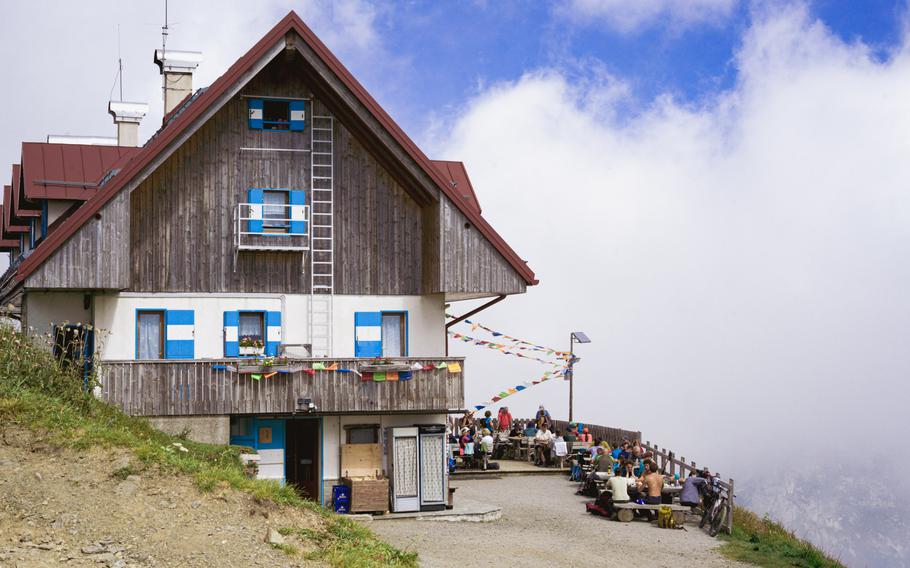
Encounters with shepherds, hut keepers and fellow hikers are common, and residents are accustomed to travelers passing through. (Kimberly Kephart)
During part of my time on the trail, I hiked with Tiziana, a guide from Prime Alps that the Dolomist works with. Tiziana grew up in the area and knows this region like the back of her hand. Her knowledge added context to my first day on the trail from Cima Sappada to Rifugio Calvi. She taught me about edible alpine plants, ridgelines where battles were fought and what makes Friuli Venezia Giulia special.
The terrain itself is considered moderate by alpine standards. While the trail includes long days and elevations gain, it does not require technical climbing. Paths are well-marked, and stages can be shortened or combined depending on time and ability. This flexibility makes the route particularly appealing to those balancing limited leave time or weekend travel. I chose to do a three-day variation starting in Cima Sappada and ending at Rifugio Tolazzi.
For solo hikers, including women, the trails infrastructure and community presence contribute to a strong sense of safety. Encounters with shepherds, hut keepers and fellow hikers are common, and residents are accustomed to travelers passing through. The atmosphere is markedly different that in the Dolomites where crowds and pace can feel overwhelming. I can say that after hiking on the Alta Via 1 and 2, this was the route I should have started with during my time here in Italy.
As overtourism continues to affect popular destinations across Europe, routes like the MADE Trek offer a different model for engaging with the landscape. Rather than chasing summits or social media landmarks the MADE Trek invited hikers to slow down and consider the layers of history beneath their feet.
In the Carnic Alps, it was not far from view. From weathered wartime ruins to active mountain farms, the MADE Trek reflects a continuity between past and present that is increasingly rare in high-profile hiking regions. For Americans living in Europe and seeking meaningful ways to explore their host countries, it offers a chance to experience Italy’s mountains beyond the usual postcard scenes, quietly, thoughtfully and on foot.
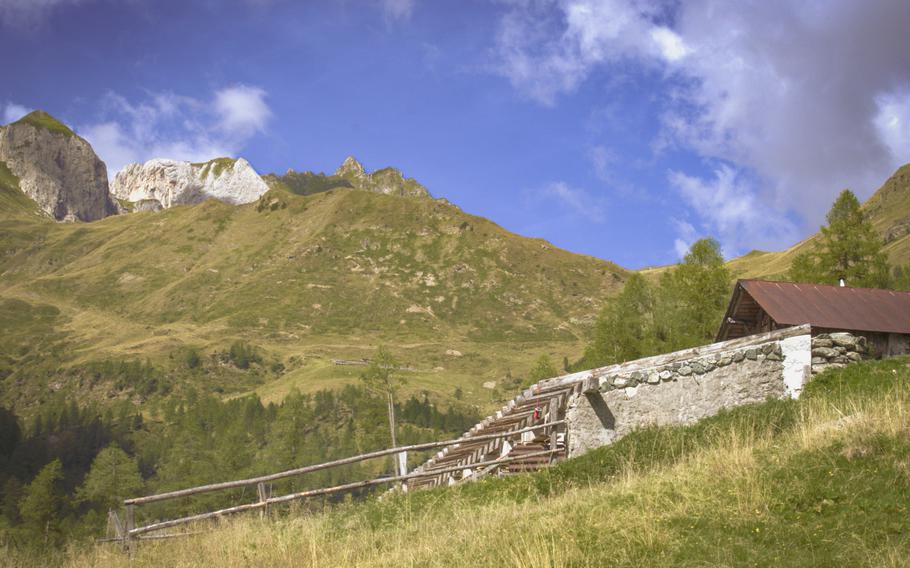
Rather than chasing summits or social media landmarks the MADE Trek invited hikers to slow down and consider the layers of history beneath their feet. (Kimberly Kephart)
Kimberly Kephart is a freelance travel writer and destination content creator, collaborating with global brands and destination management offices. Based in Vicenza, Italy, Kimberly is passionate about exploring the globe and sharing her insights through her blog, Kimberly Kephart Travels, and on Instagram at @kimberlykepharttravels.
Editor’s Note: This article was written by a member of the local military community, not an employee of Stars and Stripes. Neither the organization nor the content is being represented by Stars and Stripes or the Department of Defense.