
Published on
April 14, 2026
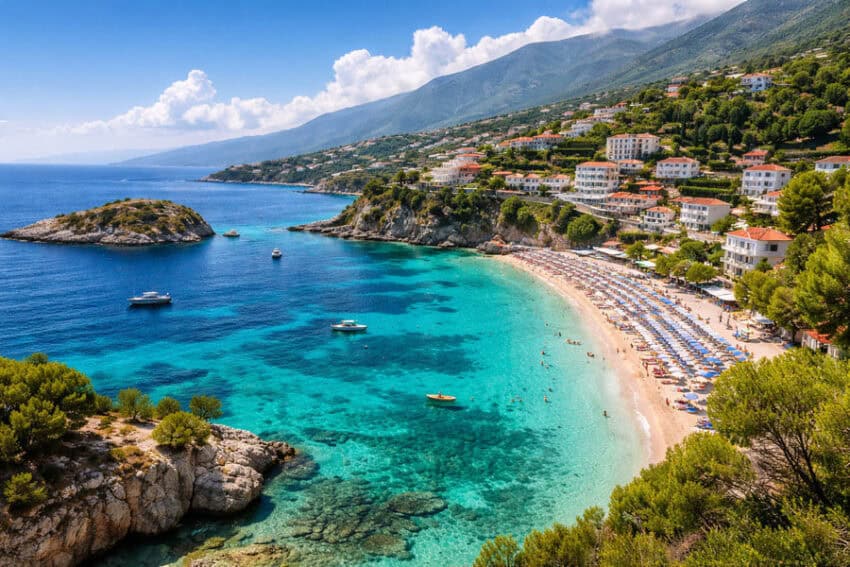
Image generated with Ai
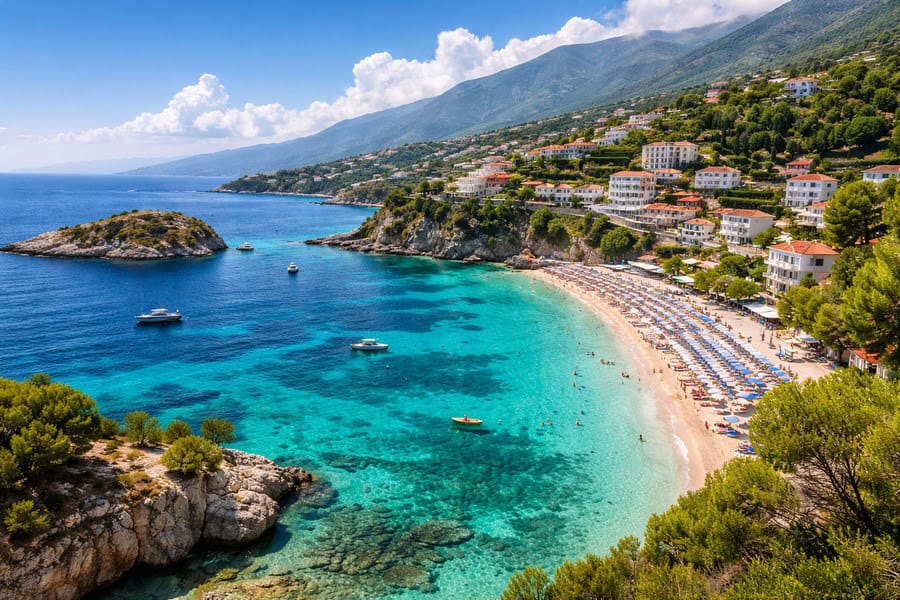
Albania’s coastal towns of Ksamil, Dhërmi, and Himara have become some of Europe’s most captivating yet largely undiscovered Mediterranean destinations. Offering an escape from the crowded beaches of Greece and Italy, these towns boast unspoiled natural beauty, crystal-clear waters, rugged cliffs, and quaint villages, allowing travelers to experience a more tranquil and traditional Mediterranean lifestyle.
Play News Now
TTW Audio Brief
As tourism to Albania grows, more visitors are drawn to its affordable charm and untouched coastline. However, with the rise in popularity, global safety concerns are beginning to shape travel, with travelers urged to stay cautious due to geopolitical risks and local crime. Despite these challenges, Albania’s uncommercialized allure and its stunning coastal towns continue to make Ksamil, Dhërmi, and Himara among the most sought-after and unique Mediterranean retreats.
The embassy’s warning urged Americans to exercise caution in public spaces and tourist-heavy areas, citing the possibility of threats from groups with geopolitical motivations. While the alert did not indicate an imminent attack, it served as a reminder that even lesser-known European destinations are not immune to the broader global security landscape. Albania continues to hold a Level 2 advisory from the U.S. State Department, which advises travelers to “exercise increased caution” primarily due to crime concerns rather than any immediate instability.
What the U.S. Security Alert Means for Travelers
The U.S. Embassy alert specifically advised heightened awareness in places like hotels, restaurants, shopping areas, and popular tourist destinations—locations that could be targeted by groups motivated by broader political agendas. However, it is crucial to note that there is no credible or immediate threat to tourists in Albania, and authorities have clarified that there is no verified intelligence suggesting an active danger to residents or visitors. Albanian officials have reaffirmed that security forces remain vigilant and operational, and that daily life for residents and tourists continues as usual.
What the security alert highlights is the increasingly globalized nature of modern travel risks. Today, security concerns are often more about international events influencing the local environment than any inherent risk within a specific destination. In this case, Albania’s safety continues to be shaped by the wider geopolitical context, rather than any domestic instability or terrorist threat.
Advertisement
Advertisement
Is Albania Safe for Tourists?
Despite the advisory, Albania remains a relatively safe destination for tourists, particularly along its coastal and resort areas. The primary concern, as noted in the U.S. State Department’s advisory, is crime—mainly petty theft and occasional scams in crowded areas. These risks are familiar to seasoned travelers and are typical of many urban destinations around the world. Larger cities like Tirana may present the usual urban awareness issues, but these are manageable with a little caution.
International travel organizations largely echo this perspective, noting that while terrorism cannot be entirely ruled out, incidents are rare. Travelers who remain vigilant and avoid demonstrations or political gatherings generally enjoy trouble-free experiences in Albania. The recent surge in visitors—Albania welcomed over 12 million foreign tourists in 2025—has brought more international attention to the country, leading to an increase in travel advisories as the nation’s visibility grows.
Why Albania Is Still One of Europe’s Most Unique Coastal Destinations
The Albanian Riviera, particularly the towns of Ksamil, Dhërmi, and Himara, remains one of Europe’s last undiscovered treasures. Unlike more developed Mediterranean destinations, Albania offers beaches framed by rugged mountains instead of sprawling resorts. Dining by the sea feels like an intimate experience, with menus that feel more personal and authentic than commercialized. Albania’s combination of affordability, stunning scenery, and still-developing tourism infrastructure continues to make it one of the most appealing destinations in Europe.
The country’s appeal lies in its position as a destination in the midst of growth—a place where travelers can experience a destination before it becomes fully commercialized. This “early discovery” feeling comes with its own set of challenges, but also with a unique opportunity to experience a country in transition, offering authentic experiences at a lower cost than its more famous Mediterranean neighbors.
How to Travel Smart in Albania Today
For those planning to visit Albania, the key is not to avoid the country but to travel smart. Travelers should exercise heightened awareness in urban areas, especially in transport hubs, nightlife districts, and popular tourist spots. Flexibility in travel plans is recommended, and visitors are encouraged to focus on Albania’s natural and coastal offerings, where the country feels most stable and offers the most memorable experiences.
Utilizing official travel tools, such as the U.S. State Department’s Smart Traveler Enrollment Program (STEP), allows visitors to receive real-time alerts and updates, which can be invaluable for staying informed during travel. Above all, travelers should maintain perspective: security advisories are meant to encourage caution, not panic. With this in mind, Albania continues to shine as one of Europe’s most visually striking, rapidly evolving, and soul-stirring coastal destinations. Despite its challenges, Albania remains a unique and increasingly sought-after gem in the Mediterranean.
Albania’s Ksamil, Dhërmi, and Himara stand out as hidden gems with unspoiled beaches and authentic Mediterranean charm, offering a serene escape amid rising global tourism and safety concerns. These coastal towns provide a rare opportunity for travelers seeking natural beauty and local culture, while navigating increased visibility and the need for vigilance.
In conclusion, Albania’s coastal gems—Ksamil, Dhërmi, and Himara—remain some of the Mediterranean’s most alluring and untouched destinations, offering travelers an authentic and serene escape from the crowds. While rising global tourism and safety concerns have brought increased attention to these areas, the country’s relatively undeveloped coastline continues to offer a rare and affordable alternative to more commercialized Mediterranean hotspots. As long as travelers remain mindful of safety precautions, Albania’s natural beauty, rich culture, and unhurried atmosphere will undoubtedly remain a draw for those seeking a unique and peaceful Mediterranean experience.
Advertisement
Advertisement
