
Published on
April 14, 2026
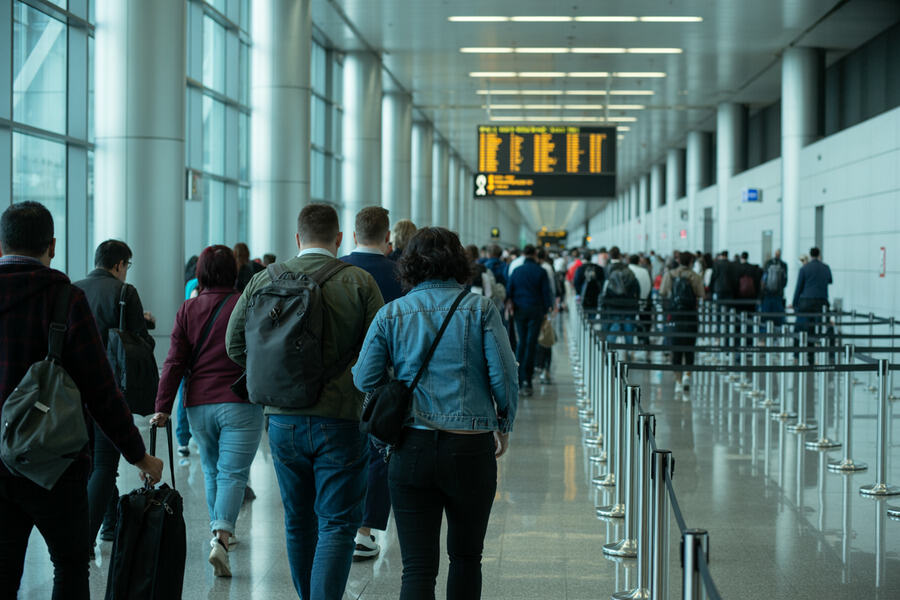
Image generated with Ai
Thailand Joins Canada, Australia, Denmark, France, India, Germany, and More Countries in Tightening Visa Policies and Combating Tourist Scams due to an alarming rise in fraudulent visa and entry-related websites targeting unsuspecting travellers. As digital platforms increasingly become the gateway to international travel, countries worldwide have stepped up their visa processes, introducing stricter requirements and issuing urgent warnings to protect tourists from scams. These measures are a response to the growing number of fraudsters exploiting confusion around visa applications, collecting personal data, and charging for services that should be free. With tightening visa systems, nations are not only enhancing security but also ensuring that legitimate visitors can cross borders safely without falling victim to deceptive schemes.
Play News Now
TTW Audio Brief
In an increasingly connected world, international travel has surged to pre‑pandemic levels, but so too have the complexities of visa requirements and the risks associated with digital scams targeting tourists. What began as sporadic warnings from individual immigration authorities has now become a coordinated global phenomenon. Countries across multiple continents — from Thailand to Canada, Australia, Denmark, France, India, and Germany — are tightening their visa policies, introducing new mandatory online requirements, and issuing urgent alerts about fraudulent websites and visa‑related scams that put travellers at financial and security risk. This article maps out the evolving landscape of travel governance and fraud warnings country by country, offering a comprehensive, factual look at the current state of travel advisories and scam prevention.
Thailand: Digital Arrival Card Scams and Pre‑Arrival Obligations
Thailand recently joined the global cohort of nations tightening visa systems when it replaced the traditional TM.6 paper arrival card with a mandatory Thailand Digital Arrival Card (TDAC) in May 2025. The move was intended to modernize border control, streamline entry processes, and improve public health tracking.
However, as soon as this digital requirement was rolled out, scammers moved in. The Thai Immigration Bureau issued formal warnings that a growing number of fraudulent TDAC websites were circulating online. These impersonators mimic official pages, charge visitors fees — sometimes ranging from USD 10 to USD 90 or more — and harvest sensitive personal data such as passport numbers, travel itineraries, and email addresses. Because the official TDAC process is free of charge when completed through the legitimate government portal (ending in a .go.th domain), travellers misled by commercial intermediaries are not only paying unnecessarily, they are placing their personal information at risk.
Authorities estimate that as much as 10% of foreign arrivals have used unofficial services at least once, underscoring the scale of the problem. Thai immigration is now working with cybercrime units to identify and take down bogus platforms, but enforcement is difficult when domains are registered overseas.
Thailand is actively urging tourists to complete their digital arrival cards at least three days before departure through the official Immigration Bureau site to avoid delays upon arrival at ports of entry.
Advertisement
Advertisement
Canada: Visa Fee Guarantees and Fraud Alerts
Canada’s immigration authority, Immigration, Refugees and Citizenship Canada (IRCC), has increasingly stressed that no third‑party service, agent or organisation can guarantee a visa. This message stems from a marked rise in cases where applicants were misled into paying for expedited processing or approvals that were never delivered.
Canadian advisories emphasize that applicants are responsible for ensuring that their visa applications are complete and accurate. Fraudulent agents often claim to have insider access or government connections and levy fees for services that either do not exist or cannot influence the outcome of an application. Some schemes also involve identity theft — collecting passport numbers and personal data under the guise of “preparing documents” — and then selling that information on illicit networks.
The Canadian government has taken steps to reinforce direct communication of visa requirements through its official websites and consular channels, discouraging the use of unauthorised intermediaries.
Australia: Tightened Entry Rules and Anti‑Scam Measures
Australia has also seen a tightening of travel entry systems, particularly with its Electronic Travel Authority (ETA) and Visitor Visa processes. A spike in complaints about fake visa websites prompted officials to launch multiple alerts reminding travellers that:
- Australia’s official visa services are free to start when done through government portals.
- Third‑party sites that charge an additional “service fee” are not endorsed by the government.
- Scam sites often duplicate official branding, leading to credible appearances that can mislead even experienced travellers.
Some fraudulent Australian ETA sites have been linked to international domain hosts that are difficult to shut down quickly. In response, the Australian Department of Home Affairs regularly publishes lists of known fake domains and partners with global cybersecurity agencies to intercept scams.
Denmark, France, Germany and the EU: ETIAS Confusion and Scam Exploitation
With the upcoming launch of the European Travel Information and Authorisation System (ETIAS) — a new pre‑travel screening requirement for visa‑exempt visitors to Schengen Area countries — EU member states like Denmark, France, and Germany are bracing for an increase in scam attempts.
Before ETIAS goes live, travel advisory sites and travel blogs are already warning that criminals are creating fake application portals claiming to be the official ETIAS system. These sites mimic EU branding and ask visitors for passport information, credit card details, and personal contacts, all under the pretense of charging an “ETIAS processing fee.”
The European Union has clarified that the only legitimate ETIAS application will be through an official EU domain (under a .eu or government‑verified portal), and fees will be standardised. Citizens are being urged to verify domain authenticity and avoid any portal that appears to be commercial or hosted outside secure government networks.
Law enforcement agencies in Europe are coordinating to shut down fraudulent ETIAS sites as quickly as they emerge, but the volume of bad actors means ongoing vigilance is necessary.
India: Fake e‑Visa Sites and Authorised Portals
India has long been the target of extensive fake visa websites, especially those advertising e‑Visa services. The Indian government has repeatedly warned travellers that the only official e‑Visa portal is indianvisaonline.gov.in and that there are numerous look‑alike sites that:
- Charge inflated “processing fees”
- Collect personal and passport data
- Mislead applicants into believing they are endorsed by the government
Embassies in countries like Kuwait, the U.S., and Papua New Guinea have issued public advisories alerting their citizens to the proliferation of fake India e‑Visa domains. These fake pages often use similar terminology to official sites but substitute letters or use different domain endings (e.g., .com, .net, .org) rather than the government’s controlled domain.
Some miscreants even harvest data to perpetuate identity theft or sell the information via illicit data markets.
To combat this, the Indian government lists known fraudulent sites on official pages and works with global internet registrars to suspend scammers’ domains when possible.
Malaysia: Digital Arrival Cards Under Threat
Malaysia, like Thailand, has introduced a digital arrival card requirement for international visitors. Immigration officials have publicly warned that fake websites claiming to offer Malaysia Digital Arrival Card (MDAC) services have appeared online.
These unofficial sites often charge fees for what should be a free government service and can also involve:
- Unauthorised collection of passport details
- Misleading instructions that do not transmit data to official immigration systems
- Risk of invalid entries at checkpoints due to incomplete or incorrect submissions
Malaysia’s immigration authorities emphasise that digital arrival cards should only be submitted via the official government portal, and travellers should be wary of any intermediary requesting payment.
United Arab Emirates: Online Visa and Residency Scam Alerts
The UAE has issued several warning statements about fraudulent online advertisements promising quick visa and residency permit services through unauthorized agents.
These scams typically operate by:
- Advertising expedited processing for a fee
- Claiming association with “official UAE government partners”
- Sending counterfeit documents that bear government seals but lack real legitimacy
Officials remind applicants that UAE visa and residency applications are processed directly through UAE government portals or approved service centres, and no third‑party can guarantee faster approval or entry.
Poland: Visa Issuance Irregularities and Broader Concerns
While not a typical scam website case, Poland’s recent visa controversy — often referred to as the “cash for visa” scandal — revealed systemic weaknesses that can affect trust in visa systems. Investigations found that some officials allegedly accepted bribes to issue visas that allowed entry not only into Poland but across the entire Schengen Area. While this was an internal corruption issue rather than a public online scam, it illustrates the vulnerabilities in visa systems that can undermine both security and fairness.
The fallout has prompted discussions in other nations about strengthening oversight and accountability in visa processing.
Nepal: Extortion Networks and Visa Corruption
In Nepal, reports emerged about organised extortion schemes within the visa process where applicants were pressured to pay bribes to receive legitimate visit visas. While this was largely confined to in‑country immigration offices and third‑party brokers, it highlights another form of visa scam — one rooted in corruption rather than digital deception.
Nepal’s government responded by tightening documentation checks and staffing controls, but the episode underscores that scam risks are not limited to online platforms alone.
How Travellers Can Protect Themselves
Across all the cases above, common patterns emerge in scam tactics:
- Fake domain names that look official but use non‑government suffixes (e.g., visa‑application.com instead of an authentic gov domain).
- Unnecessary fees for services that should be free or direct government functions.
- Collection of excessive personal data beyond what official forms require.
- Misleading branding or claims of guarantees or fast‑tracking approvals.
To avoid falling victim, authorities and travel experts recommend:
- Always start with the official government immigration portal of the destination country.
- Verify that the domain ending matches government standards (e.g., .go.th for Thailand, .gov.in for India, .gov.au for Australia).
- Ignore unsolicited offers from email, social media, or web adverts that bypass official channels.
- Confirm entry requirements well before travel, ideally several weeks in advance.
- Use embassy or consulate resources for clarification.
The Broader Implication
What began as individual warnings — such as Thailand’s alert about fake TDAC websites — has now coalesced into a global pattern of tightened visa governance and scam mitigation. In every region, from North America and Europe to Asia and the Middle East, authorities are confronting both digital deception and systemic vulnerabilities in visa processing.
For international travellers, this means that understanding entry rules is no longer a passive process. It requires active verification, scrutiny of official sources, and awareness of how scammers exploit confusion around digital immigration systems.
Thailand Joins Canada, Australia, Denmark, France, India, Germany, and More Countries in Tightening Visa Policies and Combating Tourist Scams as rising fraudulent websites targeting travellers prompted governments worldwide to implement stricter visa requirements and issue urgent alerts. These measures aim to protect tourists from scams while ensuring smoother and safer travel experiences.
As more countries adopt electronic travel authorisation systems, digital arrival cards, and online visa applications, the challenge will be to stay one step ahead of fraudsters — while ensuring that legitimate travellers can move across borders with confidence and security.
Advertisement
Advertisement
