
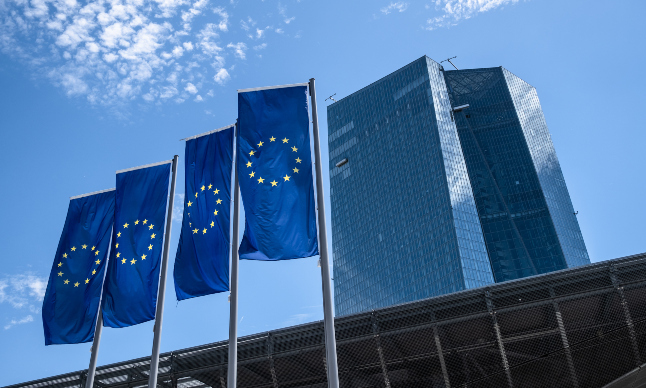
For years, the financial industry has criticised the fact that a truly unified financial marketplace within the European Union remains unrealised. Diverging national interests, regulatory regimes and supervisory structures continue to hinder the creation of a genuine single market for capital.
The push to supervise financial market participants at the EU level rather than nationally forms part of a broader initiative, driven by France and Germany, to strengthen the Union’s competitiveness — not least vis-à-vis the United States and China.
The European Commission has proposed transferring supervisory responsibilities from national authorities to the European Securities and Markets Authority (ESMA) in Paris.
Oversight of Systemically Important Cross-Border Institutions
Last Friday, the European Central Bank (ECB) expressed its support for enhanced EU-level supervision of systemically important, cross-border financial market participants. This would also bring major trading venues, central counterparties (CCPs), central securities depositories (CSDs), and crypto-asset service providers under its remit.
«The ECB fully supports the Commission’s proposals, which represent an ambitious step towards deeper integration of capital markets and financial supervision within the Union,» the central bank said in a statement issued as part of the EU legislative process.
Adequate Resources and Phased Implementation
At the same time, the ECB stressed the importance of careful implementation. ESMA would need to be adequately resourced — both financially and in terms of staffing — to assume its expanded supervisory mandate and carry out new responsibilities effectively.
The ECB also recommended that it be granted a non-voting seat on ESMA’s Board, allowing its expertise to contribute to supervisory decisions, technical standards, guidelines and recommendations. Its involvement would add value, particularly in areas where its experience in financial stability and supervision can support effective regulation.
Furthermore, the transition of supervisory powers from national to EU level should be carefully phased to minimise potential market disruption. A gradual approach, the ECB noted, would help ensure continuity and stability throughout the transition.
The European Commission’s proposal will now enter negotiations between EU member states and the European Parliament.