
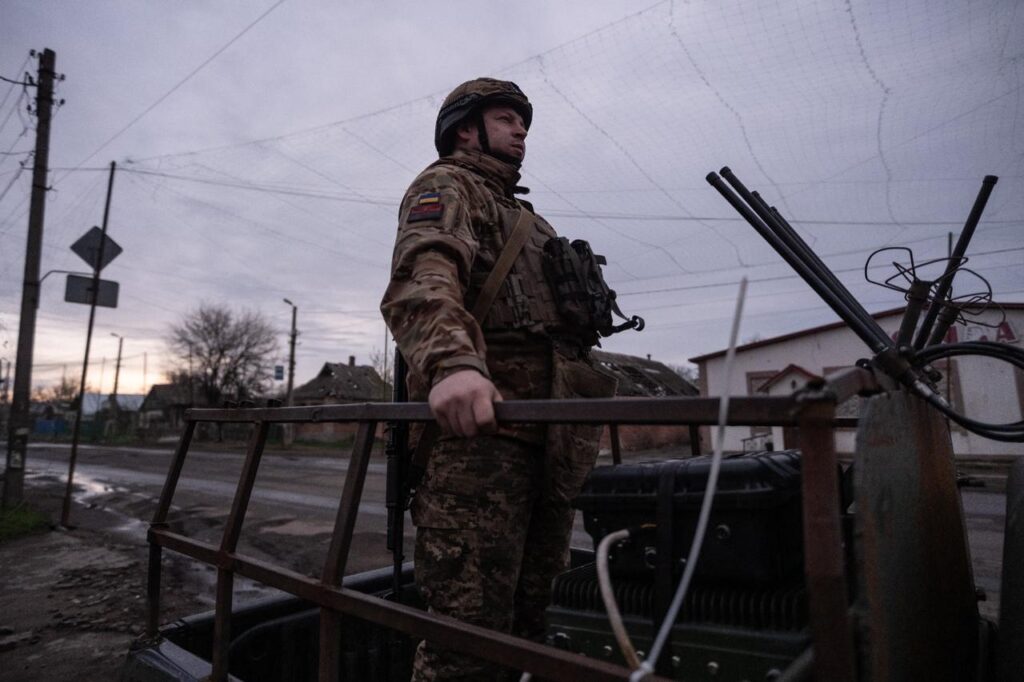
The Western Balkans does not appear on most maps of the war in Ukraine. It should.
The conflict that began with Russia’s full-scale invasion in February 2022 has never been purely about Ukrainian territory. For Kosovo and Bosnia, it has also been about whether the regional order established in the late 1990s would survive into the next decade, or whether a Russian victory would create the conditions for its controlled demolition.
That is not merely an abstraction. It is a question that can be examined through the record.
The evidence of contingency
Serbia has spent the past four years acquiring hardware at a pace that drew sustained attention from regional governments and Western capitals: Chinese FK-3 air defense systems, CH-92A combat drones, Pantsir-S1 units, upgraded MiG-29 fighters transferred from Belarus, and Lynx infantry fighting vehicles.
President Vucic announced an ambition to expand the Serbian armed forces to 150,000 soldiers. Belgrade has consistently framed this buildup as defensive, a response to what it describes as a hostile regional environment created by Croatia, Kosovo and Albania.
That is the framing Belgrade advances. What it cannot fully explain is what happened in the last week of September 2023.
On Sept. 24 of that year, a group of heavily armed Serb gunmen ambushed a Kosovo Police patrol near the village of Banjska in northern Kosovo, killing officer Afrim Bunjaku. Several dozen assailants then barricaded themselves inside an Orthodox monastery.
The ensuing firefight killed three gunmen. Kosovo Police recovered military-grade weapons, armored vehicles and logistical equipment at a residential site used by the attackers. Milan Radoicic, then vice president of the Serb List and a figure with documented ties to the Serbian state, subsequently admitted through his lawyer that he had personally organized the operation’s logistics.

The logo of Kosovo Dispatch, an independent platform focused on decoding political, security and strategic developments in Kosovo.
Within days of the Banjska attack, the White House detected what it described as an “unprecedented” staging of advanced Serbian artillery, tanks, and mechanized infantry units along the Kosovo border, and called on Belgrade to withdraw those forces immediately.
U.S. National Security Adviser Jake Sullivan spoke directly with Prime Minister Kurti and expressed concern over Serbian military mobilizations. NATO authorized additional forces for KFOR. The United Kingdom transferred command of an infantry battalion to the alliance.
Vucic denied that his forces were at their highest alert level while not directly denying the buildup itself. His defense minister and the head of the armed forces had already traveled to what Belgrade called a “deployment zone” on the border.
The sequence matters.
A state-linked paramilitary operation in northern Kosovo, followed within days by an unprecedented military deployment to the border, followed by White House pressure demanding withdrawal, followed by NATO reinforcement of KFOR.
That sequence is difficult to reconcile with a purely defensive posture.
It is not, however, proof of an operational decision to cross the border, or of a defined political threshold for action. What it establishes is that the hardware, the political willingness to use paramilitaries as instruments of pressure, and the reflexive forward deployment of conventional forces were all simultaneously present in September 2023.
The question a former Croatian defense minister asked last week, who would have stopped him?, refers to this environment, not to an imagined one.
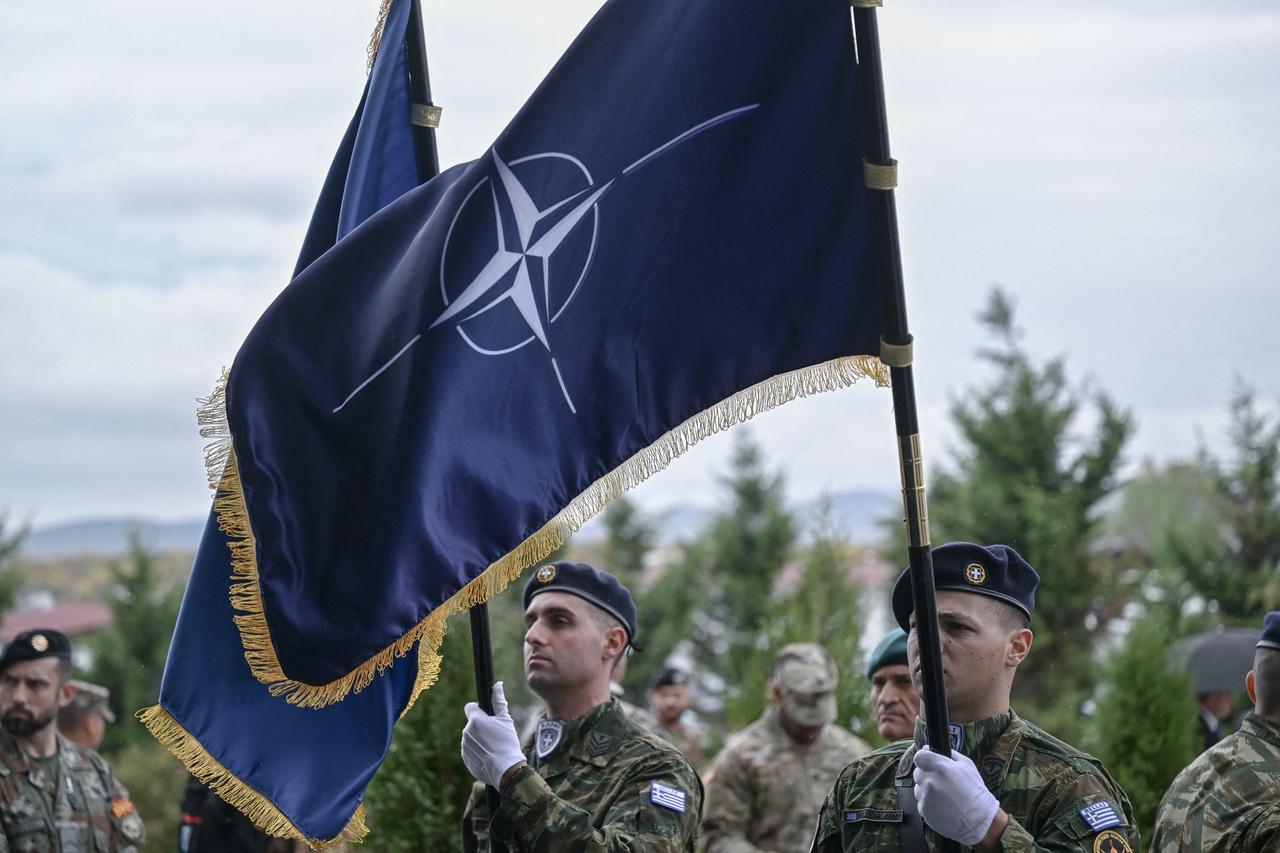
Members of the NATO-led peacekeepers in Kosovo (KFOR) attend the change of command ceremony at the Headquarters of the NATO-led KFOR Mission, in Camp Film City in Pristina, Kosovo on October 11, 2024 (AFP Photo)
Capability without decision
Former Croatian Defense Minister Ante Kotromanovic appeared on N1 television last week and offered an assessment grounded in exactly this logic.
He described Serbia’s rearmament primarily as an instrument of internal consolidation — a tool through which Vucic strengthens his political position and controls the institutions he requires to remain in power.
Then he widened the frame:
“They talk obsessively about Kosovo, which they cannot overcome. I believe that Vucic with his forces and some Russians, would have gone all the way to Kosovo if Russia had won against Ukraine within a month. Who would have stopped him then?”
The statement is explicitly counterfactual and framed as a question. Kotromanovic is not disclosing a Serbian war plan.
He is a former defense minister of a NATO member state with direct professional knowledge of the bilateral military relationship between Croatia and Serbia, including joint exercises conducted under a 2009 cooperation agreement.
His assessment is informed regional judgment: that the structural conditions constraining Belgrade’s options in September 2023 were contingent on Ukraine not losing quickly, and that a swift Russian victory would have materially altered those conditions.
That argument holds on its own terms.
A Russian victory within weeks of the February 2022 invasion would likely have restored Russian deterrence and elevated Moscow’s prestige among revisionist governments. It would have established the precedent of a successful forced revision of a post-Cold War settlement in Europe for the first time since 1999.
Western attention and political bandwidth would have been consumed by the consequences of a collapsed European security order. And the network of actors inside Western institutions working to erode the constraints on Belgrade would have operated in a significantly more permissive environment.
That network requires separate examination.
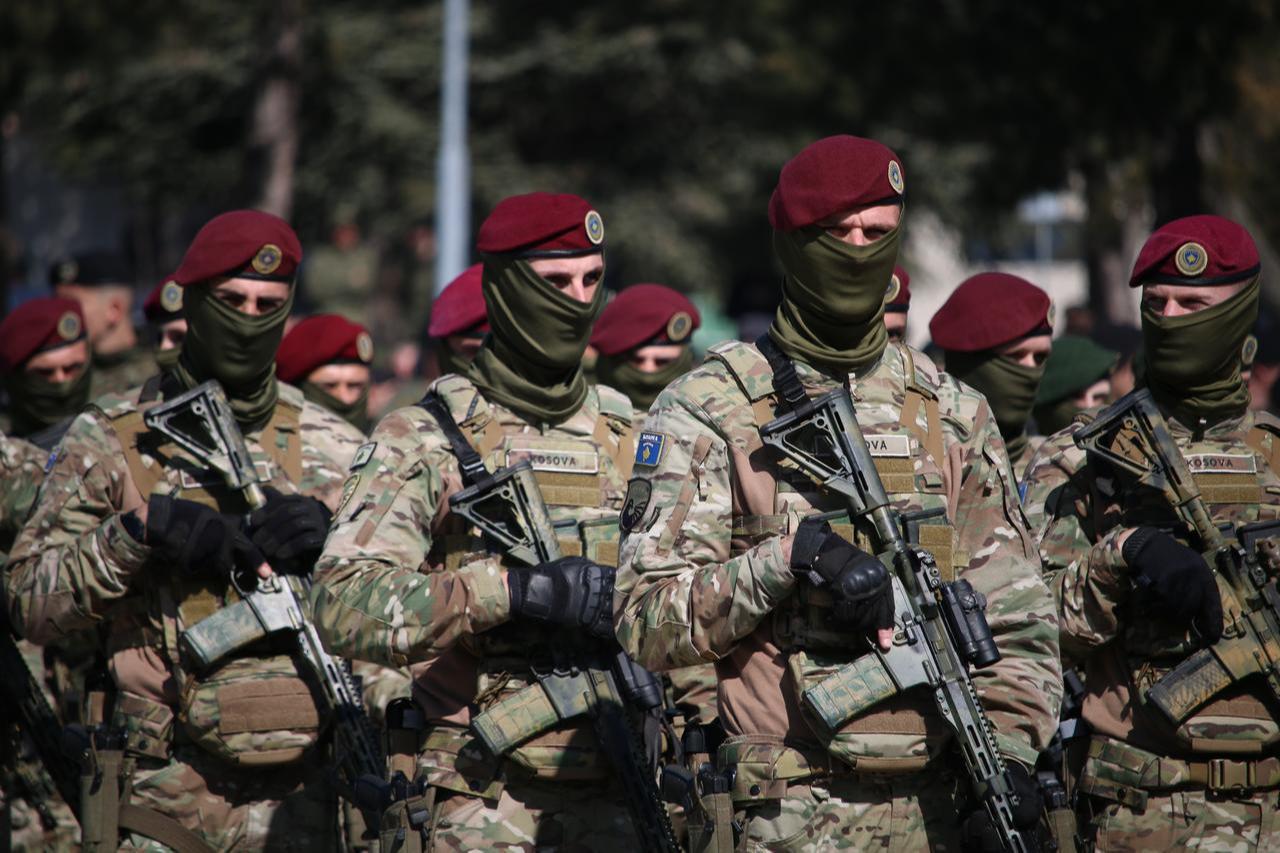
Soldiers parade during an event organized to commemorate the 27th anniversary of Prekaz Massacre at Adem Jashari Barracks in Pristina, Kosovo on March 05, 2025. (AA Photo)
Constraints beyond the battlefield
Viktor Orban’s Hungary has consistently and deliberately complicated Kosovo’s position inside the European Union.
Budapest blocked or slowed Kosovo-related EU measures, maintained a bilateral political alignment with Belgrade in open tension with broader EU policy, and used its position as a member state to limit the institutional costs Belgrade faced for non-compliance.
This mattered for Kosovo’s accession trajectory, for the coherence of EU sanctions policy and for the political signaling Brussels sent to the region.
It did not, however, directly alter the hard security environment.
NATO’s deterrence posture, KFOR’s mandate and the credibility of an alliance response to Serbian military action at Kosovo’s border are functions of NATO, not EU council dynamics.
Hungary’s capacity to complicate EU policy has real limits when the issue moves from institutional procedures to the territory where KFOR operates.
The two channels are related, but they function at different speeds and through different mechanisms.
What changed on April 13, 2026, when Hungarian voters removed Orban’s Fidesz from power after nearly 16 years, is therefore significant but bounded.
The loss of Budapest as a reliable blocking voice inside EU institutions removes one structural obstacle from Kosovo’s accession path and from the EU’s ability to maintain a coherent Western Balkans policy.
It does not alter NATO deterrence directly.
Both things are true simultaneously.

A view of the 19th Armed Forces Day celebrations during the official ceremony at the Bosnia and Herzegovina Military Barracks in Rajlovac neighbourhood of Sarajevo, Bosnia and Herzegovina on November 28, 2024. (AA File Photo)
Bosnia and the parallel challenge
If the Kosovo dimension of this argument requires calibration between what is documented and what is inferred, the Bosnia dimension is more explicit.
Milorad Dodik has never concealed his objectives.
Republika Srpska’s secession from Bosnia and eventual unification with Serbia has long been his stated political program. He has systematically challenged Dayton’s institutional architecture, refused to recognize the authority of the High Representative, and maintained open political and financial ties with Moscow throughout the Ukraine war.
The international response followed a recognizable pattern: escalating concern, escalating sanctions — and then reversal.
On Oct. 29, 2025, the U.S. Treasury’s Office of Foreign Assets Control removed Dodik, his family, his closest associates and more than a dozen connected companies from the sanctions list without public explanation.
The lobbying effort preceding that outcome was systematic and fully documented in Justice Department filings.
Rod Blagojevich’s firm held a contract with the Republika Srpska government directed at exactly that result. A second firm held a separate $1 million contract with a bonus clause tied to successful delisting.
The political framing deployed in Washington described Dodik as a defender of Christian values and a victim of lawfare.
What followed was telling.
In February 2026, during his first visit to Washington after the delisting, Dodik described Sarajevo as the enemy of Republika Srpska, asserted the right to self-determination and called for the expulsion of the High Representative.
A bipartisan group of U.S. senators and representatives wrote to Secretary Rubio and Treasury Secretary Bessent in March 2026, demanding reimposition of sanctions under a statutory obligation in the FY2026 National Defense Authorization Act.
The deadline passed. No action followed.
Dodik, convicted by a Bosnian court and formally banned from office, continues to exercise controlling influence over Republika Srpska.
The apparatus he built no longer requires him to hold formal office. The Republika Srpska project and pressure on Kosovo are not separate strategic bets.
They are the same bet placed on two tables.
Both depend on the same premise: that the post-1990s regional settlement is reversible if the external environment becomes permissive enough, and that the path to that permissiveness runs through Moscow’s regional influence, Washington’s selective disengagement and the erosion of EU internal coherence.
Ukraine’s continued resistance has kept that premise from being validated. It has not eliminated the actors who hold it.
What Ukrainian endurance bought
Kosovo and Bosnia have not been passive observers of the war in Ukraine. They have been beneficiaries of it in ways rarely stated with precision.
Every month that Ukrainian forces held the line foreclosed another month in which the structural conditions for Balkan revisionism could crystallize.
Russian prestige did not recover. The precedent of successful territorial revision by force in post-Cold War Europe was not established. Western political bandwidth was not consumed by a collapsed European security order.
The network of actors working to erode constraints on Belgrade and Banja Luka operated in a more contested environment than a Russian victory would have produced.
None of this means the threat has disappeared.
Serbia’s hardware remains. The relationship between Belgrade and Moscow remains. Republika Srpska’s secessionist project continues. Washington has demonstrated that sanctions can be lifted through the right lobbying and political framing.
The structural conditions that made September 2023 possible have not been permanently altered. They have merely been degraded, and, for now, held in check.
Postponement, however, creates facts of its own.
Kosovo’s Security Force has continued to develop. Kosovo’s international position has accumulated institutional depth through engagement with NATO structures and multinational exercises.
Bosnia’s reform process, however incomplete, has not been reversed. The EU accession framework remains alive, and Orban’s removal from power in Budapest opens institutional space that had been closed for years.
These are not guarantees.
They are contingent gains purchased by Ukrainian endurance at Ukrainian cost.
Kosovo’s security is not separable from European security. And European security in 2026 looks materially different from what it would have looked like had Kyiv fallen in the spring of 2022.
That is the arithmetic Prishtina and Sarajevo should not allow either their publics or their partners to forget. Because for both capitals, Ukraine’s endurance did not merely preserve Kyiv. It preserved time, and in Balkan geopolitics, time is often the difference between deterrence and revision.
This article was first published on the Kosovo Dispatch website.
DISCLAIMER: The views and opinions expressed in this article are those of the author and may not necessarily reflect the editorial policy of Türkiye Today.

April 14, 2026 10:38 AM GMT+03:00