
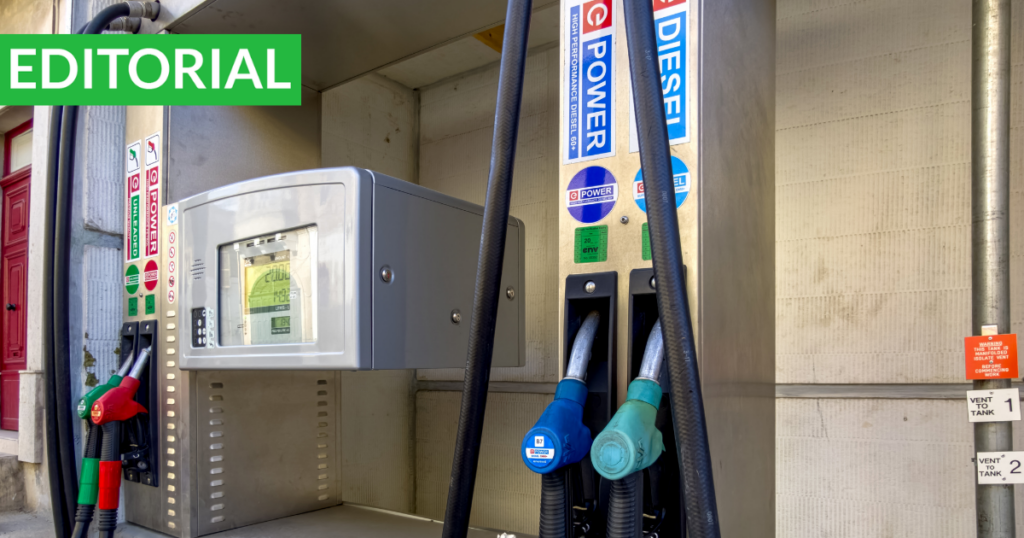
Malta’s open economy is particularly vulnerable to external economic shocks over which it has no control. In the last six years, like the rest of the world, we have had to deal with the disruptions of COVID, the Ukraine War and, now, the Iran war.
It’s time to ask ourselves whether we are managing these crises sensibly without taking the easy option of kicking the can down the road, hoping that future generations will foot the bill we incur now to dull our economic pain.
The Central Bank of Malta’s annual report for 2025 gives us some indication of the immediate challenges we face. Governor Alexander Demarco said the government’s energy support measures should help reduce the impact of potential rises in foreign inflation, as Malta, like most other countries, faces high uncertainty as a result of the pointless Iran war.
He cautioned that energy subsidies, which the government refuses to make more focused on helping those who really need support, would require greater restraint on public expenditure to achieve the fiscal targets.
With the elections just around the corner, it is most unlikely that the government will take the public into its confidence by being honest about the price that present and future generations will pay for ignoring the harsh market realities driving up inflation. Demarco hopes that inflation projections of 2.3% for 2026 are reasonable, even if he cautions that inflation forecasts are “characterised by high uncertainty”.
Malta has also stopped short of backing EU-wide calls for emergency cuts in energy use, instead pointing to its “preparedness plan” as fears grow over supply disruptions caused by the Iran war.
Surely, there is a limit to how much longer we can sustain economic growth by promoting more construction projects and consumer spending
A spokesperson for the Energy Ministry says the government is closely monitoring ongoing developments in energy supplies while not endorsing the advice of European Energy Commissioner Dan Jørgensen, who said that “even if peace is here tomorrow, still we will not go back to normal in the foreseeable future”.
The Central Bank report also noted structural weaknesses in the current economic model, which continues to rely excessively on the construction industry and private consumption. Construction permits for residential units issued by the Planning Authority increased by 41.4% in 2025, following a 7.4% rise in 2024.
Surely, there is a limit to how much longer we can sustain economic growth by promoting more construction projects and consumer spending.
Central Bank and Energy Ministry officials should go beyond moral suasion to convince the public of the need to economise energy use to help reduce the costs borne by present and future taxpayers.
At a time when taxpayers are collectively underwriting energy subsidies to cushion rising costs, it is indefensible that high-consumption leisure activities, like power boats and cars, continue to benefit from artificially low fuel prices.