
An Instagram reel for N12 News Israel tells the story of a well-known resident in Kiryat Shmona, a town near the Lebanese border, on the verge of tears. His 8-year-old daughter cannot ride her bike for fear she’ll have to duck an oncoming missile or run to a safe room. His 10-year-old son’s hair is falling out. His grown sons tell him they won’t come back. “What do they have to come back to?” he asks — and breaks into tears.
I want to weep for him and for every displaced and angry resident of Israel’s north, especially the Galilee Panhandle communities that have nearly been ignored and abandoned.
I keep watching this reel, trying to understand why. Is it heartbreak for the father? The denial that this once-thriving town has become a ghost town? The longing to return to our kibbutz nearby, where I met my Israeli-born husband and had my son? Or is it the ache of being unable to go home, with the backdrop of uncertainty against canceled flights leaving Instagram as my only window?
I remember a different rhythm of life in the north before we left Israel. Children rode their bikes along the Jordan River until dusk, laughter stretching across open spaces without interruption. There was a quiet confidence then — a belief that life, though never simple, was steady. Our kibbutz, not far from Kiryat Shmona, held that same sense of belonging for me. It was where I first understood what it meant to build a life with someone, where I became a mother, where ordinary moments — shared meals, familiar paths, the hum of community — felt enduring. Watching that father unravel, I realize I grieve not only for him, but for a version of home that no longer exists, for the innocence that allowed children simply to be children without calculating the distance to a shelter.
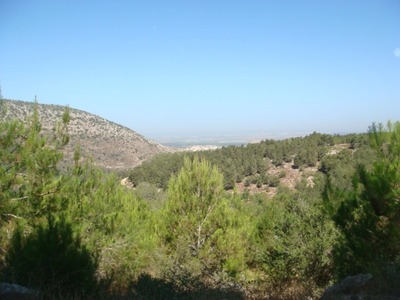
Since Oct. 7, I’ve been tracking news from Israel because U.S. headlines rarely capture what’s happening along the northern border. From my Pittsburgh home, I follow almost every day the news of this neglected yet stunning region of Israel, zooming in on two of my favorites that have been nonstop targets: Kibbutz Misgav Am, where I spent the last year of my military service and Kibbutz Malkiyyah, founded by my uncle and aunt in 1949. You would never know that beyond the beauty of these landscapes, their proximity to the border has become a constant threat to their daily existence.
Through this father’s lens, I see the fear I have carried silently: my family displaced, my friends scattered, lives upended while I sit in quiet Pittsburgh for many years, my heart torn. Now these bordering communities live in constant fear. Kiryat Shmona — empty, silent, haunting. Most days, I walk the streets of Squirrel Hill carrying these images and memories of happier days. Headlines lodge themselves somewhere deep in my body, a sense of home suspended across oceans.
I remember being a young mother during the 2006 Israel-Lebanon war, fleeing our kibbutz, Sde Nehemia, just a few kilometers from Kiryat Shmona, only to travel hours to sleep on the beaches of the outskirts of Tel Aviv. The fear that our kibbutz home and community might be destroyed resurfaces these days again and again, as real as it is now for those I love. In Pittsburgh, I get a chance of sharing my pain and heartache, offering a small relief of being seen.
But from afar, I am angry. Frustrated. As an Israeli expat, this anger simmers beneath every headline. I see the Galilee Panhandle communities — once vibrant, now emptied, their children learning fear before they can ride their bikes — and it breaks something in me. I cry into my husband’s arms, but the relief is just temporary.
Many families in the north like this resident of Kiriyat Shmona are losing hope not only for their own lives, but for the futures of their children, for the possibility that these towns could ever again be home. I feel powerless, exiled in both distance and circumstance, carrying grief that refuses to settle because few notice what is being lost.
“Why does one choose to have children?” one man asks the reporter. “For continuity, for hope in their future — not just to say I have children.”
And that is the heartbreak of home from afar: the hope that once sustained generations now hangs in the balance, fragile, urgent and too easily overlooked. PJC
Dorit Sasson is the award-winning author of “Accidental Soldier: A Memoir of Service and Sacrifice in the Israel Defense Forces” and its sequel, “Sand and Steel: A Memoir of Longing and Finding Home.”