
 image: ©Joel Papalini | iStock
At a regional airport in Denmark, drones are beginning to take an important role in sectors such as emergency services and infrastructure
A new EU-supported initiative is now demonstrating how safely integrating drones into controlled airspace can work in practice.
Turning an airport into a living lab
The project, known as NextGen Innovation, has turned Hans Christian Andersen Airport in Odense into a testing environment.
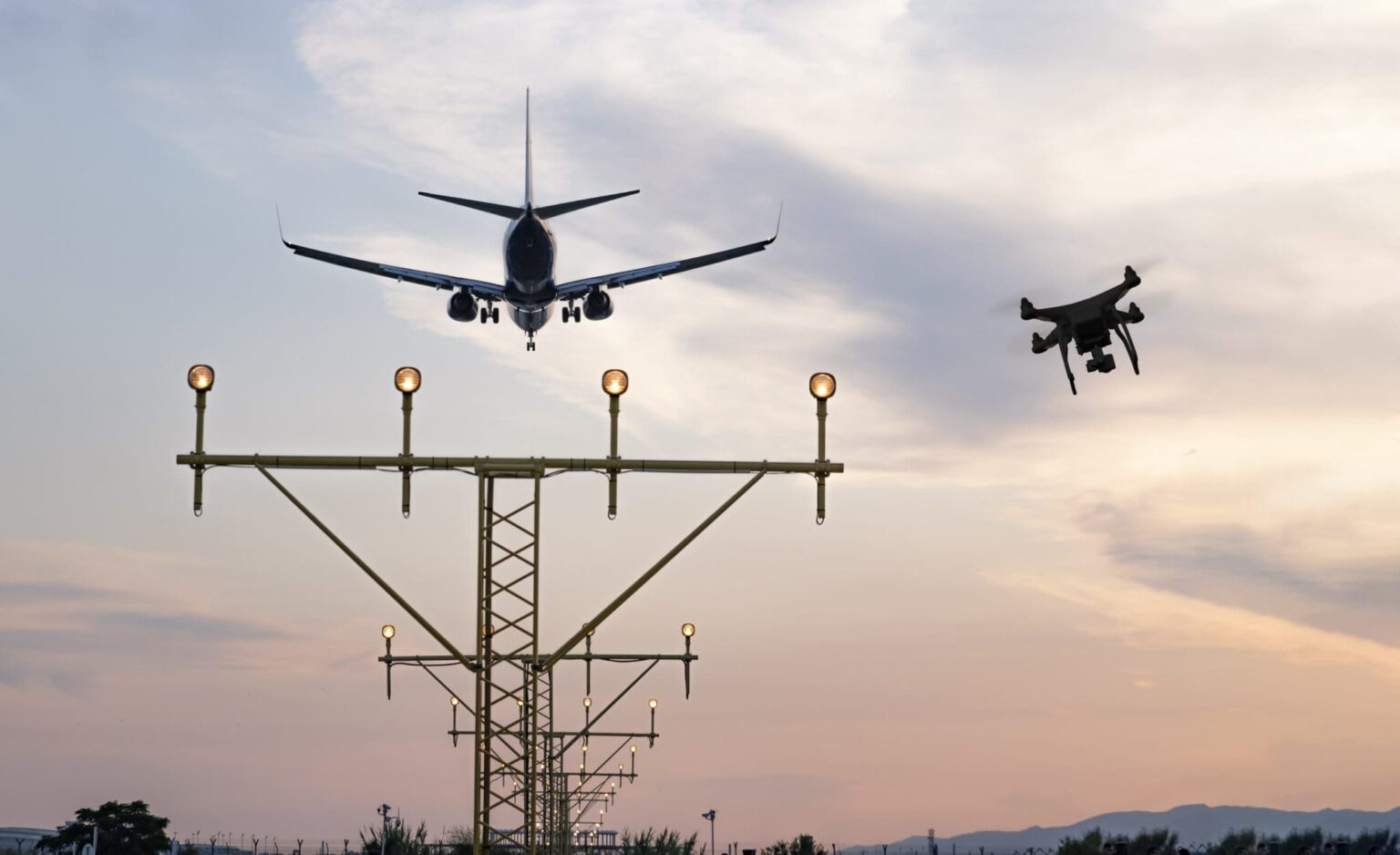
Instead of relying on stimulations, developers and researchers are working within an active airspace covering 1,900 square kilometres. In this airspace, drones and traditional aircraft operate side by side under a joint coordination system.
By doing it this way, researchers and developers can collect realistic testing of how drones behave in complex airspace conditions. It also gives them valuable insights into how potential risks can be managed while maintaining efficiency.
The testing site has quickly become one of Europe’s leading centres for drone development. Around 15 specialised companies are based at the facility, working closely with academic researchers. This collaboration creates an environment where ideas can move rapidly from concept to testing.
Having strong research partners ensures that innovation is grounded in scientific expertise. Companies also benefit from immediate access to testing infrastructure, allowing them to refine technologies more quickly than before.
Advanced technology at work
A key feature of NextGen Innovation is its use of advanced tracking and detection systems. These tools enable real-time monitoring of drones, operators and flight paths, ensuring that all movements within the airspace are visible and controlled. Detection technology can identify drones at distances of more than 15 kilometres, significantly enhancing safety.
This monitoring is essential as drone usage increases. Without reliable tracking and coordination, the risks of incidents in shared airspace would rise.
By developing and testing these systems now, the NextGen Innovation is helping to build a framework for safer skies in the future.
NextGen Innovation is supported by a budget of over €9 million, with a portion funded by the EU Cohesion Policy.
Beyond economic benefits, NextGen Innovation also strengthens capabilities in areas such as security, surveillance and infrastructure protection. These applications are becoming more important as drones take on more critical roles in society.
As drone adoption continues to grow, the need for coordinated airspace management will only become more urgent. The work being carried out in Denmark offers a practical model that other regions can follow.
By combining real-world testing, strong collaboration, and advanced technology, the NextGen Innovation demonstrates that innovation can be both fast-paced and safe. It represents a step in the right direction for a future where drones and aircraft operate together, opening new possibilities for mobility, safety and efficiency across Europe.