
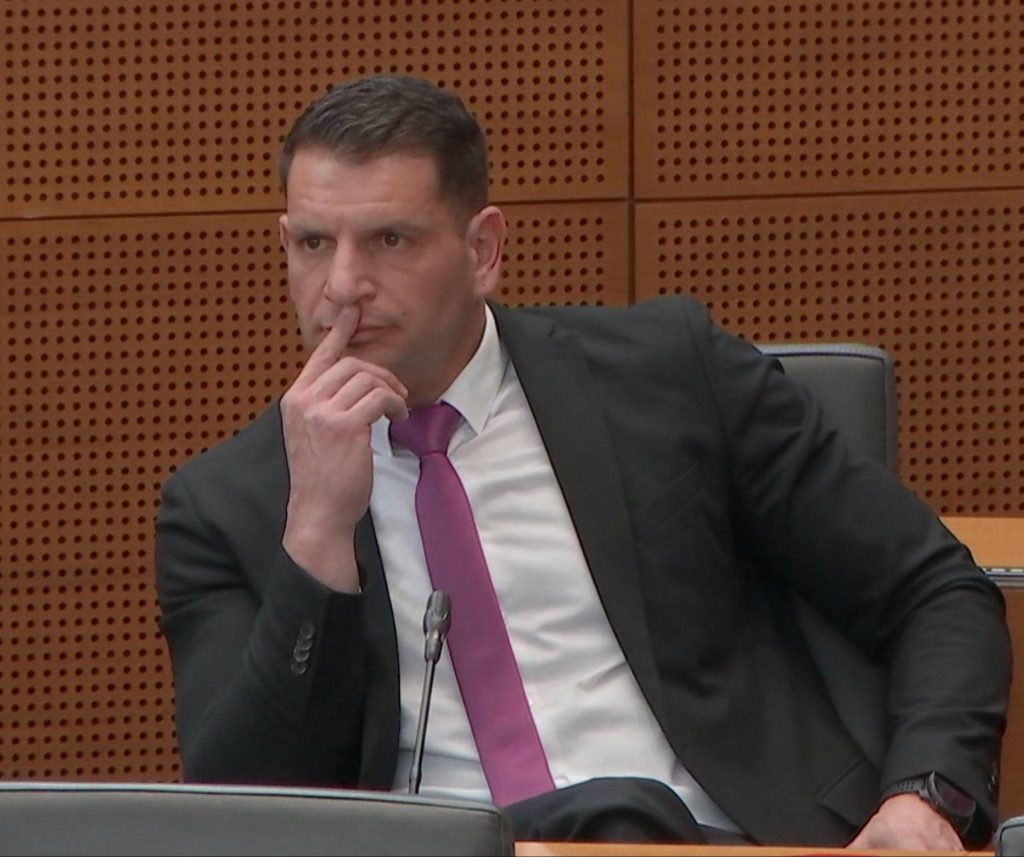
Slovenia has entered a more volatile phase of coalition politics after the National Assembly elected Zoran Stevanović, leader of the small populist Resni.ca party, as speaker of parliament. On paper, the vote concerned one of the state’s senior institutional posts. In practice, it has become a test of whether a fragmented parliament may now be drifting towards a right-leaning arrangement in which a party with openly pro-Moscow instincts could gain leverage beyond its size.
It is against that background that Stevanović’s election has been read as politically significant. After taking office Stevanović said that he intended to pursue a referendum on Slovenia’s withdrawal from NATO. TASS reported that he also said he wanted to “build bridges” despite the division between West and East and planned to visit Moscow soon. These are not routine ceremonial remarks from a new parliamentary speaker. They place Slovenia’s domestic coalition arithmetic directly in contact with wider questions of European security and sanctions policy.
Until now, Slovenia has broadly remained within the EU and NATO mainstream on Russia’s war against Ukraine. That continuity has survived changes of government. Golob’s administration has followed the general European line, but the same was also true, in different political circumstances, under Janša. Reuters reported in April 2022 that Janša campaigned on cutting Slovenia’s reliance on Russian gas and on a firm pro-Ukraine stance during a tightly fought election. Earlier that year, Reuters also reported that Janša travelled to Kyiv with the prime ministers of Poland and the Czech Republic in one of the earliest high-level visits by European leaders after the start of Russia’s full-scale invasion.
That record is important because it complicates any simple argument that Slovenia is now automatically set for a pro-Russian turn if Janša returns to office. His political profile remains controversial for other reasons, including his proximity in the past to Viktor Orbán and his clashes with liberal critics at home and abroad, but on Ukraine his public line since 2022 has been clear. The more immediate concern is not that Janša has adopted Stevanović’s foreign-policy language, but that parliamentary dependence on a smaller radical party could create pressure points inside any future governing arrangement.
That is where the speaker’s election has acquired broader meaning. Because Resni.ca is only a minor parliamentary force, Stevanović could not have secured the post without support from elsewhere in the chamber. The precise pattern of support has political consequences. It suggests that at least some actors on the right are prepared to cooperate tactically with a figure who has already moved to the edge of Slovenia’s post-independence foreign-policy consensus. Even if Resni.ca were not formally brought into government, its votes could still become valuable in a hung parliament, and that in turn could give it influence over the agenda, the tone of public debate, and the stability of any cabinet dependent on narrow margins. This is an inference from the parliamentary arithmetic rather than a formal coalition agreement, but it is the inference many observers in Ljubljana are now drawing.
For Golob, the political task remains to prevent that alignment from hardening. Reuters reported after the election that no clear governing majority had emerged and that coalition negotiations would therefore be decisive in shaping both Slovenia’s domestic agenda and its international orientation. In that sense, the current dispute is not merely about the speaker’s office. It is about whether Slovenia ends up with a broad, unstable compromise, a right-led arrangement reliant on smaller partners, or a prolonged period of parliamentary fragility.
For Brussels, the immediate lesson is one of caution rather than alarm. Slovenia has not changed foreign policy. It remains an EU and NATO member whose mainstream parties have, until now, maintained a broadly pro-Ukrainian stance. But the election of Stevanović, followed by explicit statements about Moscow and NATO withdrawal, has introduced a new variable into that equation. In a tightly balanced parliament, even a small party can matter. In Slovenia, that is now no longer a theoretical point but a practical one.
Post Views: 987