
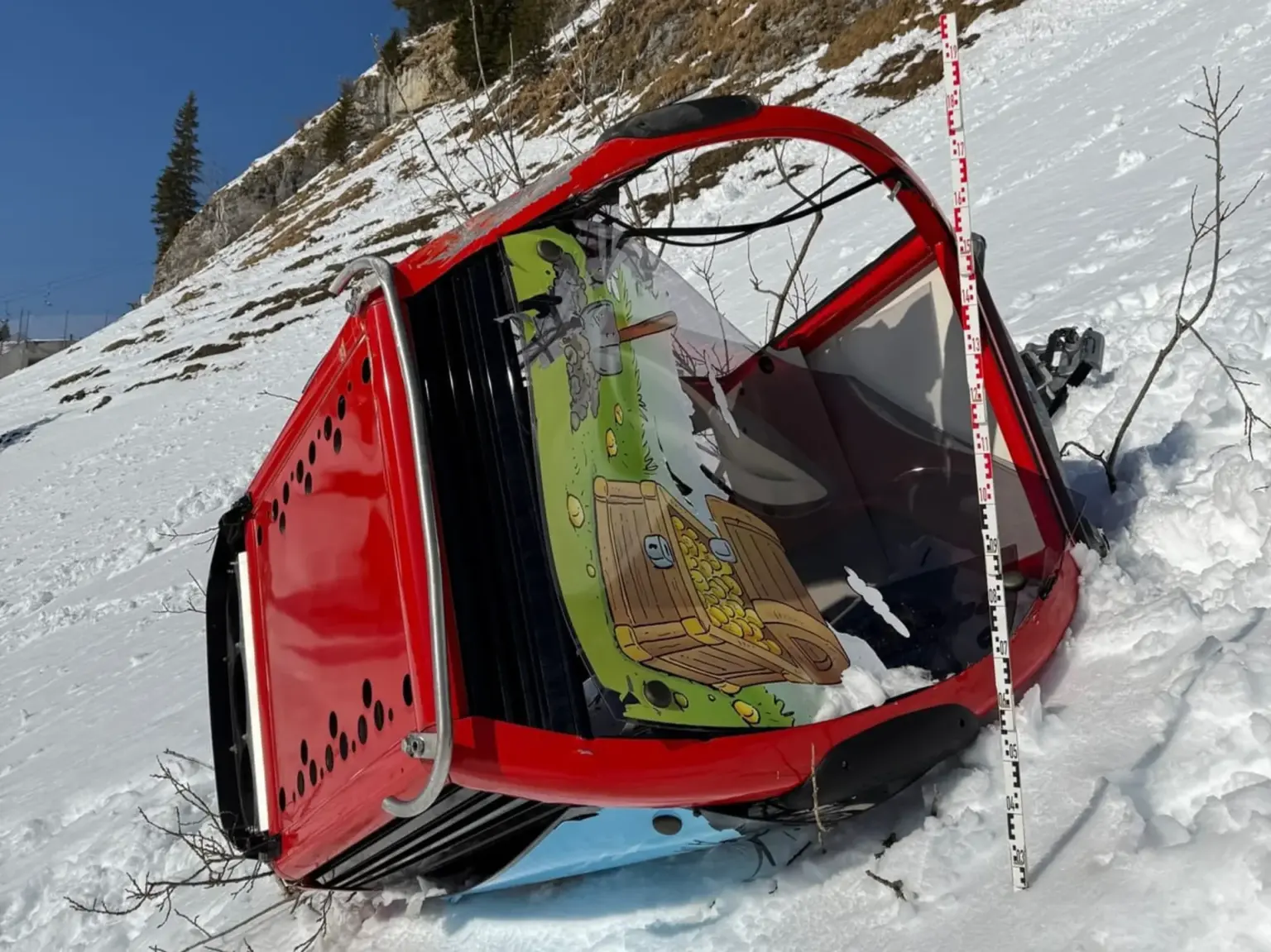
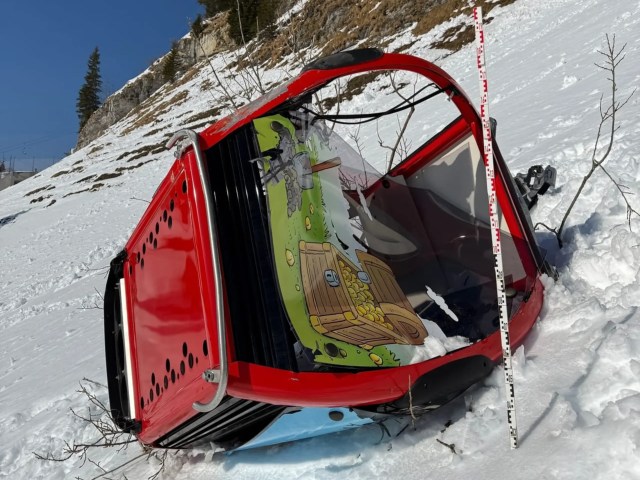
 The gondola cabin crashed to the ground, killing one person. | Image: Kantonspolizei Nidwalden
A powerful and sudden gust of wind is emerging as the most likely cause of the fatal gondola accident on the Titlis Xpress lift, according to early findings from investigators and the system’s manufacturer.
The crash, which occurred shortly before 11 a.m. on Wednesday, March 18, killed a 61-year-old woman who was alone in an eight-person cabin. The gondola detached from the cable, fell onto a snow-covered slope, and rolled several times before coming to a stop. First responders rushed to her aid and tried to resuscitate the woman but all help was in vain.
While the investigation remains ongoing, the manufacturer of the gondola, Doppelmayr Garaventa, now believes the tragic accident was caused by the extreme wind conditions. According to Doppelmayr Garaventa CEO, Arno Inauen, the cabin likely violently swung due to an unexpectedly strong gust of wind. “That movement caused the gondola to collide with a support tower,” CEO Arno Inauen said in initial statements to Swiss media.
Investigators from the Swiss Transportation Safety Investigation Board (SUST) have found physical evidence supporting this theory. Early indications suggest a collision occurred between the gondola’s clamp—the mechanism attaching it to the cable—and the roller assembly on a support tower. This impact appears to have been the decisive moment. After striking the tower, the gondola was torn from the cable, leading to the fatal fall.
According to the resort, weather conditions at the time were sufficiently bad, that resort workers had initiated the closure of the Xpress gondola, when the accident occurred. Wind gusts in the region were recorded at up to 105 km/h (65 mph), with even higher speeds possible at exposed spots. National weather services had already issued wind warnings, and some lift installations in the area had been shut down prior to the crash.
Cable car systems are equipped with wind sensors mounted on towers, transmitting real-time data to operators. Industry guidelines typically trigger a wind warnings at ~40 km/h (25 mph), while an operational alarm is triggered at ~60 km/h (37 mph), often prompting speed reductions or shutdowns. Whether conditions at the exact location of the crash exceeded operational thresholds—and how operators responded—remains a central focus of the investigation. The resort stresses that its staff proceeded correctly.
Both the manufacturer and investigators have emphasized that there is no indication of a mechanical or design flaw. Garaventa stated that the system was in “technically perfect condition” prior to the accident. Similarly, SUST has said it does not suspect a systematic issue with the gondola design, including the clamp mechanism. However, it is possible that the clamp was not closed properly, causing the gondola to come off the cable easier than it normally would have. The gust of wind remains the contributing factor in this scenario.
The Swiss Transportation Safety Investigation Board (SUST) is continuing to analyse wind data from the lift’s sensors, along with operational records and camera footage. A parallel criminal investigation is also underway. A final report will determine whether the accident was solely the result of extreme weather, or if operational decisions played a contributing role.
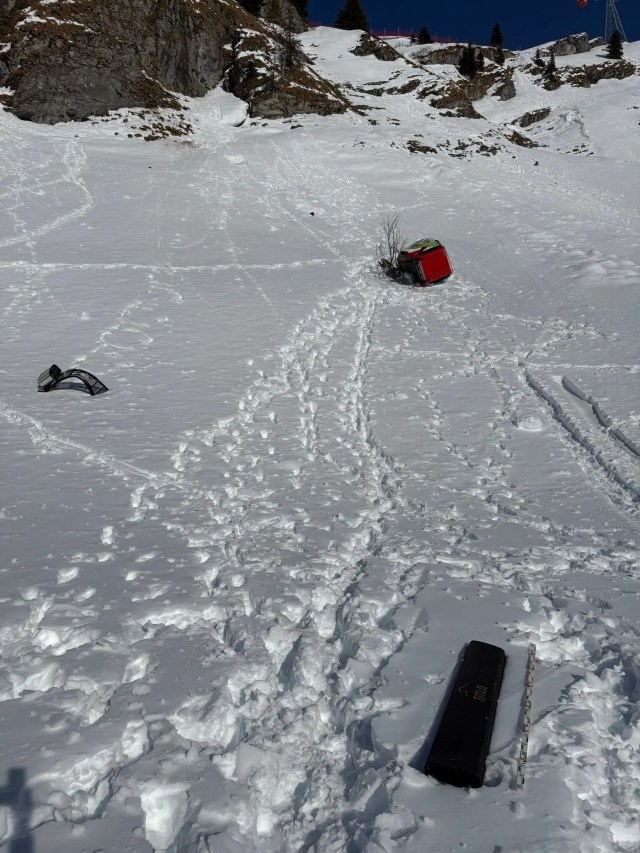 The gondola rolled down the slope, flipping several times, throwing the passenger out mid-fall. | Image: Kantonspolizei Nidwalden