
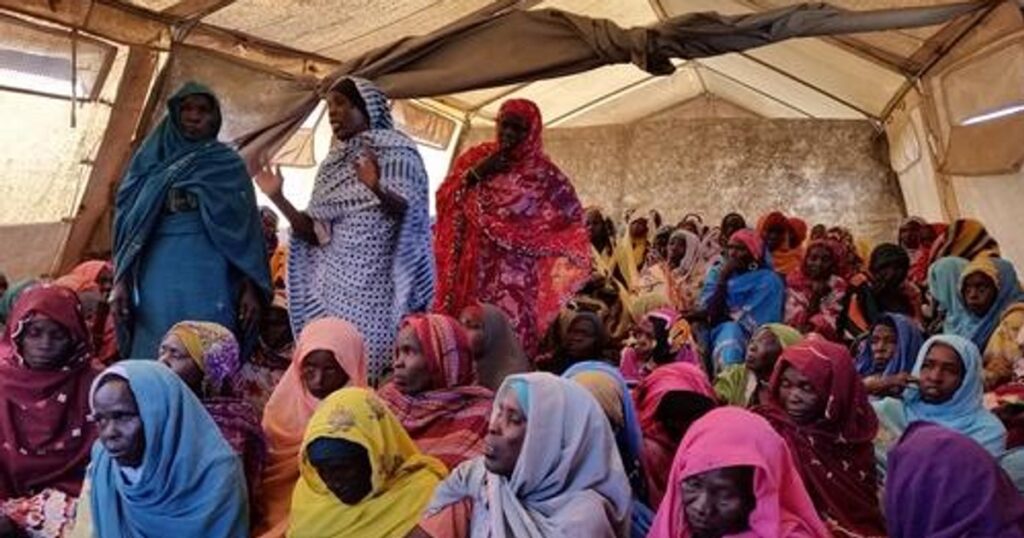
The announcement was made at an international conference in Berlin marking three years since fighting broke out in April 2023 between Sudan’s army and the paramilitary Rapid Support Forces (RSF).
What began as a power struggle has since escalated into a devastating conflict, particularly in the Darfur region, killing tens of thousands of people and forcing about 13 million from their homes.
The United Nations estimates that more than 33 million people now need urgent humanitarian assistance, while over 21 million are facing acute hunger. Famine conditions have persisted in parts of the country since August 2024.
Announcing the funding, Canada’s Foreign Affairs Minister, Anita Anand, warned that the crisis is worsening, with civilians increasingly bearing the brunt of the violence.
“There is credible evidence that starvation is being deliberately used as a method of warfare,” she said.
Of the new package, more than $94 million will go towards humanitarian assistance in 2026, including emergency food, healthcare, shelter and water services for people in Sudan as well as refugees in South Sudan and Chad.
A further $25 million will support development programmes. This includes $18 million to Save the Children Canada to provide education and protection services for more than 60,000 children affected by the war, and $7 million to the United Nations Population Fund (UNFPA) to expand responses to sexual and gender-based violence.
Anand said women and girls in Sudan now face widespread abuse, describing sexual violence as pervasive across conflict-affected areas.
“The people of Sudan deserve more than survival. They deserve a future, one defined by safety, dignity and hope,” she said.
Canada is also providing $1.25 million to support peace and stabilisation efforts, including civilian-led initiatives.
The Berlin conference, co-hosted by Western governments and international organisations, secured billions of dollars in pledges aimed at addressing a widening funding gap for Sudan, partly linked to reductions in US foreign aid.
However, Sudan’s government criticised the meeting, calling it external interference and saying it had not been properly consulted.
Canada said the latest funding builds on more than $220 million already committed since the conflict began, underscoring its position as one of the leading donors to the crisis.
Despite increased pledges, humanitarian agencies warn that access constraints and ongoing fighting continue to limit aid delivery, leaving millions without sufficient food, healthcare or protection.
Diplomatic efforts remain focused on securing a ceasefire, though there has been little sign of a breakthrough as the war enters its fourth year.