
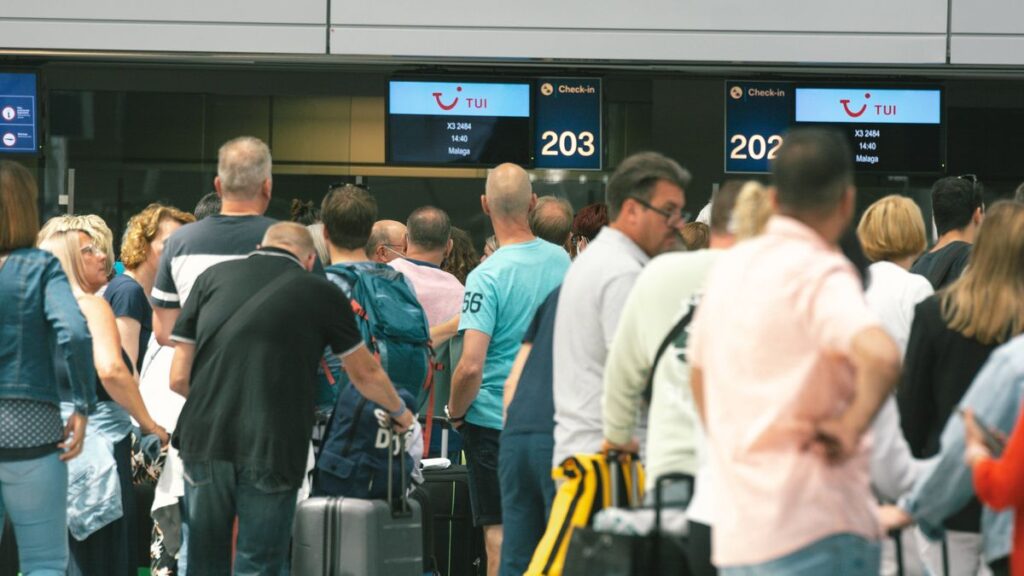
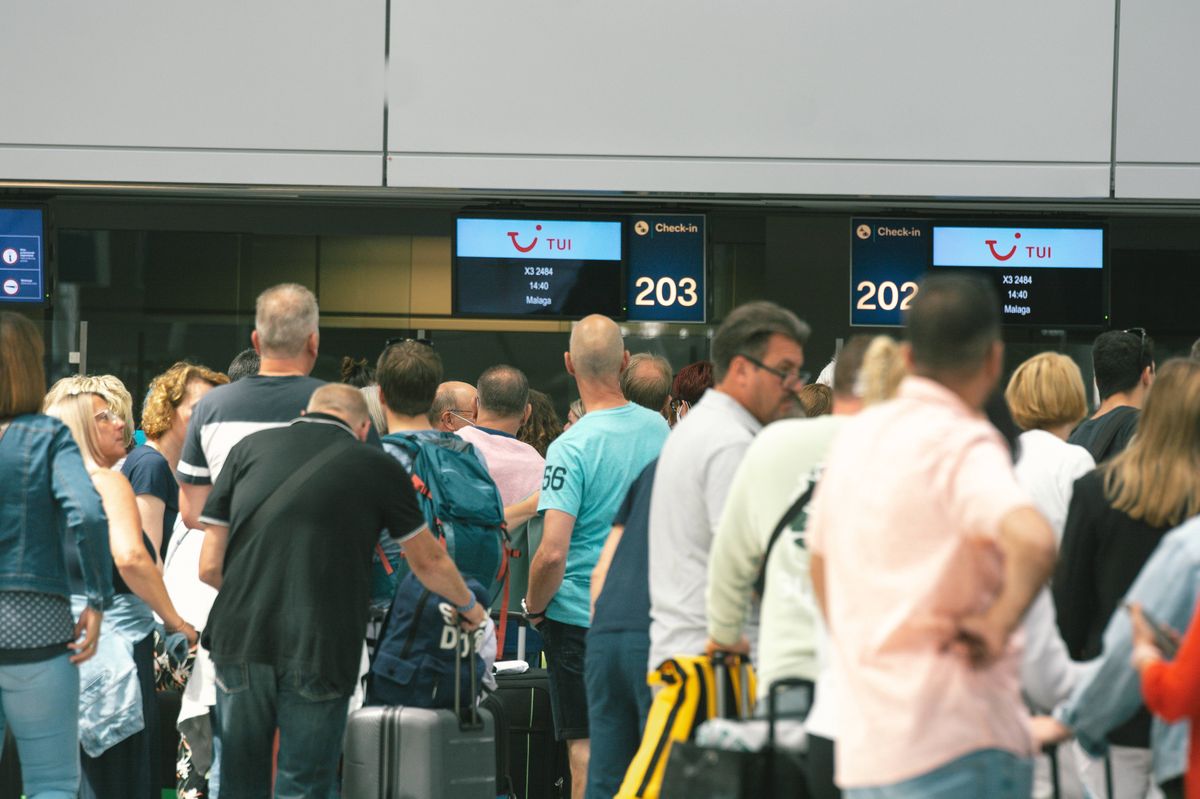
The new EES has caused travel delays for many across Europe(Image: Getty )
Tui has released a new passenger advisory online, outlining an important ‘two to three hours’ guideline the airline has established for travellers flying with checked baggage. Tui ranks among Britain’s leading travel companies and stands as the nation’s biggest tour operator, assisting over six million holidaymakers annually.
Tui’s most recent update comes as numerous passengers travelling to and from Europe have encountered long queues and waiting times at passport control. The European Union’s recently implemented Entry/Exit System (EES) has led to considerable delays at airports across the continent.
The new EES aims to replace manual passport stamping with a more sophisticated biometric registration procedure. Travellers from beyond the EU must register their faces and submit their fingerprints upon their initial entry to the Schengen Area. This first-time registration requires considerably more time than a standard passport stamp, thereby prolonging processing times.
Numerous passengers have been asking airlines online how early they should arrive and when check-in facilities open, expecting lengthy queues at border control. On X, one passenger sought Tui’s guidance on an upcoming journey they have arranged, reports the Mirror.
The passenger, named Sue Cooper, who uses the username @Splott42 on the social media platform, posted: “@TUIUK Good morning. Can you advise what time your bag drops open before a flight? I will be travelling to Corfu next month from Stanstead and this is the first time I have flown with you.”
A Tui spokesperson responded, clarifying the timings. They said: “Good morning Sue, Short and mid-haul flights: Standard check-in opens at least two-and-a-half to three hours before departure. We do not have a night before bag drop at Stansted I am afraid. I hope you have a fab holiday in Corfu. ^Carol.”
The official Tui website states: “The first time you travel under the new system, you may spend a little longer at border control… After checking in your luggage, head straight to border control. During busy times, there might be queues at border control. “
Corfu Airport’s website has published an ‘important announcement’ notice, which reads: “The Entry/Exit System (EES) is being applied at border control points, and waiting times are expected to be longer than usual at arrivals and departures.”
Corfu Airport says waiting times are expected to be longer than usual (stock image)
It adds: “For departures to non-Schengen destinations, passengers are advised to arrive at the airport when check in opens and complete all processing early, respecting the airlines’ boarding instructions, as emigration controls are expected to take longer.”
Other airlines have also been issuing similar alerts for passengers. An update on the easyJet website said: “Airports across Europe may experience longer queues at passport control whilst the new European Entry /Exit System (EES) border checks are being completed. This will mean you may need to have your biometrics taken including your face and fingerprints scanned.”
Meanwhile, Jet2’s website said: “There may be longer wait times than usual when you arrive in destination and before your flight back to the UK. We’re really sorry for any inconvenience this may cause, but unfortunately, this is outside of our control.”
In autumn 2026, the EU is also set to introduce ETIAS, a separate travel authorisation requiring a €7 fee and advance online application. For official updates and comprehensive FAQs, visit the European Union’s EES portal or the UK Government’s guidance page.