
Researchers have identified a previously unknown hillfort at Köstrimägi that stood for a brief period nearly 2,000 years ago.
Its unusual design and short lifespan recast the scale and instability of early fortified sites in the eastern Baltic.
Rings in the ground

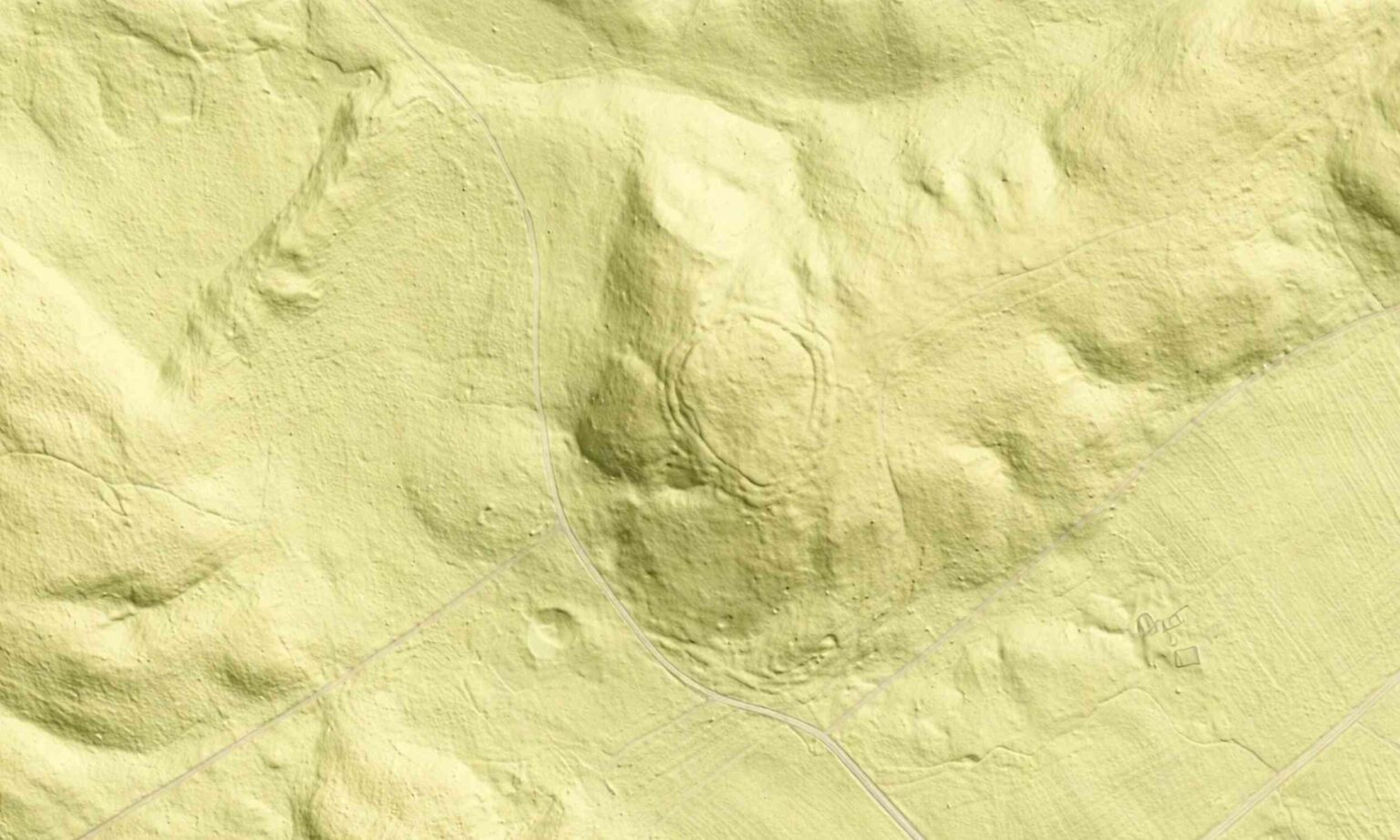
On a wooded ridge near Kambja in southern Estonia, faint circular patterns on a relief map outlined a stronghold beneath trees.
Reading those circles against the slope, Heiki Valk, PhD, at the University of Tartu, tied the rings to an ancient fort. Oral lore had pointed to a fort nearby, but Valk gave the first clear shape to it.
That proof mattered fast because planned gravel work had put the ridge at risk before archaeologists could define its value.
Unusual fort design
Instead of one high wall, the site used several low ramparts and ditches wrapped around a broad inner court.
These layered barriers would have slowed movement uphill, forcing anyone approaching to cross multiple obstacles before reaching the center.
Measured across the court, the enclosure covered about 51,700 square feet (4,800 square meters). Describing its structure, Valk said, “There is a hill, surrounded by ramparts and ditches.”
Multiple rings are rare in Estonia, and that strange layout is why Köstrimägi stood out as soon as researchers mapped it.
Dating a brief stay
Trial trenches along the edges yielded only tiny pottery fragments, burned stone, charcoal, and charred birch bark.
Those scraps proved important because radiocarbon dating – a method used to date once-living material – could pin the site’s short life to a narrow period.
“In total, we conducted three carbon samples and they all fell within the same range,” said Valk.
The overlapping dates ran from 41 B.C. to A.D. 9, making the fort’s existence startlingly short for such a large build.
Signs of destruction
Burned soil and a posthole near the edge show that wooden defenses once stood there and later went up in flames.
Fire alters wood, bark, and soil in lasting ways, leaving blackened layers long after walls and fences disappear.
Because the fort seems brief, that burning reads less like decay and more like a sudden, violent ending.
Given the short occupation, the fire suggests a sudden and possibly violent end rather than gradual abandonment of the site.
Archaeologists cannot identify the attackers, but the evidence points to conflict.
Beyond pure defense
One detail keeps this from being a simple war fort: the easiest approach was not better protected.
That choice weakens a purely defensive reading, because the easy approach does not carry heavier barriers.
Here, the shallow rings may have steered movement or marked space, not merely blocked people from entering.
That possibility widens the story, because power in early communities could work through ceremony as well as defense.
Hints from Latvia
Similar low, ringed forts have been identified farther south in present-day Latvia, not in Estonia’s familiar pattern.
Construction styles can matter because the study links these rings to movement and tension between communities.
That comparison does not prove newcomers built Köstrimägi, but it does pull the hill into a wider Baltic map.
Instead of looking isolated, the fort starts to resemble one small piece of movement and contact.
Life on top
The plateau held little thick occupation soil, which suggests people did not live there continuously for generations.
Archaeologists call that altered ground a cultural layer, soil changed by repeated human activity over time.
Sparse traces at Köstrimägi fit a short, practical stay that may have mixed defense, work, and temporary shelter.
That lighter footprint also explains why deep layers of domestic debris have not turned up there.
Future finds possible
Valuable metal objects probably vanished long ago because metal was scarce enough to salvage, carry away, and reuse.
Buildings leave another kind of record, since postholes, burned floors, and stove stones can stay fixed in place.
Future excavation may therefore reveal houses or work areas inside the enclosure even if no glittering finds appear.
Those quieter traces would show how people arranged authority, storage, and daily tasks within the fort.
Saving the site
Estonia has now given the hill legal protection, blocking the immediate risk that quarrying or development could erase it.
Officials recognized its unique, well-preserved nature and deemed it nationally important enough to enter the country’s monument register.
Protection also buys time, because archaeologists can return only when new questions justify disturbing more of the ground.
For now, leaving much of Köstrimägi untouched keeps the strongest evidence exactly where it survived.
Rewriting early Estonia
Köstrimägi now reads as a large, short-lived stronghold whose odd design, fire damage, and fast abandonment sharpen early Estonia’s story.
More digging may refine that picture, but the hill already shows how much history can stay hidden beneath ordinary woodland.
The study is published in the Arheoloogilised Välitööd Eestis.
—–
Like what you read? Subscribe to our newsletter for engaging articles, exclusive content, and the latest updates.
Check us out on EarthSnap, a free app brought to you by Eric Ralls and Earth.com.
—–