
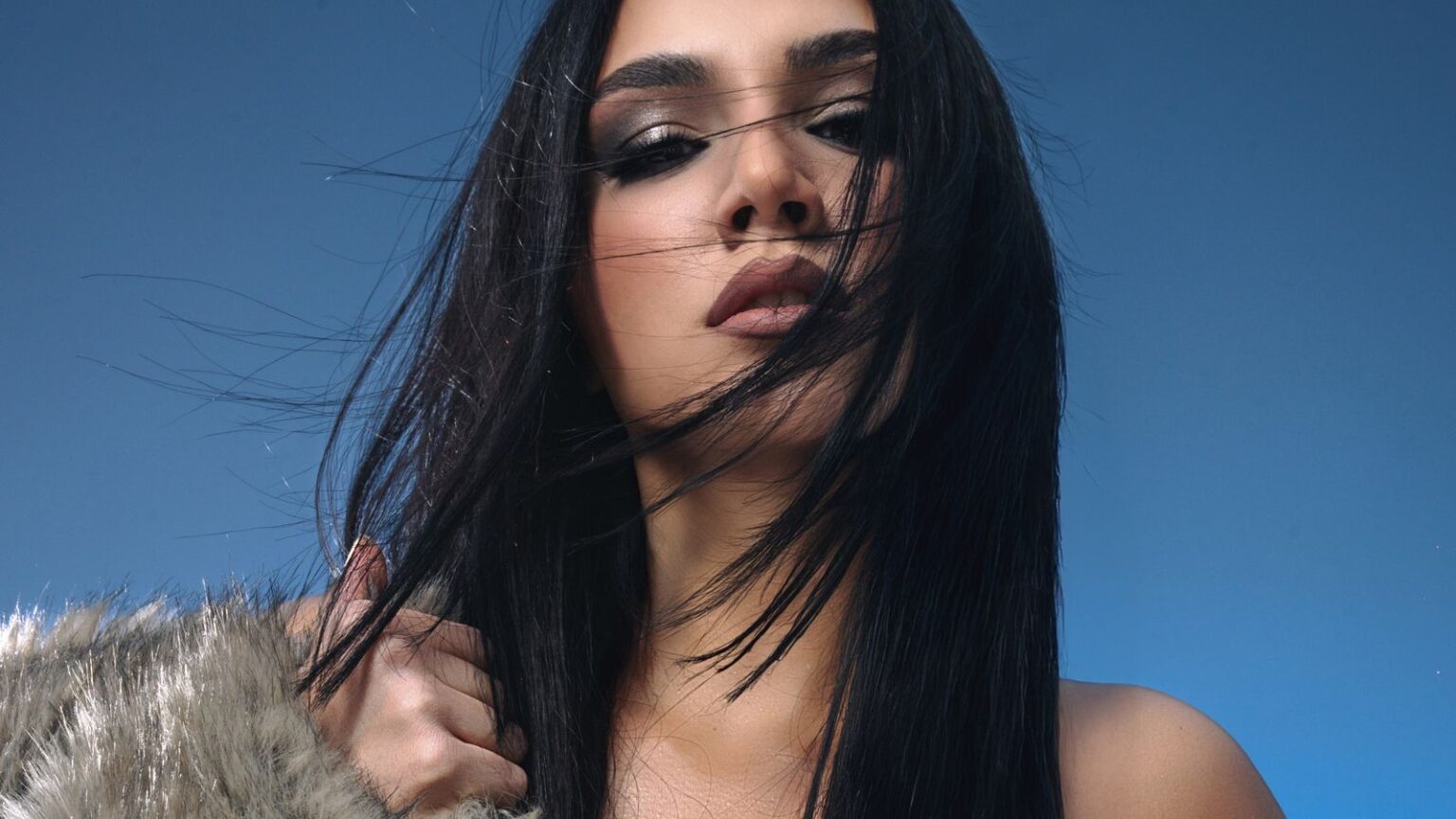
Ahead of the Eurovision Song Contest 2026, we had the opportunity to speak to Tamara Živković from Montenegro.
We spoke to Tamara Živković at Eurovision in Concert this weekend in Amsterdam. We discussed her Montesong 2025 experience compared to the previous year, the female empowerment “Nova Zora” represents, the struggle of smaller delegations at the contest, and her first Eurovision memory.
Due to the unfortunate technical issues that occurred during the interview, we decided to share the transcribed version of the interview.
Interview with Tamara Živković
Interviewer: “Last year you entered Montesong almost by chance as a reserve act, and this year you came back and won the whole selection. What changed between last year and this year, in your mindset, your confidence, or the way you approached the competition?”
“Well everything really, except that I had the same team of Dalibor Ivanković and Boris Subotić, who were with me also the first year. For the second year, because I was directly competing, we really prepared everything on time. We checked every little thing to make sure it will be okay and good and prepared for the performance. You know in the first year, I had some things that I was wan’t thinking about that made some trouble for me on stage. So, we thought about that I don’t think about any problems when I went on stage this year.”
Interviewer: “Nova Zora feels like a very strong female empowerment moment. You released your music video on the 8th of March (International Women’s Day), the video itself portrays women playing more than just the traditional role. Can you tell us more about the reason why you went with the female empowerment topic to Eurovision?”
“Well, Boris who made the song was inspired by my journey, my journey of becoming myself again, exploring my voice to the fullest of my potential and career wise, private life also and he made a song about women who are empowered to break those traditional behaviours.
Especially in the Balkans, women and men don’t have really equal rights, so it is a song about a woman that is angry and being fed up with that and breaking all her chains and being herself, finally speaking up and giving herself a chance.”
Interviewer: “And where did the inspiration for the music video come from, because it’s very situated in this traditional Balkan living room, with women ironing, washing the laundry, cooking, preparing coffee, and then in the end the role changes and the man has to do the same.”
“The story of the video is very simple. We wanted it to be a metaphore in the simple things (ironing, washing the laundry, etc.) that are still the problem. We wanted to explain what the song is about, about breaking those traditional behaviours.”
Interviewer: “Montenegro is a smaller delegation, and we know that smaller delegation have to be more creative at Eurovision. “Nova Zora” is very modern with dancers included in the song, it’s conceptual…. How did you manage to balance the resources with the ambition that this song has?”
“I think that if you have a good idea that everything is possible. You know, that you just have to be creative and my team is. I am really lucky that my team, Boris Subotić and Dalibor Ivanković are working on the performance. The creativity and talent is the key.
Interviewer: “It’s 70 years of Eurovision, 70 year’s of memories, when was your first memory of Eurovision, when did you first come across it?”
“Somebody asked me this, I am not sure. The oldest performance and the song that I remember watching was “Pokušaj” (preceeds to sing the chorus). I was watching it like this (mouth open, shocked look on face), and I was like wow, it was everything.”
Interviewer: “Tamara thank you so much for this interview. Good luck at Eurovision. Enjoy in ont he stage and off the stage. Hvala na svemu.”
We thank Tamara for her time and wish her the best of luck in Vienna this May. Tamara Živković will perform in the eight position in the first semi-final on May 12.
Montenegro debuted at the Eurovision Song Contest as an independent country in 2007, and participated until 2010 when they withdrew for financial reasons. They returned to the contest in 2012, and since then have mostly chosen their entry internally. Montenegro failed to qualify for the grand final until 2014, when Sergej Ćetković and his song “Moj svijet” placed 19th in the final. Their best result came a year later, when Knez performed “Adio” in Vienna. They have never reached the top 10, with Knez reaching 13th out of 27 countries.