
Europe is accelerating the creation of a “new NATO” in case of a possible US withdrawal from the alliance. How might such a military-political reshaping affect stability in the region? Discussions about a “European army” have been ongoing for a long time, but it appears that the war in Iran has become the trigger for this process. Is the level of trust between allies on both sides of the Atlantic no longer what it used to be?
NATO — goodbye?
The Wall Street Journal recently published an article, citing official sources, reporting an intensification of plans to form a “European NATO”.
In essence, this idea is not new. For example, France has previously repeatedly called for the creation of European collective armed forces that are more independent from the United States. Germany, on the contrary, has long opposed such a project. However, after Donald Trump returned to the presidency, he began hinting at the possibility of the United States leaving NATO or, at the very least, reducing American involvement in the alliance.
Since the start of the US–Israeli operation against Iran, divisions among allies have deepened. Support for the United States has primarily come from the “eastern flank” countries — Romania, Greece, Lithuania, Poland, and Germany. At the same time, Spain, France, and Italy have refused to allow their airbases to be used by American aviation. The United Kingdom has provided bases but declined to take part in efforts to unblock the Strait of Hormuz. Türkiye has also not supported the military actions, instead calling for a peaceful resolution of the conflict.
On April 1, Donald Trump stated that he was seriously considering the possibility of the United States leaving NATO after the end of the war with Iran. On the same day, Secretary of State Marco Rubio noted that Washington may reassess the value of the North Atlantic Alliance. And these were not April Fools’ jokes.
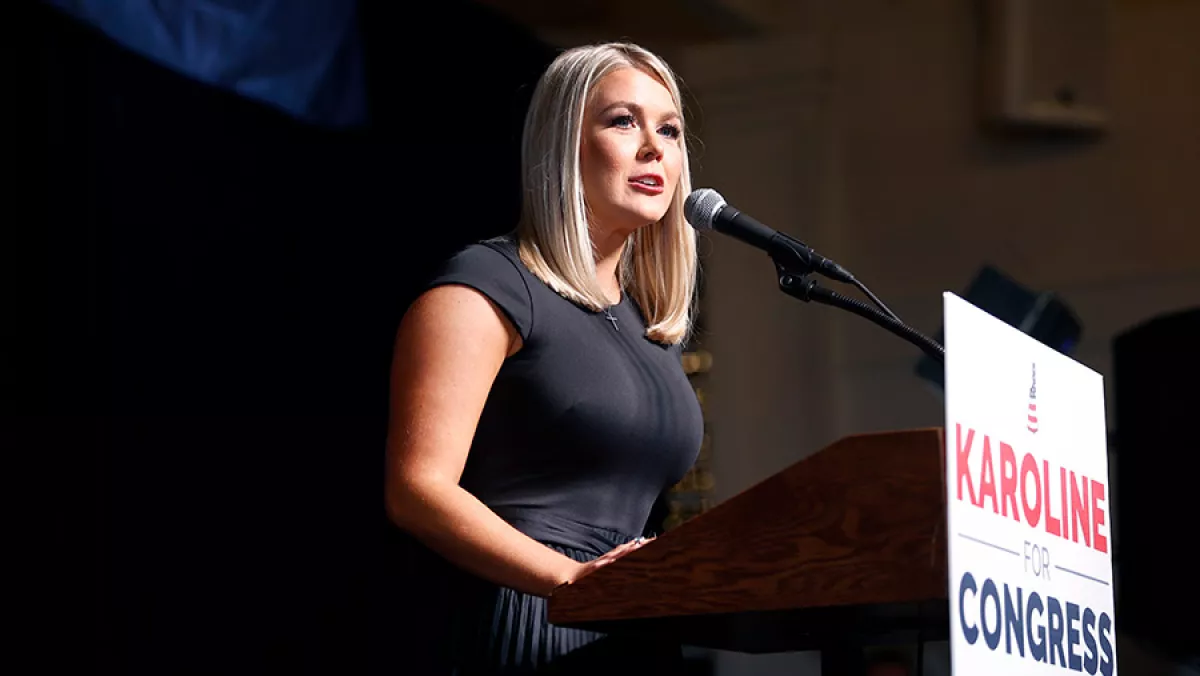
The White House Press Secretary Karoline Leavitt later clarified: “[…] it’s quite sad that NATO turned their backs on the American people over the course of the last six weeks, when it’s the American people who have been funding their defence.”
President Donald Trump, meanwhile, believes the current conflict has its roots in his demands for the United States to take control of Greenland from Denmark.
“It all began with, if you want to know the truth, Greenland. We want Greenland. They don’t want to give it to us. And I said, ‘bye, bye,’” the US president stated on the eve of NATO Secretary General Mark Rutte’s visit to Washington.
Donald Trump has described the alliance as a “paper tiger” and claims that “NATO wasn’t there for us, and they won’t be there for us in the future!” The situation has escalated to the point where the White House is considering options to “punish” NATO allies that most actively refused to support the United States in the Middle East. One of the plans under development involves the withdrawal of American troops from “unreliable” countries and their subsequent redeployment to states more loyal to Washington. The possible dismantling of permanent US bases in Spain and Germany is also not excluded (although Berlin, unlike Madrid, has reportedly provided its facilities, including Ramstein, without obstruction for operations against Iran).
A bloc within the alliance?
Against this backdrop, Germany has finally adopted the concept of a “European pillar of NATO,” and movement in this direction is clearly accelerating. It is emphasised that this is not about replacing NATO with a new bloc, but rather about strengthening its European component. However, it is evident that the North Atlantic Alliance is facing perhaps the most serious challenge in its entire history.
As can be understood, at present the “European NATO” plan remains informal and preliminary, and is being worked out through behind-the-scenes negotiations. The most active participants in these discussions are representatives of France, the United Kingdom, Germany, Poland, and Finland. Even in this format, however, the project retains an Atlantic dimension — Canada is also showing interest in it.

Sweden’s Ambassador to Germany, Veronika Wand-Danielsson, notes: “We are taking precautions and having informal talks with a group of like-minded allies, and will contribute to filling the gap within NATO when so required.”
Finnish President Alexander Stubb, in turn, points out: “A burden shifting from the U.S. toward Europe is ongoing and it will continue…as part of U.S. defense and national security strategy. The most important thing is to understand that it’s taking place and also to do it in a very managed and controllable way, instead of [the U.S.] just quickly pulling out.”
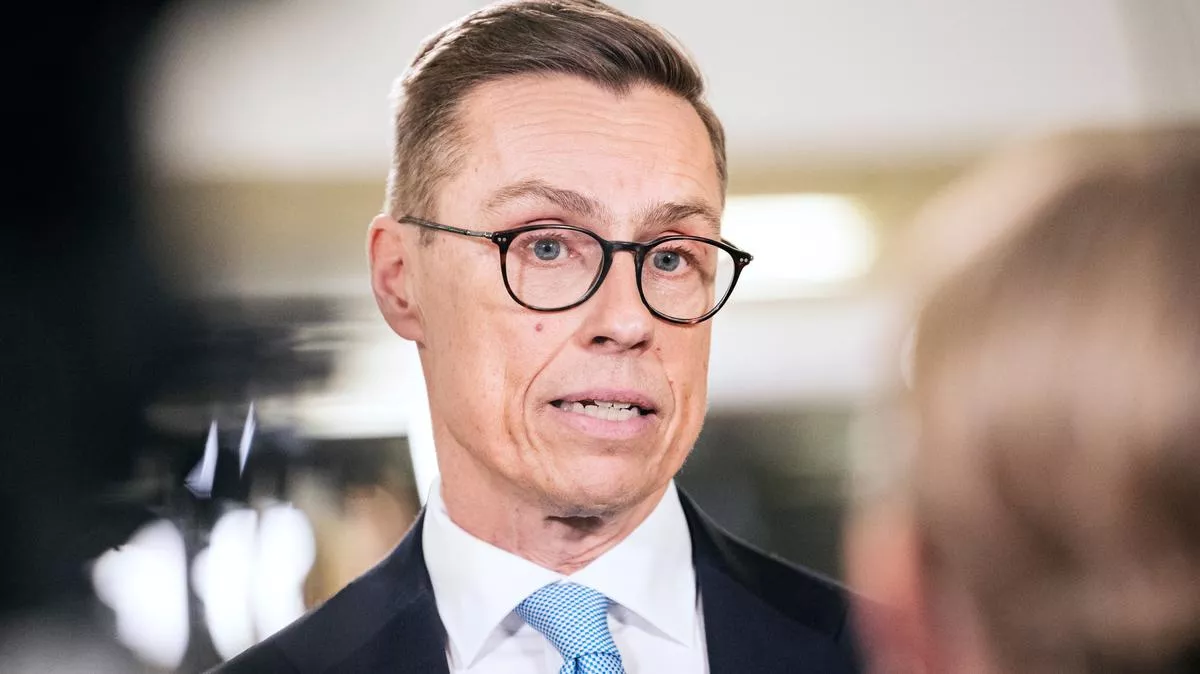
According to available information, Stubb personally contacted Donald Trump after his statements about a possible US withdrawal from NATO.
Among other things, the “EuroNATO” plan envisages an increase in the number of European military personnel in command and control positions within alliance structures, as well as the expansion of Europe’s own arms production and resources.
In parallel, intra-European cooperation in the defence industry is also developing. In particular, this includes cooperation between the United Kingdom and Germany in the development of cruise missiles with enhanced stealth capabilities, as well as hypersonic weapons.
Another item on the agenda under discussion is the introduction of universal conscription — corresponding decisions have already been adopted or are being prepared in several countries, including Germany.
Whoever has the “nuclear button” is the leader?
Be that as it may, a potential US withdrawal from NATO would significantly weaken the alliance. In 2025, the combined military budget of NATO countries reached $1.5 trillion, of which more than $900 billion came from the United States. Of the alliance’s total personnel of around 3.6 million troops, up to 40% are in the US armed forces. Of 11,300 tanks, 4,600 are American, while of 21,000 military aircraft, around 13,000 belong to the US Air Force.
At the same time, in 2025, European NATO members and Canada significantly increased defence spending — by roughly 20%. Europe is also setting itself the goal of expanding production in intelligence capabilities, military space technologies, air mobility, and anti-submarine systems — areas in which it still lags notably behind the United States. In the event of a full “sovereignisation” of NATO’s European component, serious gaps would need to be addressed in satellite constellations, strategic aviation, as well as air and missile defence systems.
The key factor remains nuclear weapons. France and the United Kingdom possess their own nuclear arsenals, but their combined stockpile of around 515 warheads is not comparable to the United States’ approximately 5,177 nuclear warheads. In this context, discussions within the EU increasingly focus on the creation of an independent European nuclear capability based on French assets. According to some reports, there is also covert preparation for developing nuclear programmes in Germany and possibly several other countries.
The question of weapons of mass destruction is directly linked to leadership in a potential “European NATO”. Germany is currently seen as a contender for this role. If Berlin manages either to develop its own nuclear warheads based on its civilian nuclear energy infrastructure, or to reach a joint nuclear arrangement with France, its position would be significantly strengthened. At the same time, in terms of troop numbers, France and Poland both surpass the Bundeswehr.
Nevertheless, Germany’s potential leadership in “Euro-NATO” is primarily driven by its economic dominance within the EU, as well as its central role on the alliance’s eastern flank, oriented toward the deterrence of Russia and Belarus.
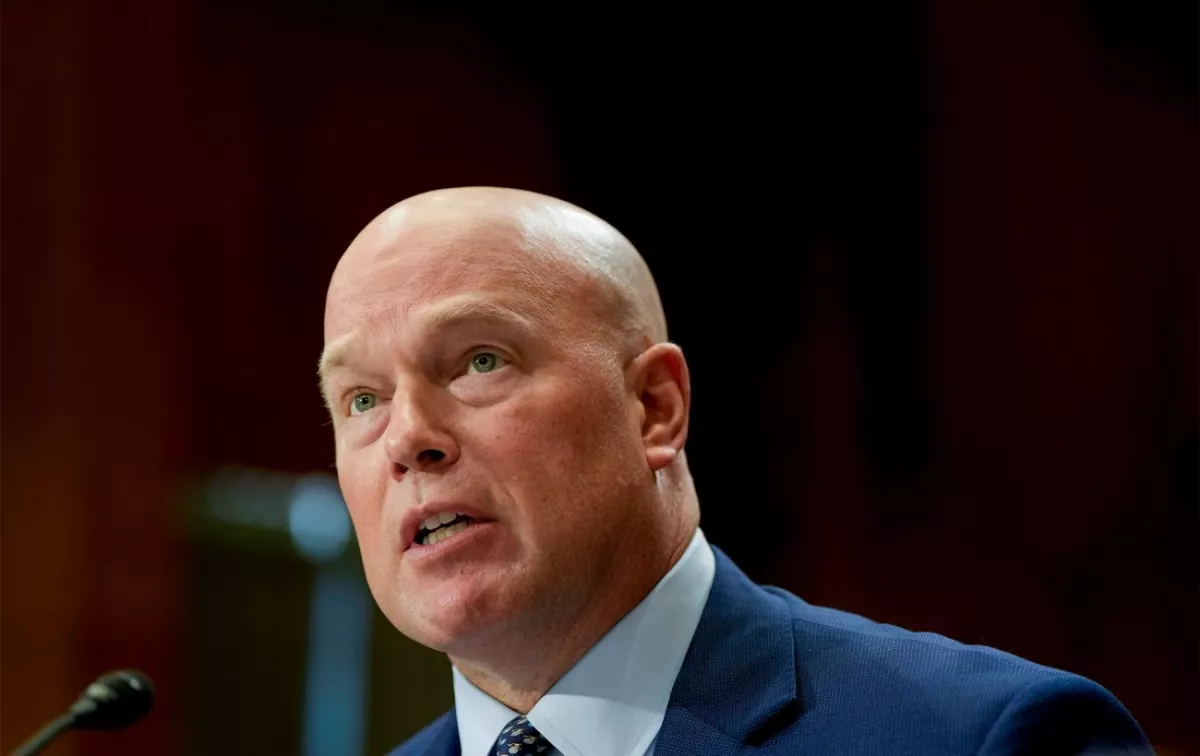
It is noteworthy that as early as November 2025, the US Ambassador to NATO, Matthew Whitaker, stated Washington’s desire to see Germany serve as the commander of allied forces in Europe.
At the same time, “EuroNATO” is not free from internal contradictions from the outset. In particular, Germany’s leadership role is viewed with clear scepticism by Poland. Warsaw is likely to seek a balance between the emerging European bloc and its traditional strategic ties with the United States.
In addition, the possibility is being considered of relocating US troops from Germany and several other countries to more loyal states such as Poland, Romania, Lithuania, and Greece. For the ruling elites of these countries, hosting US bases represents a strategic advantage, but for local populations it could entail significant risks in the event of further escalation — both in the Middle East and in relations with Russia and China. In Greece, for example, protests against regional militarisation have already been recorded.
Against the backdrop of rising military tensions, internal crisis dynamics may also affect the European segment of NATO itself. In Slovenia, for instance, parliamentary speaker Zoran Stevanović has proposed holding a referendum on the country’s withdrawal from the alliance.
Without a doubt, against the backdrop of deepening economic problems and growing competition, contradictions between the United States and its European allies are increasing. However, it is unlikely that the United States will actually leave NATO, just as it is unlikely that the alliance will collapse. More likely, the ongoing transformation is of a managed and coordinated nature on both sides of the Atlantic. It could allow the United States to reallocate resources and reduce involvement in conflicts that do not align with its priorities, while still retaining its role as a strategic arbiter in the event of escalation in Europe.
At the same time, the restructuring itself and the formation of “EuroNATO” — which has a practical focus on preparing for potential military scenarios — as well as the overall militarisation of the continent, point to one conclusion: in the foreseeable future, the security situation in Europe is likely to deteriorate.
On April 16, NATO Secretary General Mark Rutte held a closed-door meeting with European Commission President Ursula von der Leyen. No press briefing followed the meeting…