

We all know our busy, technology-focused lives can cause burnout unless we regularly switch off and swap screen time for blue skies and fresh air. There’s even a term for it, ‘nature deficit disorder’, which sums up the restlessness many of us feel when stuck indoors with artificial lighting for too long. Deep down we know we’re supposed to roam free in the great outdoors, like our ancestors did.
In need of a nature fix, I felt drawn to northern Norway and its Sámi culture. Who are the Sámi, you ask? They are the Indigenous people of Arctic Norway, Sweden and Finland, and Russia’s Kola Peninsula – regions collectively known as Sápmi. Traditionally the Sámi lived as semi-nomadic reindeer herders, and some still do.

Sámi Safari CampFrode Vestad
I’ve always been fascinated by Indigenous cultures, because their traditional ways of living seem far healthier than our modern Western lifestyle. Keen to learn more about this Native people and their wellness philosophy, I booked a three-night stay at Sámi Safari Camp, an off-grid glamping retreat a few hours north of Bodø run by married couple Anna and Ingar Kuoljok. Mixing mindfulness, forest bathing and storytelling, they guide guests through a restorative stay in the wilderness.
How will I cope without Wi-Fi and running water?

Reaching the camp by boatLisa Kjellsson
Having flown to Bodø and travelled by bus to the village of Drag – a three-and-a-half-hour journey through northern Norway’s picturesque coastal landscape – I’m met by Anna, who greets me warmly and zips us across the Tysfjord by speedboat. “This is where we lose phone signal!” she announces as I marvel at the mirror-like fjord in which orcas come to feed in winter.

Inside the LavvoLisa Kjellsson
We step ashore onto the Kuoljoks’ ancestral land, where Ingar meets us and leads the way up to the camp. In a secluded spot in the woods the couple have put up a few lavvo (teepee tents made from sturdy canvas) that each sleeps two in comfy beds made up with fluffy duvets and woolly blankets. It’s nice and toasty inside as the tents are kitted out with both wood and fuel burners, a necessity when temperatures drop at night. Reindeer hides on the wooden floor and a couple of armchairs draped with sheepskin complete my cosy abode.
Any slight trepidations about how I would cope without running water are put to rest as soon as I step inside the bathroom tent. There’s a neat composting toilet, basin with hot and cold water thermoses, and even a battery-driven bucket shower and organic bath products. Phew!
Let the magic of mindfulness begin…
With a maximum of six guests, the setup at Sámi Safari Camp is more intimate than the typical retreat, which for an ambivert like me is a major draw. Getting to know each other over delicious birch sap drinks and blinis in the dining tent, it turns out my lovely hosts and fellow campers are wired the same way. “I love meeting people, but I also need time to myself,” someone says, and we all nod knowingly. Clearly I’m in the company of kindred spirits, and I feel completely at ease as Anna guides us through the first mindfulness ritual, a conscious breathing exercise.
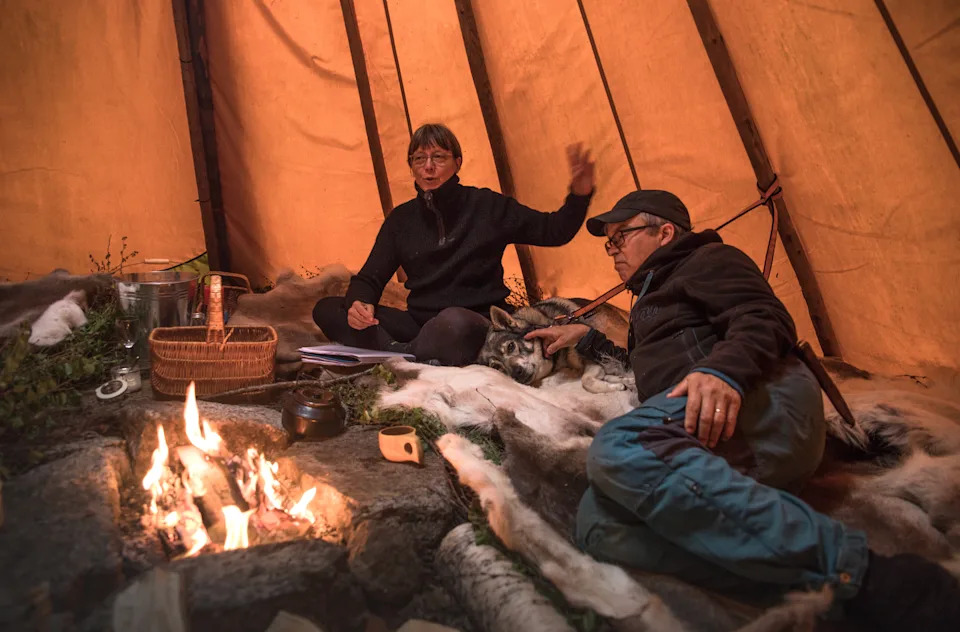
Relaxing around the open fire with Anna and IngarFrode Vestad
Later that evening, relaxing around an open fire in the camp’s traditional lavvo, we repeat the exercise, delving deeper into it. Lying on a reindeer hide with my eyes closed and my hands resting on my stomach, I focus on its gentle rise and fall with each breath. Anna encourages us to notice every sensation, whether we feel warm or cold, or have any aches or tension anywhere. We slowly scan the entire body from top to toe. It’s simple but effective – I can hear soft snoring and begin to feel quite sleepy myself.
Forest bathing, the Nordic way
Wrapped up in bed, I listen out for sounds of the forest – trees rustling in the wind, their branches creaking. A wheezing sound makes my ears prick up. Could it be an animal? There are no wolves or bears here, Anna reassured us, but occasionally wolverines or moose wander into the camp. Of course I’m perfectly safe in my tent, and I soon drift off and sleep soundly through the night.
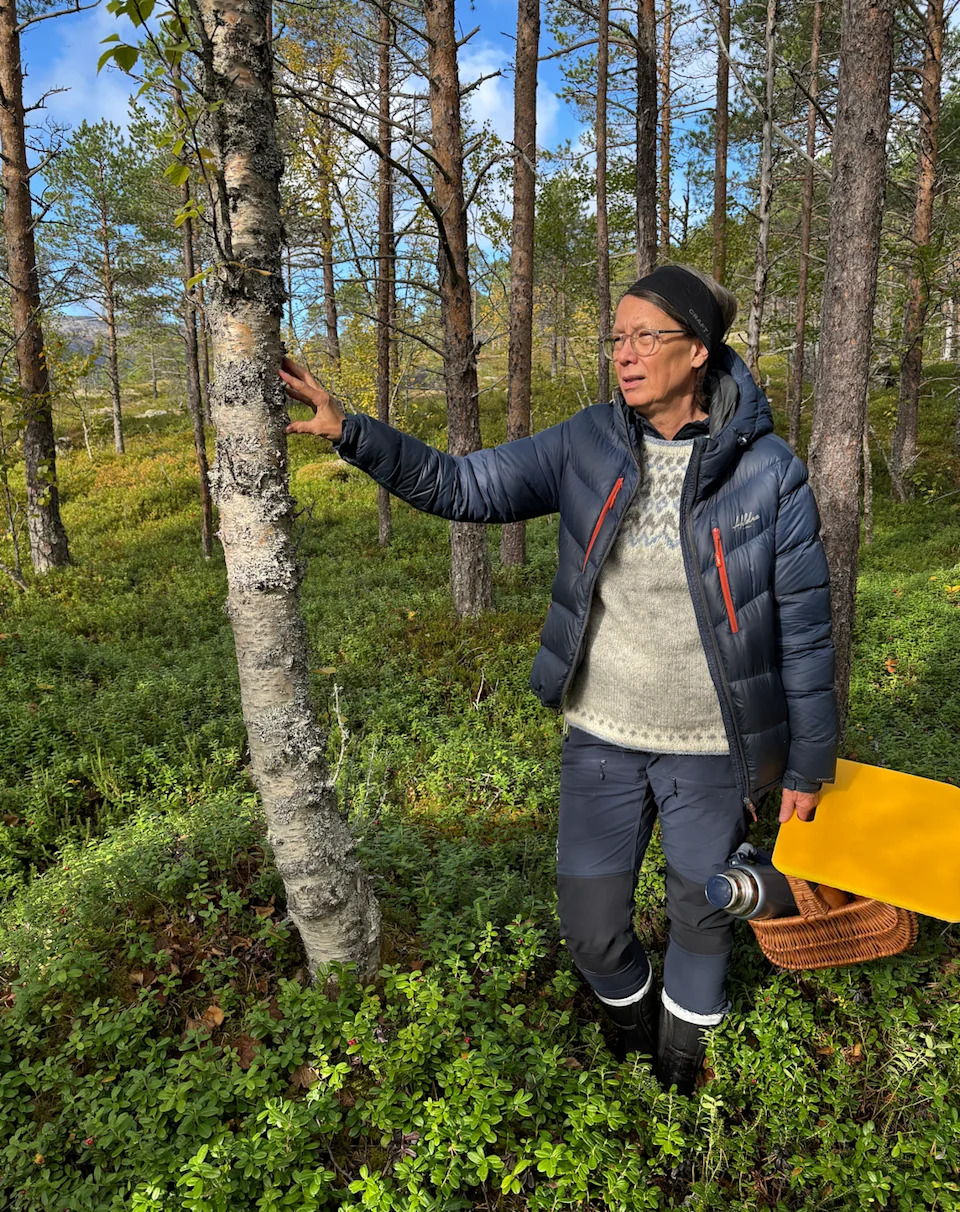
Forest bathing with AnnaLisa Kjellsson
The next morning, we set off on a forest walk, initially in silence to focus on the sensory experience. I fill my lungs with the crisp, clean air and wish I could bottle the fresh scent of pine and dewy moss. “Forest bathing is about letting your senses bathe in everything you see, hear, taste, smell and touch, noticing how it makes you feel – it’s mindfulness in nature,” explains Anna.

Lisa taking in the viewLisa Kjellsson
I feel invigorated, and in awe of the ruggedly beautiful wooded landscape framed by mountains. When we reach a clearing with benches made from fallen tree trunks, we sit down and enjoy a cup of pine needle tea while Anna explains how the pine and birch communicate with each other by emitting pheromones into the atmosphere and via the fungal filaments that connect the roots underground, the ‘wood wide web’. We then meditate among the trees, and it feels like they are watching.
Getting a glimpse of Sámi values and culture
You never know what you’ll come across in the forest. One of our walks takes us to a 300-year-old tiny timber cottage that has been in Ingar’s family for generations. Inside, framed portraits of his relatives dressed in traditional clothing adorn the walls. Spellbound, we listen to stories about their lives, and Anna even sings a traditional jojk, a melodic style of song unique to the Sámi that often describes a family member. This one is about a bear hunter, asking permission to kill his prey. “There are lots of rituals surrounding the bear hunt,” she explains. “It was always considered great honour to kill a bear and it still is today.”

300-year-old timber cottageLisa Kjellsson
Anna originally hails from a Sámi community in Sweden, where her family herds reindeer, while Ingar’s family hasn’t for a few generations. They were both brought up with the same moral compass though, and feel that passing it on is crucial to preserving their culture. “The traditional dress, our language, foods and handicrafts are of course important too, but to us the inner aspects – our values and worldview – are more important,” says Anna.
In addition to teaching these to their son, Alfred, they generously offer insights into the Sámi way of life with their guests through storytelling. Anecdotes about their ancestors, both amusing and heartbreaking, cleverly convey key principles such as respect for all living things, and reciprocity in all relationships. For example, if you catch more fish than you need, you share it with others, who will return the favour.
I’m still reminiscing about the gourmet food
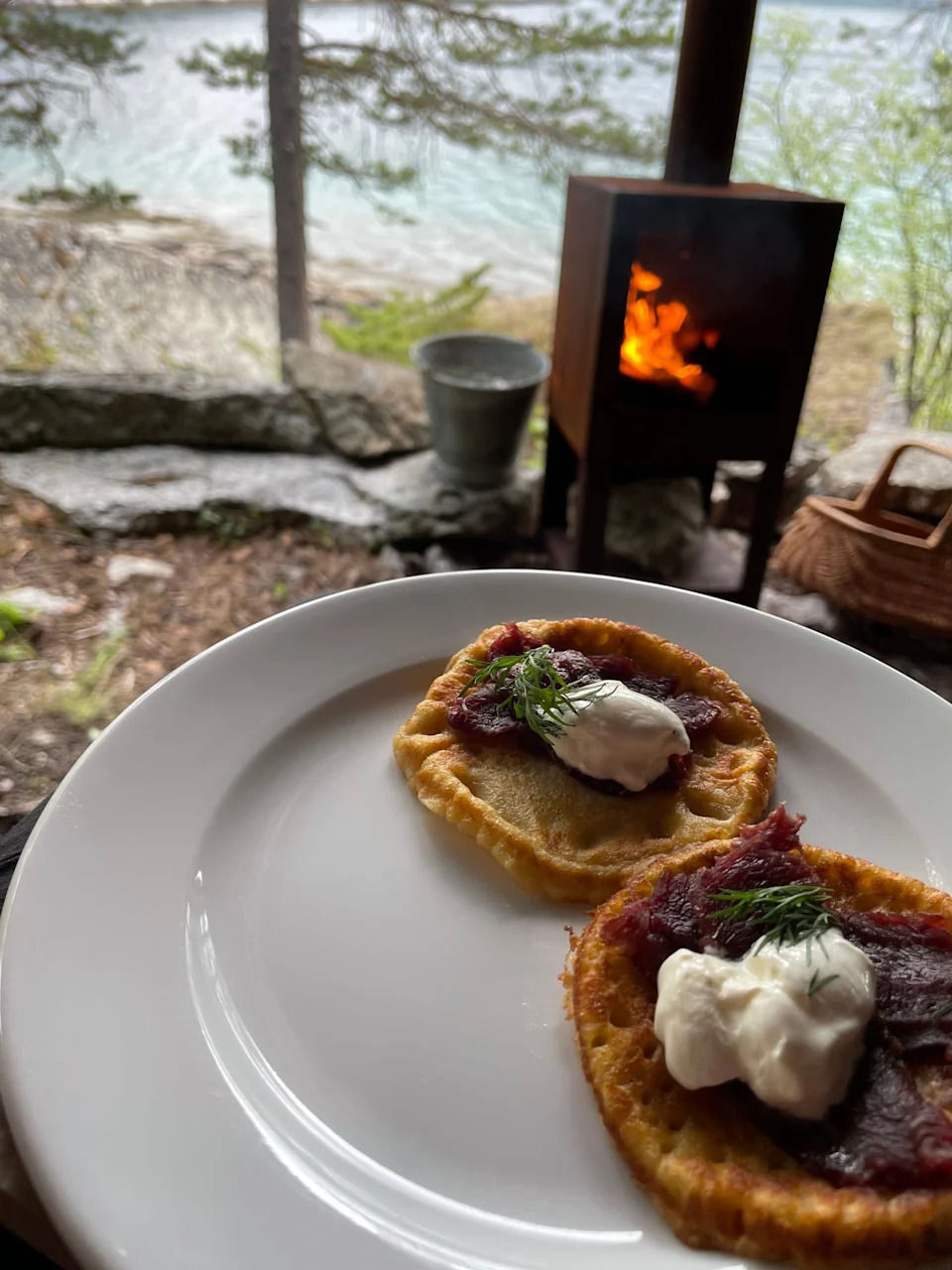
Traditional cuisineNina Smedseng
The food culture is reason enough to visit a Sámi community, and I knew I was in for a treat. Anna is an excellent cook – and skilled hunter – and whips up three-course meals made with foods foraged from the forest and game from her hunts. We tuck into moose burgers topped with goats cheese and garnished with pickled pine shoots, and suovas (smoked reindeer meat) in a creamy chanterelle stew served with tagliatelle and tangy lingonberry jam. Wild salmon is of course also on the menu, and desserts such as lingonberry panna cotta.
Breakfast is an equally indulgent affair. A hamper with a tea thermos and homemade cinnamon buns is delivered to my tent first thing in the morning, a lovely way to start the day. Later, actual breakfast is served in the dining tent – a buffet of sourdough, crispbread, and gáhkku (a thick, soft flatbread), cheeses and cold cuts, eggs, and yoghurt with cloudberries.
Lasting impressions
Gathered around the fire on the last evening, we reflect on the fact that we’ve spent the past few days without all the technology otherwise integral to our lives and not missed it one bit. Without the constant distraction of phone notifications, we all feel more grounded. The challenge now will be to create better habits at home. There are many aspects of the Sámi culture I’d like to adopt, not least living more in tune with nature. I leave Anna and Ingar’s retreat feeling recharged and inspired to move forward in life with renewed intention.
Go there!
The three-night, all-inclusive cultural retreat at Sámi Safari Camp costs from 12,000 NOK per person (approximately £930) and runs Thursday to Sunday between May and October BOOK NOW. Fly to Bodø with Fly SAS or Norwegian and catch a bus to Drag. To plan your trip, visit Nord Norge.
More holiday inspiration here..
Cut through the noise and get practical, expert advice, home workouts, easy nutrition and more direct to your inbox. Sign up to the WOMEN’S HEALTH NEWSLETTER