

Listen to this article
Estimated 4 minutes
The audio version of this article is generated by AI-based technology. Mispronunciations can occur. We are working with our partners to continually review and improve the results.
Growing numbers of wild turkeys in New Brunswick has led the Department of Natural Resources to extend the hunting season for the game bird.
The season begins on the first Monday in May and instead of running for two weeks, it will now run for three,
The department said the decision to add a week was made because of “the growth we are seeing in the population across parts of the province.”
The department said that because of “ongoing monitoring and management efforts,” it’s confident the current wild turkey population can support a longer season.’
More than 4,000 of the birds are estimated to be in New Brunswick, mostly in the western half of the province.
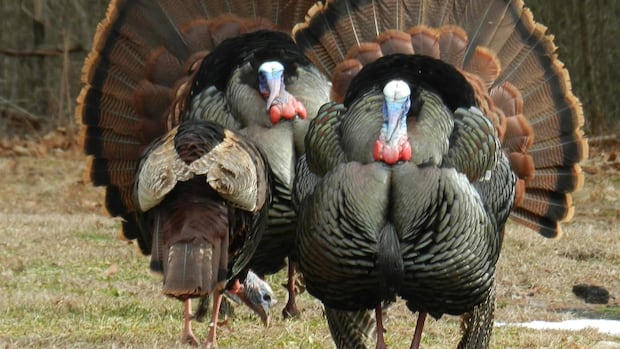
Experts say population has expanded north and east.
Hunters can take one turkey each, and the government website says 748 tags are available for the hunt across the eight open wildlife management zones.
Mike Holland, the president of the Canadian Wild Turkey Federation, said the wild turkey population has expanded because of recent drought conditions.
Holland, the minister of natural resources under the former Progressive Conservative government, started the wild turkey hunt in New Brunswick. It lasted 12 days in 2021, its first year.
“We haven’t seen very difficult winters and if you’ve got a milder winter, of course it’s easier on all animals,” Holland said.
“Wild turkeys forage for their food on the ground level, they can dig surprisingly deep amounts of snow but if there’s less of it, it makes it easier for them to access food.”
Initially, the wild turkey population migrated around 2019 from Maine to southwest and western areas of the province, such as St. Stephen and Woodstock
But today, the birds can be seen as far north as Plaster Rock and as far east as Sussex and Salisbury.

Mike Holland, president of the Canadian Wild Turkey Federation said this expansion has become ‘prolific.’ (CBC News)
“In that short period of time, a couple of decades, they’ve become prolific,” Holland said.
“The habitat that they live in can only sustain a certain amount, and if you start exceeding that, then that’s when you start seeing disease. That’s where you start seeing starvation or you start seeing some adverse effects on the population.”
Garnet McIntosh, a wild turkey hunting guide, said he is also seeing adverse effects from the growing population.
He lives in McAdam and has seen wild turkey in populated areas across southwest New Brunswick.
“There was one young fellow that I met down in St. Stephen, and he had bought a brand new Honda, and the whole side of the car was picked where a turkey, a big Tom, had decided to fight himself,” McIntosh said.
“There’s vehicle accidents constantly with turkeys, I mean a 25-pound bird at 50 miles an hour will do a lot of damage to a vehicle.”
Because of this damage, McIntosh said, he is happy to see the longer hunt.
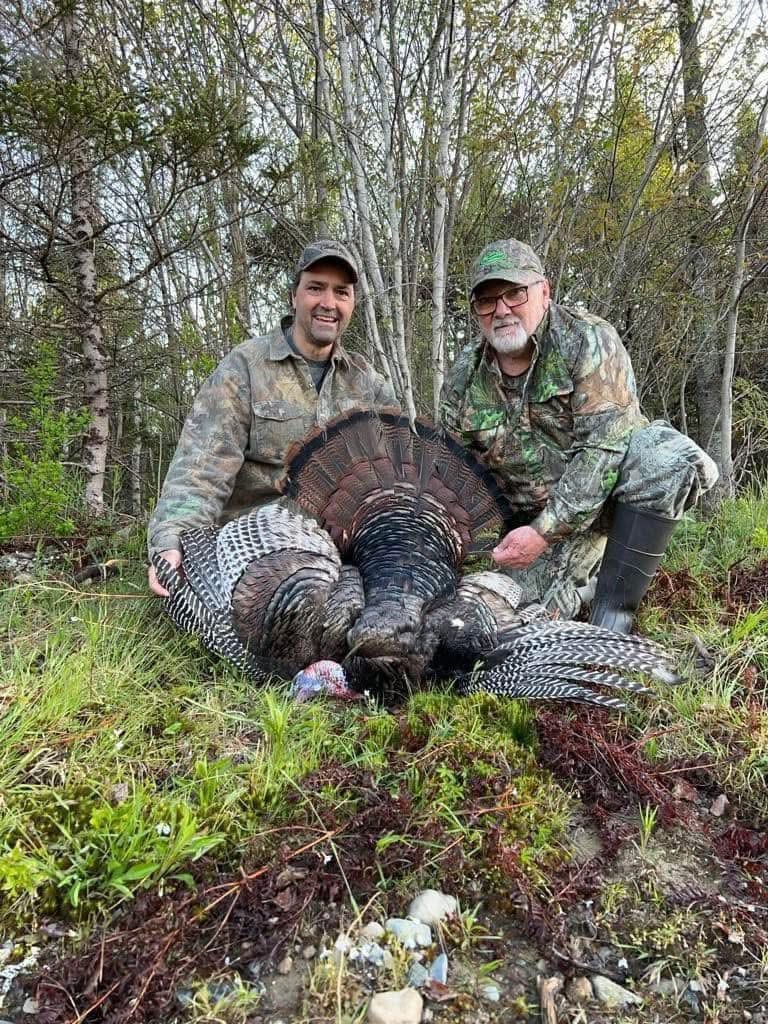
Guide Garnet McIntosh, right, holds a wild turkey he and hunter Steve Hartman tracked and harvested. (Submitted by Garnet McIntosh)
Over his five years as a New Brunswick wild turkey guide, he has watched the population grow.
“Pretty well all the hunters I’ve taken have never hunted turkeys before, and it’s quite a learning experience,” he said.
“Turkeys are very, very social, and they’re almost domesticated at times. They don’t mind being around people, and it’s basically the only animal that’s like that.”
Although they can be a nuisance, McIntosh said the growing population has brought some positive effects in his community.
“They’re doing a great service for this province all by themselves, trying to keep the tick population under control,” he said. “They’ll eat hundreds given the chance.
“And the other thing, I mean, it gives more people the opportunity to hunt, which I think is part of our heritage.”