
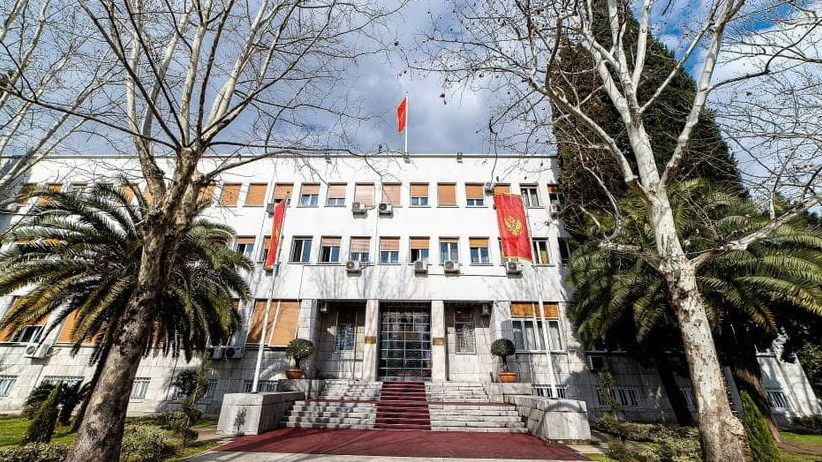
 The parliament building in Podgorica, Montenegro. Photo: Montenegrin Parliament.
Montenegro’s parliament has said it will mark a day of remembrance for victims of genocide in the World War II concentration camps at Jasenovac in Croatia, Mauthausen and Dachau on Tuesday evening with a commemorative event at the Music Centre cultural institution in Podgorica.
The move, led by parliament speaker Andrija Mandic – leader of the conservative nationalist New Serb Democracy party – has been criticised in neighbouring Croatia as politically motivated and divisive, sparking fresh tensions between the two Balkan countries.
The announcement comes less than two years after lawmakers in Montenegro angered Croatia in June 2024 by adopting a resolution on Jasenovac, prompting Zagreb to issue a protest note and cooling bilateral relations.
The 2024 resolution declared the Jasenovac concentration camp – where tens of thousands of Serbs, Jews, Roma and other minorities were murdered by the Croatian Ustasha fascist regime during World War II – as genocidal, and introduced the idea of an annual day of commemoration, but critics saw it as a political stunt.
Croatia’s Foreign Minister, Gordan Grlic Radman, said on Monday that commemorating victims of the Ustasha regime is “necessary and morally binding” and that every year all Croatian institutions “pay homage to the victims of the Ustasha regime during World War II”. But he accused political actors behind the initiative in Montenegro of “not acting sincerely”.
Grlic Radman said that those who initiated the commemorative event have “the least right to speak about Jasenovac”, alleging that they identify with Chetnik heritage and deny the 1995 genocide in Srebrenica, Bosnia and Herzegovina.
Grlic Radman also accused organisers of “primarily acting in the interests of their policies”, which he said aim to “deepen political divisions and strain relations between Montenegro and Croatia”.
Grlic Radman reiterated that Montenegro must confront its own “dark past of the 1990s”, during which Montenegrins “attacked and destroyed Dubrovnik” and “robbed, killed and took the civilian population to the Morinj camp”. Morinj is a coastal village in Montenegro and was used as a detention camp by Montenegrin authorities during Croatia’s war of independence.
Grlic Radman reminded Podgorica that fostering good neighbourly relations is a principle of the European Union, which Podgorica aspires to join.
“Montenegro must prove that it is a true advocate of EU membership,” he stressed.
Adrijan Vuksanovic, a lawmaker and head of the Croatian Civic Initiative in Montenegro, said condemning the Ustasha regime that created Jasenovac was “necessary and morally binding”, but echoed criticism that those promoting the commemoration lack credibility.
He accused organisers of aligning with the policies of Serbian President Aleksandar Vucic and singled out Mandic for backing the event while not marking Montenegro’s own Independence Day.
The 2024 Jasenovac resolution had already triggered a deterioration in relations with Croatia, which subsequently delayed Montenegro’s EU accession talks by blocking the closure of Chapter 31, covering foreign, security and defence policy.
The latest dispute comes after Montenegro’s Foreign Ministry sought to repair relations with Croatia following the 2024 resolution, leading to a recent improvement in ties.
There was no immediate reaction from members of the ruling coalition in Montenegro, including the Coalition for the Future of Montenegro – which includes New Serb Democracy – the Europe Now Movement and the Democrats, all of whom previously backed the 2024 Jasenovac resolution.
Montenegro – the frontrunner in the Balkans for EU integration – and Croatia also have a number of unresolved bilateral issues, including the status of the Prevlaka peninsula, ownership of the Jadran naval training ship and claims related to property and war reparations stemming from the 1990s conflict.