
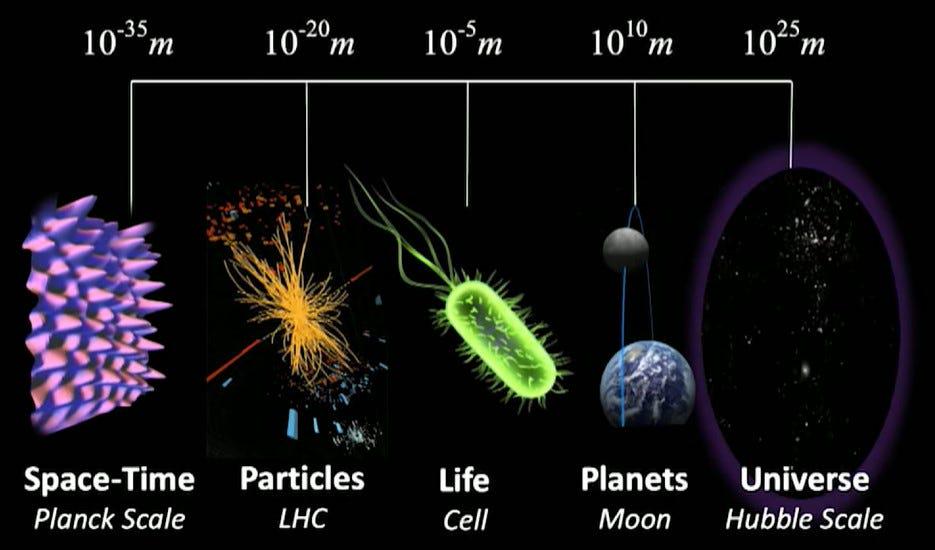
Franco Vazza's 2025 paper is technically impressive, but it does not address the basic premise of Bostrom's Simulation Hypothesis. We just published a response in Frontiers in Physics.
We are likely only decades away from artificial general intelligence, fulldive virtual reality, and potentially digital consciousness. Not to mention the increasing photorealism of graphical interface. Each of these technologies forces the same question the simulation hypothesis has always forced (when you actually read it): what is the minimum computational requirement for genuine subjective experience? Physicists like Vazza calculate the cost of simulating physical reality at the Planck scale and declare the simulation hypothesis impossible (which is NOT what the SH proposes). But if consciousness doesn't require that—if experience is cheaper than physics (which it most certainly would be)—then their calculations are measuring the wrong thing entirely. As we build increasingly convincing simulated worlds and increasingly convincing minds, the gap between 'simulating physics' and 'simulating experience' becomes an evermore central question in philosophy and technology. This piece is an attempt to clarify where that line actually is, as an understanding of Bostrom might actually help us better along the way.
https://simulism.substack.com/p/physicists-keep-refuting-the-wrong?r=22w8nu&utm_campaign=post&utm_medium=web&triedRedirect=true