
Rabat – Austria has expressed backing for Resolution 2797 and support for Morocco’s Autonomy Plan as a solution to the long-standing regional dispute over Western Sahara.
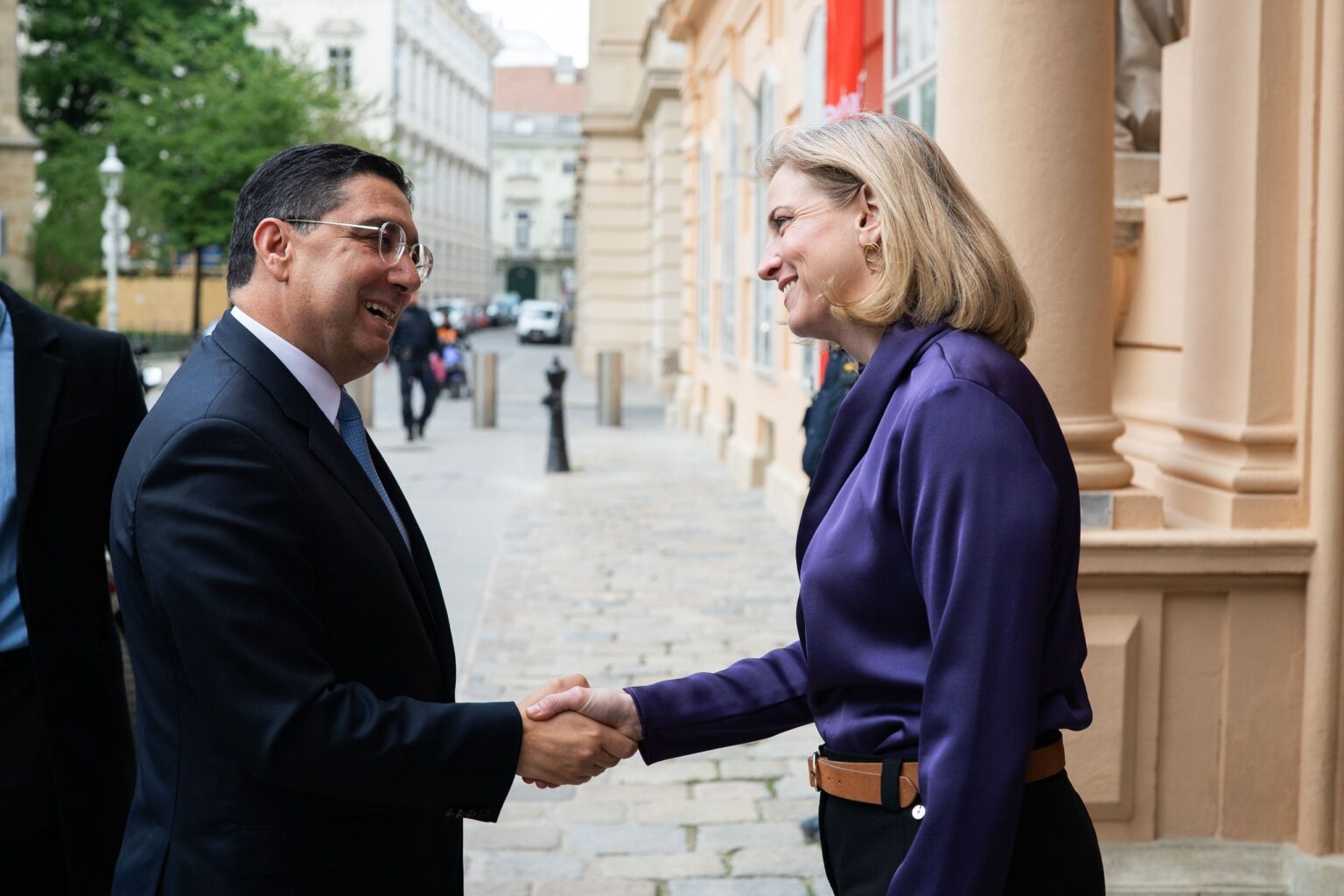
The European country affirmed its position in a joint statement following a meeting between Austria’s Federal Minister for European and International Affairs, Beate Meinl-Reisinger, and Morocco’s Minister of Foreign Affairs Nasser Bourita, who is on a working visit to Austria.
Austria said that “genuine autonomy under Moroccan sovereignty can constitute one of the most viable solutions.”
In addition, it welcomed the adoption of UN Security Council Resolution 2797, which supports the efforts of the UN Secretary-General and his Personal Envoy to facilitate and lead negotiations on the basis of Morocco’s autonomy proposal. The aim, according to the resolution, is to reach a “just, lasting and mutually acceptable political solution” to the regional dispute over the Sahara.
The statement further lauded Morocco’s efforts in detailing how the autonomy initiative could be implemented within the framework of its national sovereignty.
Read also: How Does It Feel to Be Like a Rolling Stone? The Cruel Wake-Up Call
The joint statement reflects a growing international momentum in support of Morocco’s autonomy plan for Western Sahara. In recent years, several countries have voiced support for the Moroccan initiative as the most realistic framework for ending the long-running dispute. This includes increasing diplomatic backing from European, African, and Arab states, as well as growing references within international forums to autonomy as a practical compromise solution.
The adoption of UN Security Council Resolution 2797 in October 2025 marked a further step in this evolving diplomatic trend. The resolution reinforces the central role of the United Nations-led political process while placing greater emphasis on negotiations based on Morocco’s autonomy initiative. It also underlines the need for all parties to engage constructively in order to achieve a durable settlement.
This shift comes amid a broader pattern of changing international positions, with several countries strengthening their support for Morocco’s proposal. At the same time, the positions of Algeria and the Polisario Front are becoming increasingly isolated within the international diplomatic landscape, particularly as more states align themselves with the Moroccan autonomy framework as a realistic basis for negotiations.
Recent developments have also included engagement from African countries in supporting pragmatic solutions to the conflict. This includes Mali, which recently withdrew recognition of Polisario’s self-proclaimed Sahrawi Arab Democratic Republic. The country also officially expressed support for Morocco’s Autonomy Plan.