
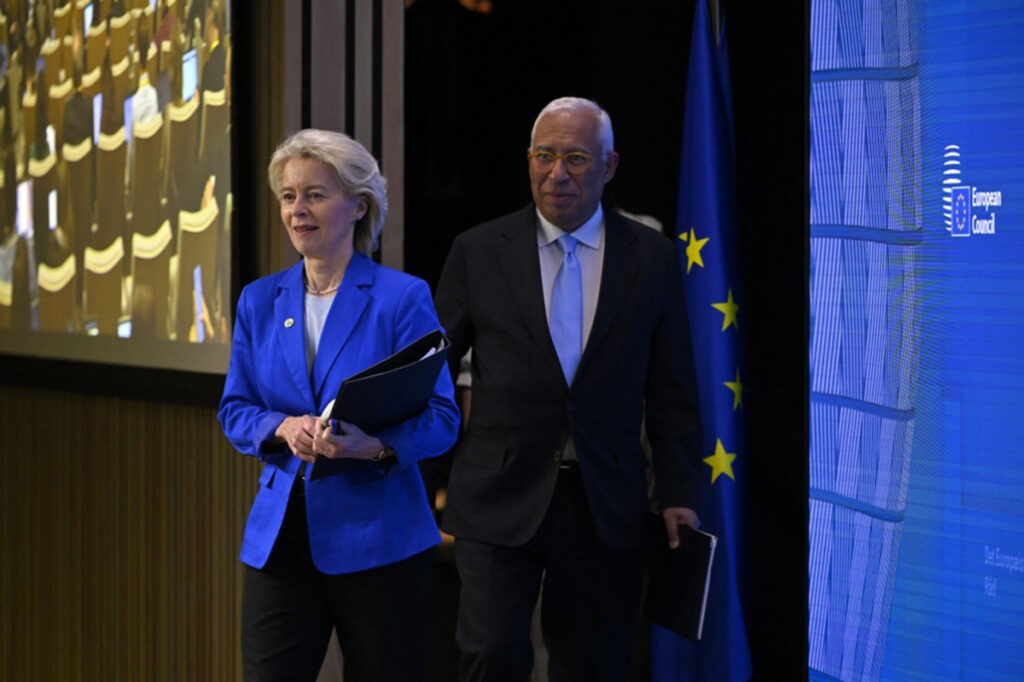
The European Commission is considering suspending funding for the cultural exhibition, the Venice Biennale, after organizers allowed Russia to participate again.
According to The Guardian, a commission spokesperson confirmed that a formal warning letter had been sent to the Biennale’s organizers two weeks ago, stating that a €2 million ($2.3 million) grant could be “suspended or terminated.”
Follow our coverage of the war on the @Kyivpost_official.
The organizers were given 30 days to respond and justify their decision.
“If the reply from the Biennale is not satisfactory, we intend to suspend or terminate the contract,” said European Commission spokesperson Thomas Regnier.
He added that the commission “strongly condemns” the reopening of the Russian pavilion at the high-profile international art exhibition.
The move reflects broader European efforts to isolate Russia culturally and politically following its full-scale invasion of Ukraine.
In March, the European Commission issued a similar warning after organizers decided to allow Russia to participate for the first time since its full-scale invasion of Ukraine.
More than 6,000 artists, academics, curators, journalists and political figures signed an open letter at the time urging the leadership of the Venice Biennale to “address the implications” of allowing Russia to participate.
Italy’s government has also come out in opposition to the Biennale’s move, saying it was made “entirely independently” of Rome’s wishes. Ukraine has also protested the decision.
Other Topics of Interest
Zelensky to Attend EU Leaders’ Cyprus Meeting as €90B Ukraine Loan Takes Center Stage
The gathering, initially expected to center on the war in the Middle East and energy security, has shifted its agenda toward Ukraine support following progress on the proposed loan.
“The Venice Biennale is one of the world’s most authoritative art platforms, and it must not become a stage for whitewashing the war crimes that Russia commits daily against the Ukrainian people and our cultural heritage,” said Andriy Sybiha, Ukraine’s foreign minister, and Tetyana Berezhna, the culture minister, in a statement.
Meanwhile, Mikhail Shvydkoi, Kremlin leader Vladimir Putin’s special representative for international cultural cooperation, described the decision as “further proof that Russian culture is not isolated,” adding that “attempts to silence it – undertaken over the last four years by Western political elites – have failed.”