
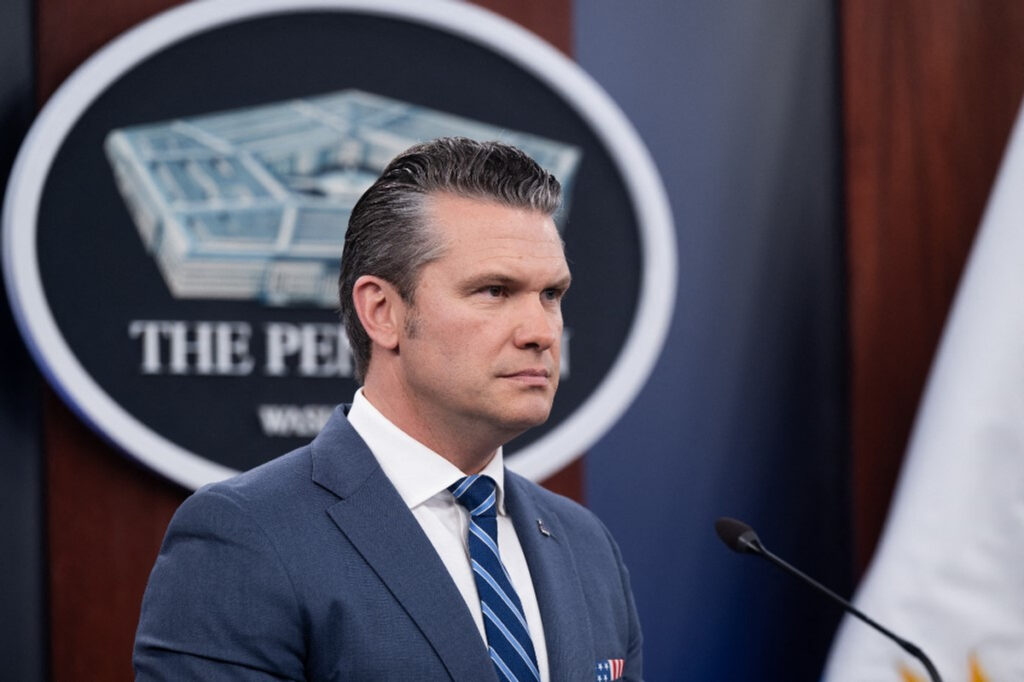
The Pentagon, under Defense Secretary Pete Hegseth, is considering options to punish NATO allies it believes failed to support US operations during the war with Iran, including the possibility of suspending Spain from the alliance, a US official told Reuters.
According to the report published Friday, April 24, an internal Pentagon email outlined a range of potential measures targeting countries that declined to provide access, basing, and overflight rights (ABO) for US military operations.
Follow our coverage of the war on the @Kyivpost_official.
One proposal includes suspending “difficult” allies from key NATO roles or positions, while another suggests reassessing US support for certain European territorial claims.
The email reflects growing frustration within the administration of Donald Trump, who has repeatedly criticized NATO members for failing to back US-led efforts during the conflict.
Trump has publicly questioned the value of the alliance, saying earlier this month he would consider withdrawing from NATO, which legally would require a two-thirds vote in the Senate, and a waiting period of one year – in accordance with the treaty ratified by the Senate in 1949.
“In 2023, Congress enacted a law that prohibits the President from ‘suspending, terminating, denouncing, or withdrawing the United States from the North Atlantic Treaty,’” according to the official US Congress website. At the time, Secretary of State Marco Rubio, as a Senator, “helped lead effort to prevent unilateral withdrawal” as a lead sponsor of the statute, according to a separate report by Reuters.

Other Topics of Interest
Russia Says Foiled Bomb Plot Against Telecoms Officials Amid Online Curbs
The FSB security agency said Friday that a “terrorist attack against Roskomnadzor’s leadership, planned to involve a car bombing with an explosive device, was prevented.”
A Pentagon spokesperson confirmed that officials are reviewing policy options but declined to comment on internal deliberations.
“As President Trump has said, despite everything that the United States has done for our NATO allies, they were not there for us,” spokesperson Kingsley Wilson said, adding that the Defense Department is working to ensure allies “do their part.”
Spain has been a particular point of contention, as its government refused to allow US forces to use its bases or airspace for strikes on Iran.
While the proposals are still under discussion and no decisions have been announced, analysts say the debate highlights deepening divisions within NATO and within the US amid the ongoing Middle East conflict.
Tensions within NATO have intensified since the start of the US-Israel war with Iran in late February, particularly over the use of European bases and naval support in the Persian Gulf.
Several European countries, including the UK and France, have argued that directly supporting US military operations would risk drawing them into a broader war, though they have signaled willingness to assist with securing maritime routes following a ceasefire.
The dispute has raised broader concerns about the future of NATO and the reliability of US security guarantees for Europe.
On April 18, Trump launched a fresh attack on NATO during a Turning Point Action event in Arizona, accusing the alliance of failing to support the US and Israel in the conflict against Iran.
Addressing a supportive crowd that booed at the mention of the North Atlantic Alliance, Trump declared that NATO proved to be “absolutely useless when we needed them.” He compared the alliance’s current stance to a donor attempting to contribute to a political campaign after the election has already been won. “Campaign contributions after I won don’t count,” Trump said. “And NATO, after we won, that doesn’t count either.”
NATO Secretary General Mark Rutte previously attempted to soften Trump’s stance by highlighting European contributions to logistics and overflights, but the White House maintains that the alliance “turned its back on the American people.”