
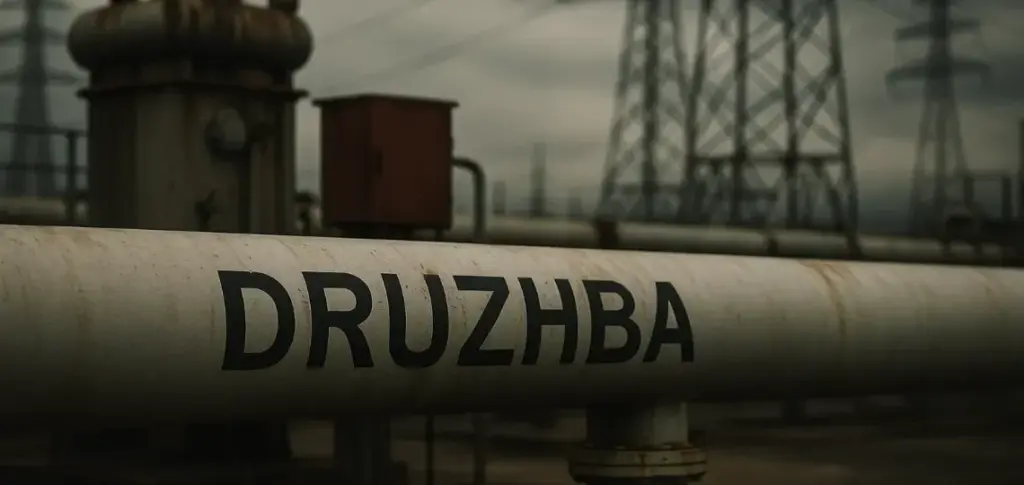
Hungary and Slovakia typically import around 100,000 barrels of Russian crude per day each via Druzhba, a volume representing the near entirety of their oil imports, according to estimates from DNB Carnegie analysts. These volumes remain small compared to the barrels affected by the paralysis of the Strait of Hormuz and do not influence oil prices. Since the start of the war in Ukraine, deliveries through the pipeline to European Union (EU) member states have fallen from roughly 750,000 to 200,000 barrels per day following the EU’s embargo on Russian oil. Budapest and Bratislava remain the only member states benefiting from an exemption, as the United States also extends the suspension of its own sanctions on Russian and Iranian crude. Druzhba also supplies Belarus at roughly 300,000 barrels per day, according to the same estimates.
The pipeline’s outage triggered sharp political tensions. Hungarian Prime Minister Viktor Orban — defeated in legislative elections on April 12 — accused Kyiv of deliberately delaying repairs to the damaged section, blocking in retaliation a 90-billion-euro EU loan to Ukraine. Slovakia for its part threatened to block Brussels from adopting its next package of sanctions against Moscow.
Kazakh Transit to Germany, a New Source of Uncertainty
Beyond Russian crude, approximately 40,000 barrels per day from Kazakhstan also transited through Druzhba to Germany in late 2025, according to DNB Carnegie. Russia announced it would halt deliveries of Kazakh oil via the pipeline as of May 1, cutting off an additional supply flow to Berlin.
This disruption “would particularly affect the Schwedt refinery, which produces petroleum derivatives such as gasoline, diesel and kerosene for the greater Berlin area,” according to Carsten Fritsch of Commerzbank. “So far, oil deliveries from Kazakhstan have accounted for 17% of the refinery’s annual processing capacity,” he added. Compensating for these volumes would prove difficult given the energy crisis caused by the conflict in the Middle East, the analyst said.