

Listen to this article
Estimated 5 minutes
The audio version of this article is generated by AI-based technology. Mispronunciations can occur. We are working with our partners to continually review and improve the results.
There was a point in time, not so very long ago, when Lithuania was considered the testing ground for a new kind of modern warfare — economic warfare.
Today we call it economic coercion, a concept Canadians have become all too familiar with, whether we’re talking about trade and tariff threats from the Trump administration, or targeted trade restrictions from China.
U.S. President Donald Trump threatened last year to use economic coercion to force Canada to become the 51st state.
That kind of pressure is nothing new to the government in Vilnius, Lithuania’s capital.
Starting more than a decade ago, Lithuania faced intense economic coercion from both Russia and China, prompting the U.S.-based Hudson Institute in 2021 to describe the country as the canary in the coal mine of the world order.
At the time, Edvinas Grikšas, Lithuania’s current minister of economy and innovation, was the head of policy in the department he now leads. This week he was in Canada, where he was slated to meet with International Trade Minister Maninder Sidhu.
Ostensibly, his mission was to open doors for investment and economic co-operation, but the Baltic nation’s experience and response to the bullying has proven to be a hopeful, if cautionary tale.
“We know very well that diversification is always a very important part. You can’t count on one or two or three international partners” for trade and investment, Grikšas told CBC News in an interview.
“You can’t depend on several countries, actually. You have to help your companies, your businesses to export to more countries to have more [economic] ties.”
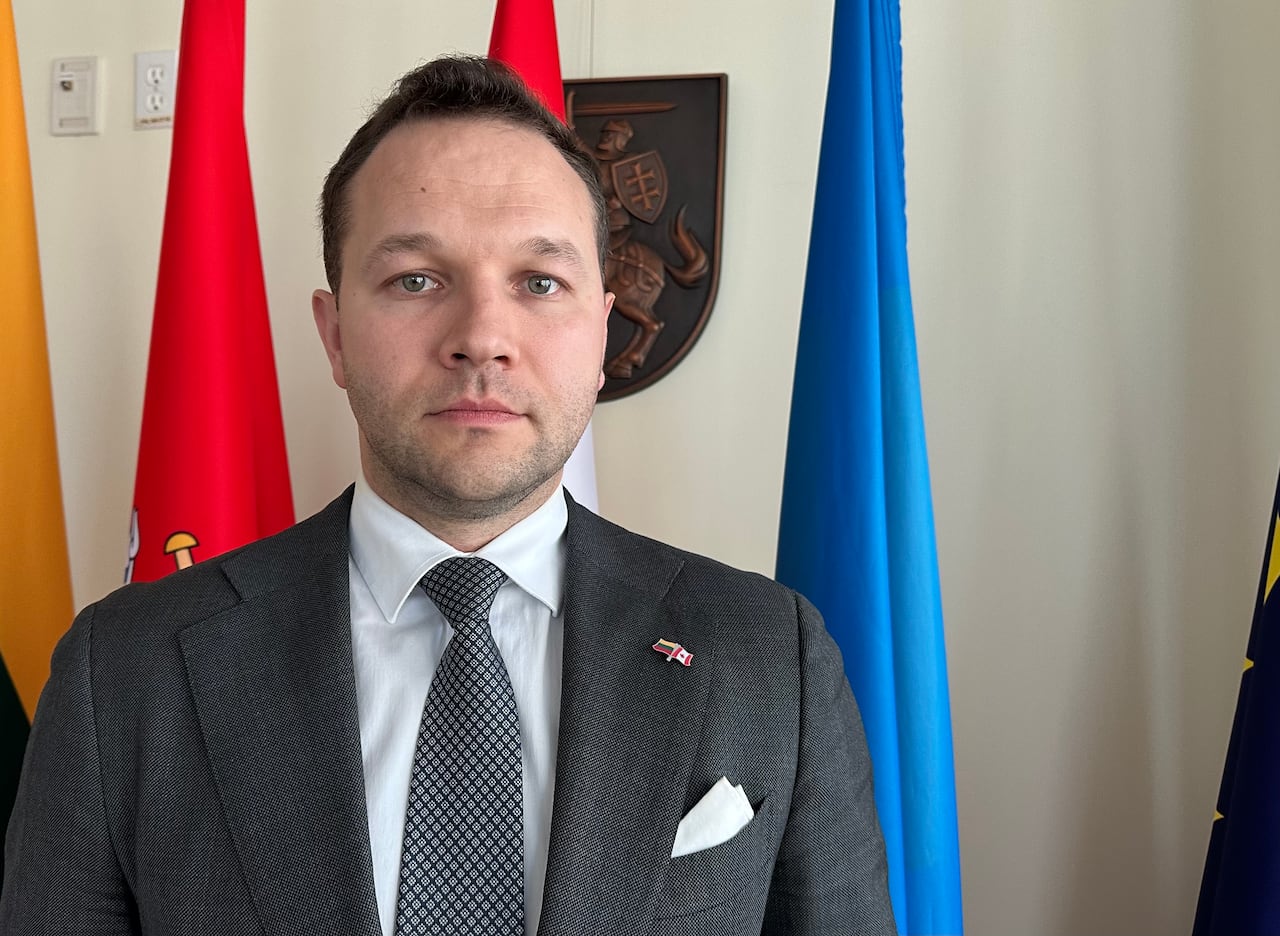
Edvinas Grikšas, Lithuania’s minister of economy and innovation, in Ottawa on Thursday. (Murray Brewster/CBC)
In 2022, Lithuania drew up a list of more than two dozen countries including Canada to target for economic diversification.
The result has been one of the most robust, resilient economies in the European Union, with gross domestic product growth of 2.9 per cent last year — almost double the rest of the continent, and more than Canada’s 1.7 per cent.
Much of that has been driven by the country’s investment in the defence and dual-use technology sectors.
If that sounds familiar, it’s because under Prime Minister Mark Carney, Canada has embarked on a similar approach with its recent defence industrial strategy.
Lithuania is one of the top defence spenders in NATO, with an estimated four per cent of GDP going into its military.
But it’s the flip side of the equation — the speed at which the Baltic nation has cut ties with Russia and responded to Chinese coercion — that’s worthy of note.
Russia often used “contract disagreements” as a cover for geopolitical coercion and energy supply manipulations in the Baltic. Russia’s state-owned multinational energy corporation Gazprom often provided natural gas discounts to “friendly” transit states while raising prices for those seeking Western integration.
Building economic resilience
For Grikšas, everything is seen through the lens of economic resilience, especially after China tried in 2021 to isolate Lithuania and push it out of global supply chains in response to Vilnius allowing Taiwan to set up a representative office.
The Center for Strategic and International Studies in Washington described Lithuania in 2022 as a “textbook case” of how authoritarian states use disproportionate economic pressure for political ends.
Within months of Beijing’s effective trade embargo, Lithuania executed a comprehensive de-coupling strategy.
It is, without question, easier to do in an economy of $95.2 billion per year, but the country made targeted investments that have now begun to pay dividends.
Canada has recently warmed relations with China as a hedge against the erratic deal-no-deal approach of the Trump administration.
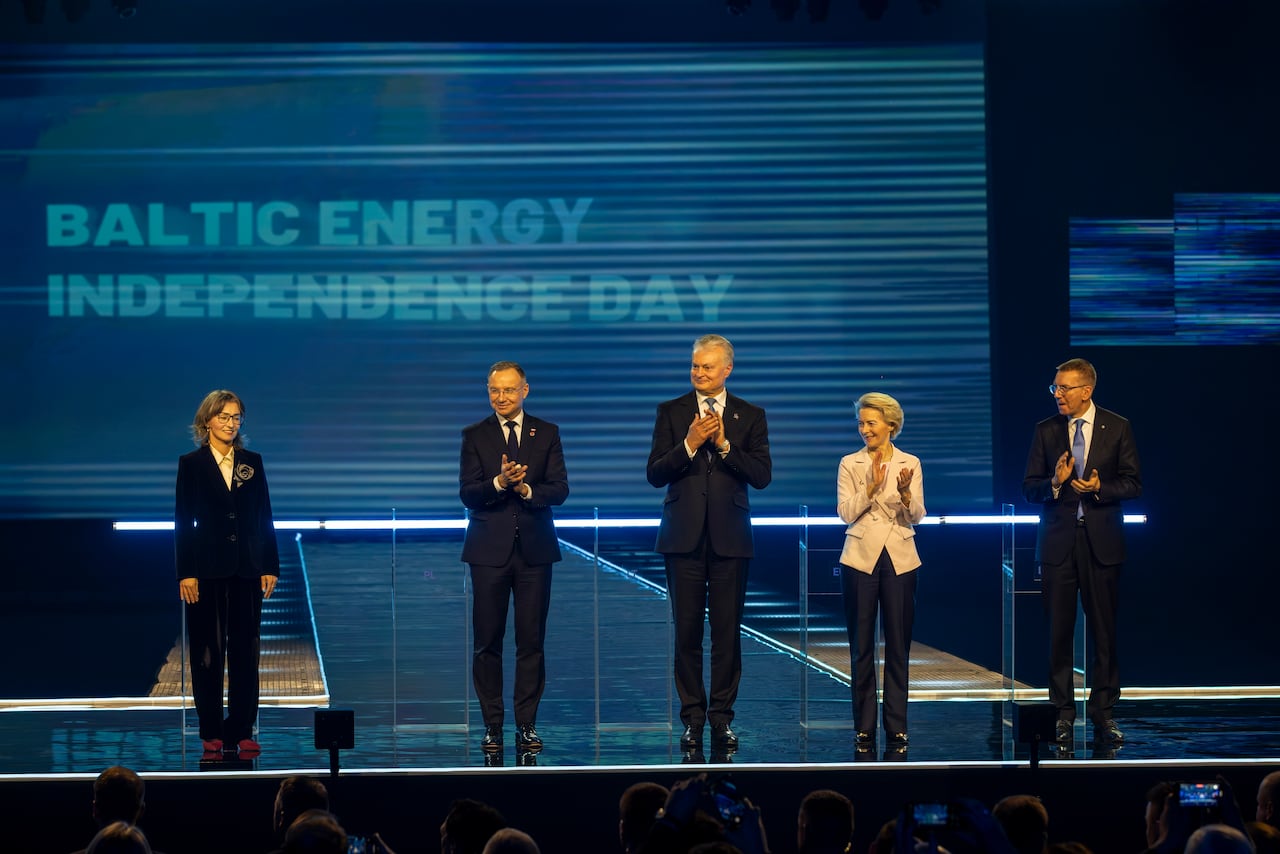
European leaders including Lithuanian President Gitanas Nauseda, third from left, applaud during a ceremony marking the synchronization of the Baltic states with the EU electrical system in Vilnius on Feb. 9, 2025. (Mindaugas Kulbis/The Associated Press)
Lithuania also moved aggressively over several years — faster than much of the rest of Europe — to break its reliance on Russian energy
In April 2022, Lithuania became the first EU country to entirely suspend Russian gas imports following the invasion of Ukraine. In February 2025, the Baltic states successfully synchronized their electrical systems with continental Europe, cutting the final energy ties to the Russian-controlled grid.
While Lithuania is not fully energy self-sufficient, it has achieved complete independence from Russian natural gas for domestic needs. Its energy demands are met through LNG imports, primarily from the United States.
In a 2025 report, the Washington-based Atlantic Council characterized Lithuania as an “unlikely EU trailblazer.” Analysts argued the country’s firm stance forced a broader European reassessment of China as a “systemic rival” and shifted the focus toward “de-risking.”