
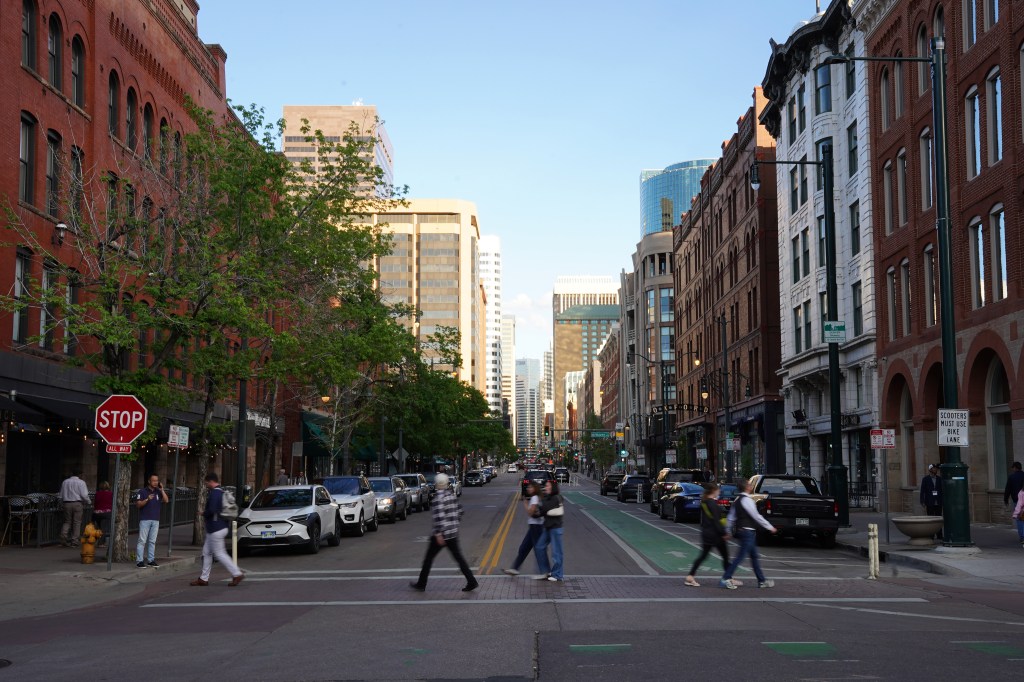
Denver officials want to boost the city’s boogie businesses.
The city’s nightlife offerings — including everything from concert venues and nightclubs to some wine bars and restaurants — are set to see a major overhaul this year as the city’s licensing department proposes changes to its regulatory framework for them.
The last time these policies were updated, songs like Olivia Newton-John’s “Physical” and Survivor’s “Eye of the Tiger” were Billboard Hot 100 Hits. It was the 1980s.
Now, as the city tries to find ways to bounce back from the pandemic-era economic downturn, it’s turning to modernizing nightlife rules.
A draft ordinance shows that officials are proposing the elimination of licensing requirements for some businesses and simplifying them for others. The new framework would also include new rules intended to make nightclubs safer for visitors and neighbors.
“We want to keep the party going, which means making sure we aren’t the reason it doesn’t get started in the first place,” said Jon Ewing, a spokesman for Mayor Mike Johnston. “We’re excited to work with the entertainment industry to ensure businesses aren’t getting tangled in red tape and that Denver is as safe, fun and vibrant at 2 a.m. as it is at 2 p.m.”
The city now has 14 different licenses for entertainment businesses. Under the new proposal, there would be just three. The city would also separate liquor licenses and entertainment licenses for the first time.
The draft proposal is still in its early stages. The city is asking for feedback on the changes before it brings the concept to a City Council committee meeting set for June 9. Then council members may tweak the rules further before voting.
So far, nightclub advocates and neighborhood organizations that sometimes deal with noise and safety impacts from the businesses say they’re supportive of the effort but aren’t yet satisfied with the specific language.
Three kinds of entertainment licenses
The Department of Licensing and Consumer Protection, which is leading the efforts, released its proposed draft earlier this month.
“Denver is striving to be more business friendly,” said Molly Duplechian, the executive director of the department. “We are overregulating in some areas and underregulating in others.”
The new rules would create three licenses:
- Limited entertainment licenses would be for any establishment that offers live entertainment, a dance floor or target sports like axe throwing. It would exempt any performance that isn’t amplified.
- Nightclub entertainment licenses would go to businesses that offer live music, DJ performances or dancing, have a capacity of at least 100 people and operate after 10 p.m. Examples would include music venues, clubs and dance halls
- Adult entertainment licenses would be for adult businesses like strip clubs
The ordinance would exempt several businesses that currently need a license from needing one in the future. That means an entertainment license wouldn’t be necessary anymore for bars that want to host trivia nights, for bowling alleys and for coffee shops that have an unamplified live performer.
Under current law, every business seeking a cabaret license, which includes any that sell liquor and offer live entertainment or dancing, must automatically have a “needs and desires” public hearing to gauge community response. The new proposal would require them only if there were a request for one from the surrounding neighbors.
That could save time and money for businesses, most of which choose to hire a lawyer to help them with those hearings, Duplechian said.
Nightclubs could also stay open past the 2 a.m. liquor cut-off time set by the state, offering music or dancing until 4 a.m.
That would mean crowds exiting clubs could disperse over a longer period of time, rather than all at once. For years, neighborhoods including LoDo and Ballpark have seen occasional violent incidents in the hours after nightclubs and bars close.
The new regulations would also require added safety measures for adult entertainment businesses and nightclubs, such as video surveillance, weapons screening, security guards and the employment of a night manager. They would also be required to help safely disperse crowds after closing, including taking “reasonable steps to ensure the orderly dispersal of patrons and to prevent disorderly conduct and unlawful activity” on their properties and those immediately adjacent.
“Other than modernizing and updating and enhancing entertainment options, we also think this proposal will really help us address some neighborhood and safety concerns that these types of businesses can present,” Duplechian said.
More feedback needed
Even if the council approves the proposed ordinance, it will set in motion additional rulemaking to flesh out more specific details, with a separate feedback process.
Some of the most interested parties — including nightlife advocates and neighborhood organizations — say they support the effort but aren’t yet happy with the draft proposal.
Don Ku with the Denver Lower Downtown Neighborhood Association said his group mostly experiences safety and noise problems from nearby clubs. Its goal is to help bars, businesses and residents peacefully coexist.
“I think simplifying the code makes sense. However, I’m not sure (the department) has hit the mark,” he said, “and I’m hoping there will be room for another draft and round of feedback.”
He would support the city adopting more safety rules for nightclubs to follow, he said.
The nightlife advocacy organization ONE Denver — an acronym for Office of Nighttime Economy — has also offered feedback.
“This needs to happen so badly because our current cabaret laws are ridiculous,” executive director Stephen Brackett said. “We love the direction of this.”
He’s concerned that as written, the ordinance could do the opposite of its intention in some instances by requiring new regulations for some businesses that may not need them. But Brackett, who is also the frontman for the band The Flobots, praised the city’s process so far.
“The hope is to make cultural events more accessible without regulation,” he said. “The changing of this ordinance will make it more possible for there to be more events at smaller venues so that people will be able to participate at lower-entry events.”
Baker resident Jonathon Skavroneck said he’s had increasing concerns with noise and chaos connected to clubs on Broadway near his home. He hopes the new regulations will address those, while simplifying licensing.
“I think Denver would be better off if people could open more entertainment venues,” he said. “It’s nice to know the city is working on bettering nightlife and increasing the availability of it, while also trying to solve some of the problems that really impact it.”
The licensing department has hosted two business and community feedback meetings over the past month. It also has a survey posted for the public on its website. The June 9 council committee meeting will include a public comment period.
Stay up-to-date with Colorado Politics by signing up for our weekly newsletter, The Spot.