
This article was originally published in Vol. 6 No. 1 of our print edition.
I. Introduction
The Three Seas Initiative (3SI) has emerged as Central and Eastern Europe’s (CEE) most ambitious project of regional renewal. It links European Union member states between the Adriatic, Baltic, and Black Seas through joint investments in transport, energy, and digital infrastructure. It aims to overcome the structural disadvantages inherited from the post-communist era—i.e. neglected infrastructure, fragmented economies, and limited connectivity—and rebalances Europe’s traditional west–east infrastructure and economic flows by strengthening north–south connectivity. The region’s geography, spanning both coastal and landlocked countries, adds strategic complexity: while some enjoy maritime access, others are asserting their relevance through logistics corridors, road and rail networks, and digital infrastructure. Access to the world’s oceans once defined national prosperity; today, digitalization has become an equally vital pillar of connectivity and competitiveness.
As a result of the EU and NATO enlargements, the CEE region has become an increasingly integrated free-trade zone, closely linked to Western Europe. Founded in 2016, the 3SI is a regional cooperation framework encompassing thirteen EU member states: Estonia, Latvia, Lithuania, Poland, the Czech Republic, Slovakia, Hungary, Slovenia, Austria, Croatia, Romania, Greece, and Bulgaria.1 All are located between the Baltic, Adriatic, and Black Seas, which encompass the region (Fig. 1). The 3SI was launched at the joint initiative of Poland and Croatia. The intellectual roots of the idea, though, stretch back nearly a century in Polish geopolitical thought, drawing on the ‘Intermarium’ concept first articulated after the First World War by Józef Piłsudski, then the Polish head of state. Piłsudski envisioned an alliance of sovereign nations in Central and Eastern Europe that could collectively counterbalance the influence of both Germany and Russia. Correspondingly, the 3SI reflects a vision of regional cooperation based on sovereignty and mutual independence—an innovative proposition in a region historically dominated by great powers.
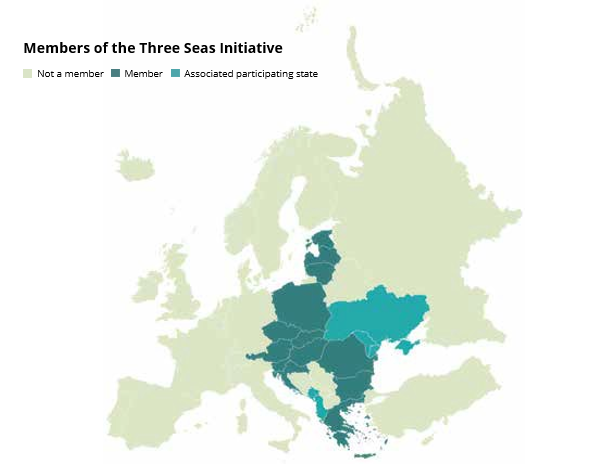 Figure 1. The member states and associated participating states of the Three Seas Inititive (made with Datawrapper)
II. The Three Seas Initiative and Hungary2
Situated in the heart of the Carpathian Basin, at the centre of a triangle delineated by the Baltic, Adriatic, and Black Seas, Hungary occupies a landlocked strategic crossroads. Its geopolitical stability, prosperity, and economic vitality depend heavily on the development of infrastructural links with states bordering these maritime zones. Hungary’s contemporary foreign policy is guided by the principle of ‘connectivity’, which entails cultivating constructive relations with as many states as possible. A notable demonstration of this approach occurred during Prime Minister Viktor Orbán’s 2024 ‘peace mission’, during which he held high-level meetings in rapid succession with Russian President Vladimir Putin, Chinese President Xi Jinping, and US presidential candidate Donald J. Trump.3 This strategy, however, extends beyond engagement with extraordinary powers; it also seeks to maintain amicable relations with neighbouring states.
Since the end of the Cold War, the strategic objectives of CEE states have evolved but remained broadly consistent. The immediate post-1990 priorities were the restoration of sovereignty, rapid democratic transition, and integration into transatlantic structures. Today, the aim is more economic than political: to close the gap with Western European living standards while ensuring national security. Yet prosperity is difficult to achieve in isolation. EU accession removed most legal and physical barriers to regional cooperation. At the same time, since 2016, the Three Seas Initiative has provided a complementary platform that extends beyond the Visegrad Group’s geographical scope. By prioritizing infrastructure, energy interconnectivity, and digital integration, the 3SI offers a mechanism for overcoming the structural constraints that have historically limited the region’s growth.
The Russia–Ukraine War has underscored an obvious lesson: energy security is a foundational element of national survival. A state unable to diversify its sources of raw materials is strategically exposed in peacetime and acutely vulnerable in wartime. Like most 3SI members, Hungary spent the Cold War inside the Eastern Bloc, leaving it dependent on Soviet energy supplies. Under the socialist model, Hungary shifted from its largely agrarian base toward heavy industry, driven by centralized five-year plans. This industrialization and the resulting urban expansion sharply increased demand for electricity, crude oil, and natural gas, which could not be met domestically. Soviet-controlled pipelines were built almost exclusively along east–west routes, entrenching one-way dependence. For strategic reasons, Moscow discouraged the construction of north–south interconnections, ensuring that its proxy states could not easily support one another. The legacy of that energy architecture still shapes Hungary’s vulnerabilities today, making diversification and regional interconnectivity not just economic goals, but strategic imperatives.
To meet rising electricity demand, Hungary committed in the 1960s to developing nuclear power, culminating in the completion of four reactors at Paks by 1987. The plant still produces roughly half of the country’s electricity, and additional units are under construction.4 As in much of the CEE, nuclear fuel is imported from the Russian Federation. Yet Hungary’s energy mix is gradually shifting: photovoltaic capacity has expanded rapidly in recent years, a trend expected to accelerate as technology advances and climate imperatives intensify.5
Nuclear dependence is only one facet of Hungary’s broader energy vulnerability. Domestic production of crude oil and natural gas is insufficient, leaving the country reliant on imports. Crude oil supply is dominated by Russia through the Druzhba (Friendship) I and II pipelines from Ukraine via Slovakia, supplemented by the Adriatic (Janaf) Pipeline linking Croatia’s Krk Island with Hungary. Built in 1974, Janaf has operated in reverse since 1989, enabling flows toward the Adriatic.6 During the Cold War, Moscow probably tolerated its construction in order to expand exports into Yugoslavia; today, it is the only non-Russian crude oil route available to Hungary and Slovakia. Yet its capacity is lower, and its operating costs higher, than those of the Druzhba network, making it an imperfect alternative.7
Natural gas supplies are more diversified. Hungary’s 5,889 kilometres of high-pressure transmission lines connect to six of its seven neighbours—Ukraine, Romania, Serbia, Croatia, Austria, and Slovakia—linking the country to regional fields and distant LNG terminals.8 The most significant recent upgrade came in 2015 with the completion of the 113-kilometre bidirectional interconnector between Slovakia and Hungary, creating rare north–south gas flow capacity in the region.9
Since the early 1990s, Hungary’s primary regional platform has been the Visegrad Group, which has at times amplified its political influence. The bloc’s most unified moment came between 2015 and 2019, when all four members opposed the EU’s mandatory migration quotas. Yet V4 cohesion has proved highly volatile, shaped more by the electoral cycles and the ideological swings of member governments than by shared strategic vision. Divergence deepened after Slovakia’s 2020 elections and the Czech Republic’s 2021 shift, creating a functional ‘Visegrad 2+2’ split between Hungary–Poland and the Czech Republic–Slovakia. The lineup was modified again in 2023–2024, with a conservative turn in Slovakia and a progressive one in Poland. Relations between Budapest and Warsaw have deteriorated since then. Tensions, however, are expected to ease with the election of right-wing conservative Karol Nawrocki as president of Poland. Furthermore, parliamentary elections held in the Czech Republic in the autumn of 2025 resulted in the return of Viktor Orbán’s strategic ally, Andrej Babiš. There is a chance that the Visegrad Group will also gain new strength, although its operation is independent of 3SI.
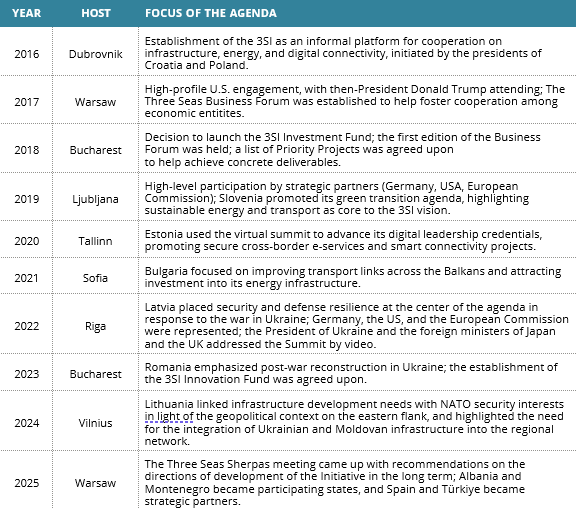 Figure 2. The agendas of the first 10 summits of the Three Seas Initiative11
III. Summit Diplomacy and Hungary’s Missed Opportunity
Within the 3SI framework, annual summits are the most important forum for high-level political discussion, coordination, and decision-making. Hosting a summit is a significant opportunity for a member state to shape the agenda, showcase national priorities, and position itself as a leader in regional cooperation.10 Since the inaugural Dubrovnik Summit in 2016, when 12 participating states formally launched the initiative, each annual gathering has advanced specific aspects of the 3SI agenda (Fig. 2).
Host countries have consistently leveraged their role to set the tone and priorities of the summits, align discussions with national strategic interests, and channel political momentum toward their preferred projects. This attitude has allowed them to secure commitments for infrastructure that directly benefits their economies, attract foreign investment, and reinforce their reputations as regional leaders. According to the accepted plans, Hungary was slated to host the 2025 3SI Summit, which would have been its debut in this role. However, the hosting rights were transferred to Warsaw for the second time in history. While no official explanation was provided beyond logistical considerations, several factors could have contributed: political divergences between Poland and Hungary over responses to the war in Ukraine; Poland’s desire to maintain a leadership role within the 3SI; and potential concerns among some member states regarding Hungary’s alignment with some EU and NATO policy positions. The relocation of the summit deprived Hungary of a valuable platform to set the agenda, secure support for priority projects such as the Danube Corridor development, and enhance its regional standing. For Hungary, the benefits of hosting a 3SI summit would have been substantial. Acting as a constructive and proactive host could have helped Budapest position itself as a leading force in the 3SI, amplify its influence within the EU, and strengthen its role in regional diplomacy.
IV. Economic Connectivity
The most tangible way Hungary can leverage the 3SI is through cross-border infrastructure development. Despite the country’s central location in the region, its transport and logistics networks remain disproportionately oriented along the east–west axis. The 3SI’s focus on north–south connectivity offers a strategic opportunity to realign infrastructure with emerging economic corridors, boost regional trade, and unlock growth for small and medium-sized enterprises (SMEs). As one of the most developed economies in the 3SI, Hungary stands to benefit from improved market access, expanded export potential, and its positioning as a logistics and innovation hub.
The investment disparity between CEE and Western Europe has been widely documented. Infrastructure in the 3SI region has historically lagged behind by a significant margin, requiring sustained annual investment 1.4 times higher than that of Western Europe to close the gap.12 The region faces a cumulative investment shortfall of €1.15 trillion across infrastructure, energy, and digital sectors.13 The region also suffers from long freight transit times: rail freight between the Baltic states and the Balkans can take more than twice as long as comparable routes in Western Europe.14 Hungary, situated at the intersection of the Carpathian Basin and the Danube region, is well positioned to benefit from investments that improve north–south connectivity, particularly through initiatives such as the Via Carpathia corridor and modernized Danube river shipping infrastructure.
The Via Carpathia highway, running from Klaipėda in Lithuania to Thessaloniki in Greece, passes through eastern Hungary near Debrecen and Miskolc—regions that have historically received less investment than the Budapest–Vienna axis. Hungarian segments of Via Carpathia, spanning 221 km across the M3, M35, and M4 highways, were completed in 2021 with the construction of the M30 highway extension. This new infrastructure has helped divert thousands of heavy trucks from local roads along Route 3, improving traffic safety and significantly lowering noise and emissions in affected towns. Moreover, the M30 highway has reduced the travel time between Miskolc and Košice by approximately 30 minutes, immediately easing commuting and cross-border economic activity.15 Once fully operational, the route could enhance north–south trade greatly by connecting Hungary directly with Baltic and Balkan markets, bypassing the already congested east–west corridors.
Enhanced infrastructure yields especially high returns for SMEs, which constitute over 99 per cent of businesses in Hungary and employ two-thirds of the workforce.16 With reduced freight times, increased export capacity, and smoother customs processing along 3SI-supported corridors, Hungarian SMEs gain improved access to both regional suppliers and customers. Proximity to new cross-border corridors can open up export opportunities previously constrained by transport inefficiencies. Moreover, Hungary could leverage the 3SI’s emerging platforms—such as the Three Seas Business Forum—to facilitate connections between its small and medium-sized enterprises and partners across the region, thereby attracting investment and enabling internationalization. To realize these economic benefits fully, Budapest must prioritize the timely completion and integration of north–south transport corridors within its national infrastructure strategy. Such a process includes ensuring the co-financing of strategic projects such as Via Carpathia, FAIRway Danube, and the Rail Corridor V. Policymakers should also promote the participation of Hungarian SMEs in regional business platforms under the initiative, and expand investment incentives for logistics and export-oriented industries in eastern and southern Hungary. By aligning national development plans with 3SI objectives, Hungary can consolidate its position as a key economic hub in the region.
V. Energy Security and Source Diversification
Hungary’s energy strategy has long been shaped by its heavy reliance on external suppliers, most notably in the natural gas sector, where domestic production accounts for only around 15 per cent of annual consumption, with the remainder historically imported predominantly from the Russian Federation.17 The Russian invasion of Ukraine in 2022, however, resulted in instability in energy markets, highlighting the strategic urgency of diversification—not only of energy sources but also of delivery routes. Within this context, the 3SI offers a valuable multilateral platform for the reshaping of the energy landscape through regional cooperation on critical infrastructure.
One of the most promising opportunities lies in integrating Hungary into a more interconnected and resilient north–south gas corridor. The Krk LNG terminal in Croatia, which has been operational since January 2021, is a key strategic asset supported by the 3SI framework. The terminal opens up access to non-Russian gas sources, including US, Qatari, and Algerian LNG. Hungary imports an annual total of 1 bcm of gas through this interconnector—nearly 12 per cent of the country’s annual gas consumption. Furthermore, with the planned expansion18 of the Krk terminal’s capacity, Hungary’s potential LNG imports could also increase significantly.19
In addition, Hungary participates in the BRUA (Bulgaria–Romania–Hungary–Austria) Pipeline corridor, another 3SI priority project. Although the full implementation of BRUA has encountered delays and route revisions, the corridor aims to unlock access to Black Sea offshore gas fields and improve interconnectivity between Southeastern and Central Europe. For Hungary, BRUA enhances flexibility in gas procurement, reinforcing its energy security in periods of disruption.
Beyond natural gas, electricity grid integration within the 3SI region is increasingly critical. Regional projects aim to link the grids of Central Europe with the Baltic and Black Sea networks, facilitating electricity trade and balancing intermittent renewable supply. For Hungary—where solar power accounted for over 18 per cent of electricity production in 202420—this enhanced connectivity is essential for managing grid stability and integrating renewables. Furthermore, Budapest is working to diversify its nuclear and renewables portfolio. While the Paks II nuclear project remains central to the national strategy, the 3SI also opens up avenues for regional coordination on energy innovation, such as smart grids, battery storage, and green hydrogen. Projects under the EU’s Connecting Europe Facility (CEF) and 3SI’s Smart Connectivity pillar offer potential co-financing for cross-border energy innovations. Energy infrastructure under the 3SI also carries significant geostrategic implications. As the eastern flank of NATO faces growing hybrid threats, the security of critical infrastructure—including pipelines, power lines, and LNG terminals—has become a matter of collective defence. Hungary’s deeper involvement in regional energy projects helps align national and alliance-level security priorities. Joint energy projects not only reduce Hungary’s dependence on a single supplier but also contribute to the resilience of the wider Central and Eastern European energy system.
To capitalize on these opportunities, Hungary should consider expanding its contributions to 3SI co-financing mechanisms, such as the 3SI Investment Fund, while also coordinating with EU instruments, including REPowerEU and the CEF. At the national level, energy diplomacy with Croatia, Romania, and Slovakia should be intensified to secure long-term contracts and to harmonize infrastructure. Hungary can also play a leadership role in shaping regional energy transition goals within the 3SI by advocating for common standards on renewable energy integration, grid modernization, and LNG security protocols.
VI. Digital Infrastructure and Cybersecurity
Digital infrastructure is the third strategic area of the Three Seas Initiative, and a domain in which Hungary can productively expand its regional role. While the economic and energy dimensions of the 3SI receive considerable attention, the Smart Connectivity pillar—which aims to digitally integrate energy, transport, and communication networks—is critical to future-proofing the region’s infrastructure and competitiveness. For Hungary, enhanced digital connectivity not only supports national digital transformation goals but also strengthens resilience against cyber threats and opens opportunities for regional tech-sector collaboration.
As of 2025, Hungary has been performing moderately well in digital connectivity and digital infrastructure development compared to its regional peers. The European Commission’s 2025 Digital Decade Country Report monitors the progress of member states towards the EU’s 2030 digital development goals. According to this document, Hungary has made notable progress in access to eHealth records and the deployment of solid digital infrastructure and 5G rollout, though the country lags behind the EU average in the digitalization of SMEs.21 The 3SI framework offers an opportunity to accelerate digital infrastructure investment and knowledge across businesses in the region, particularly for underserved rural regions and cross-border data and communications corridors. The 3SI’s Smart Connectivity strategy promotes regional cooperation on 5G corridors, secure cross-border fibre optics, and digital twin systems for transport and energy networks. Hungary, thanks to its central location and strong telecommunications sector, is well placed to lead efforts to establish 5G-enabled freight and logistics corridors along Via Carpathia or the Danube river routes. These corridors, integrating road, rail, and river transport with real-time data systems, can dramatically enhance logistics efficiency, reduce costs, and optimize environmental performance.
Hungarian tech and telecom companies can also benefit from expanded regional partnerships enabled by 3SI’s digital dimension. Through initiatives such as the Three Seas Digital Highway and regional innovation platforms, Hungarian SMEs and startups in AI, IoT, and cybersecurity could expand their markets into neighbouring countries. The Three Seas Digital Highway,22 currently on hold due to the war in Ukraine, is a cross-border initiative that supplements the 3SI’s transport and energy networks with a secure, next-generation digital infrastructure—focusing on 5G connectivity, joint R&D in technologies like AI and blockchain, and enhanced regional cooperation against cyber threats and disinformation.23
Cybersecurity is another major concern addressed under the digital pillar. As hybrid threats increase across NATO’s eastern flank, securing digital infrastructure is not just an economic concern but a national security priority. In this context, Hungary’s participation in regional cyber defence exercises, digital resilience frameworks, and 3SI-backed data protection protocols can enhance preparedness against hostile cyber intrusions. Cooperation on common standards for secure data storage, cross-border digital ID, and encryption systems would not only protect critical infrastructure but also support Hungary’s digital sovereignty goals.
From a policy standpoint, Hungary should prioritize the integration of Smart Connectivity principles into its national digital strategy and align funding mechanisms accordingly. This includes leveraging the EU’s Digital Decade targets, tapping into the 3SI Investment Fund for broadband and fibre-optic projects, and proposing regional pilot projects that position Hungary as a testbed for digital innovation. Hungary’s presidency of regional digital forums under 3SI would allow it to set a forward-looking agenda that supports convergence with EU digital goals while reinforcing CEE tech capabilities.
VII. Infrastructure and NATO’s Eastern Flank Security
The development of north–south infrastructure under the Three Seas Initiative is not only an economic imperative: it is a strategic necessity for NATO’s eastern flank. Hungary, as both a core member of the 3SI and a frontline state in NATO’s defence architecture, stands at the intersection of these overlapping interests. Infrastructure upgrades in transport, energy, and digital domains contribute not only to economic development but also to defence readiness, resilience, and crisis response capacity across the CEE. The alignment of military mobility, dual-use infrastructure, and strategic corridors has become increasingly vital in light of Russia’s war against Ukraine, NATO’s renewed force posture, and persistent hybrid threats in the region.
While civilian in orientation, the 3SI infrastructure agenda—especially its focus on improving roads, railways, and energy transit—directly complements NATO’s efforts to enhance military mobility across the CEE. Projects like Via Carpathia and the Amber Rail Freight Corridor24 are not just trade-enabling highways and railways; they are potential military lifelines for force reinforcement and logistical resupply.
For Hungary, the benefits are twofold: first, the enhancement of road and rail links positions the country as a key conduit for troop and equipment movement. These corridors provide NATO with operational flexibility and redundancy. In a crisis scenario, Hungary’s infrastructure would allow for the rerouting of Allied forces or supplies if other corridors are blocked or degraded. Second, such infrastructure enhances national resilience: a well-connected Hungary is better able to respond to emergencies, support its population under duress, and assist regional neighbours.
Infrastructure development also underpins energy resilience. By participating in energy diversification projects such as the Krk LNG terminal connection and the BRUA Pipeline, Hungary reduces its dependence on Russian energy and contributes to a broader regional energy safety net. In times of disruption, Budapest and its 3SI neighbours can rely on cross-border interconnectors to share energy supplies, reducing the chances that any one country can be isolated or coerced. This form of redundancy—the capacity to reroute energy or logistical flows—is a foundational component of NATO’s concept of resilience and is increasingly central to Hungary’s own national security planning. Equally critical is the protection of this infrastructure. The CEE region faces growing cyber and hybrid threats targeting energy grids, transport networks, and government systems. The Three Seas digital infrastructure pillar provides a venue for addressing these vulnerabilities collaboratively. Hungary’s participation in cross-border cybersecurity initiatives, digital infrastructure standardization, and joint critical infrastructure protection drills would enhance both its national defence and the collective resilience of NATO’s eastern flank. In a digitized battlefield, resilient digital infrastructure—secure 5G corridors, protected smart grids, and encrypted communication networks—can be as vital as physical roads and railways. Notably, the civilian character of 3SI allows for the strengthening of civil defence capabilities without militarizing the platform. This enables Hungary to support national preparedness goals—such as continuity of government, emergency logistics, and societal resilience—while contributing to alliance-wide security objectives. In an age when crises often affect both civilian and military spheres, the dual-use nature of 3SI projects is a strategic advantage. A well- built railway or highway not only facilitates trade but can also support the rapid delivery of humanitarian aid or military support.
VIII. Strategic and Foreign-Policy Implications for Hungary
Hungary’s engagement in the 3SI is not solely about infrastructure development, it is also a strategic foreign policy tool that can enhance the country’s influence in the CEE region and the broader transatlantic community. The 3SI offers Budapest an opportunity to shape regional economic and security architecture while diversifying its diplomatic portfolio beyond traditional V4 cooperation. By promoting joint projects and investments, it can foster goodwill, build political capital, and secure mutual support for its own strategic priorities within EU institutions. At the European level, effective participation in the 3SI can help member states coordinate their priorities and better represent shared regional interests. Many of the initiative’s priority projects overlap with EU Trans-European Transport Network (TEN-T) corridors and are eligible for co-financing through EU funds.
The 3SI has strong backing from the United States, which views it as a counterbalance to Chinese Belt and Road investments and Russian energy influence in the region. Hungary’s active role in high-profile 3SI projects can serve as an additional platform for engaging with the White House on favourable, mutually beneficial terms. By emphasizing cooperation in infrastructure, energy security, and technology, Budapest can demonstrate alignment with broader Western strategic priorities. Regional leadership within the 3SI, though, is competitive. Warsaw and Bucharest have positioned themselves as the primary drivers, hosting multiple summits and spearheading flagship projects. If Budapest wishes to elevate its profile, it must identify niche areas where it can lead—such as the Danube Corridor development, smart logistics, or digital innovation hubs—and consistently deliver results. Hosting a future 3SI summit would be a critical step in this direction, offering agenda-setting power and international visibility. The 3SI can also be leveraged as a soft power instrument. By associating itself with cross-border, future-oriented infrastructure and innovation projects, Hungary can shape perceptions of itself as a constructive and forward-looking regional actor. This narrative shift could counterbalance reputational challenges stemming from its EU disputes, portraying the country as an economy-builder and connector in Central Europe.
IX. Problems with the Three Seas Initiative
Despite its growing profile and strategic potential, the 3SI faces several structural and operational challenges that limit its effectiveness. The success of its projects depends heavily on adequate funding, yet the initiative’s dedicated financial instruments remain undercapitalized. The Three Seas Initiative Investment Fund (3SIIF), established in 2019 to co-finance priority infrastructure projects, has so far attracted contributions from only a subset of member states. Poland is the most significant national contributor, with several other member states pledging investments, while many others have yet to commit substantial resources. The United States pledged up to $1 billion through the US International Development Finance Corporation (DFC), though only a fraction has been disbursed (Fig. 3).
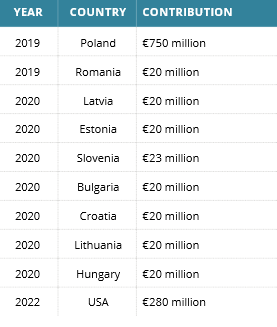 Figure 3. Contribution to the Three Seas Initiative Investment Fund by participating member states25
Another financing institution of the 3SI, the Three Seas Initiative Innovation Fund, launched in October 2024, is a fund-of -funds mechanism aimed at supporting innovative, growth-stage companies across the CEE region. Backed by development banks from Hungary, Poland, and the Czech Republic, each pledging an investment of €20 million—with the European Investment Fund managing and co-financing investments—the fund seeks to mobilize up to €1 billion in private equity, venture capital, and private credit for the region’s innovation ecosystem. Its long-term goal is to boost regional competitiveness and technological advancement by helping companies to scale internationally and integrate into global value chains. Yet no other member state has made a financial contribution to the Innovation Fund to date. The EU co-finances specific 3SI projects through the Connecting Europe Facility and cohesion policy funds, but these are not exclusive to 3SI and must be shared with other EU priorities. Without greater and more evenly distributed financial commitments from member states and partners, the pace and scope of project implementation will remain constrained.
Another problem is that the 3SI operates without a permanent secretariat, legal personality, or dedicated administrative apparatus. Its governance is based on rotating annual summits hosted by member states, with agendas shaped mainly by the host country’s priorities. While this flexible format allows for adaptability, it also creates challenges with continuity, project tracking, and long-term strategic planning. This means that without stronger institutional structures, even high-potential projects risk losing momentum when political leadership or national priorities change. The absence of a central coordinating body also makes it harder to engage consistently with external partners such as the EU, NATO, and private investors. This lack of institutionalization creates difficulties in financing, as there is no dedicated body to ensure transparency, coordinate funding streams, and provide long-term accountability for project implementation.
Although the 3SI has secured the participation of high-level political leaders, public awareness of the initiative remains minimal in most member states. Surveys and media monitoring indicate that the 3SI is almost unknown outside policy and diplomatic circles. This lack of visibility limits public support and reduces opportunities for private-sector engagement. Many SMEs—the very businesses that could benefit most from enhanced regional connectivity—are unaware of 3SI-related opportunities. The 3SI Investment Fund also aims to raise significant private capital alongside public contributions, recognizing that large-scale infrastructure development cannot rely solely on public funding. Attracting private investors requires strong visibility and clear communication of project pipelines, expected returns, and regional strategic value—yet awareness of the initiative remains so low in many member states that even potential investors are often unaware of its existence.26 Without greater public and market awareness, achieving this goal will be challenging.
X. Conclusion and Policy Recommendations
The Three Seas Initiative presents Hungary with a unique and timely opportunity to enhance its regional influence, accelerate domestic development, and reinforce national and alliance-level security objectives. While the initiative is not without its limitations, its potential to address infrastructure gaps, strengthen energy and digital resilience, and improve regional coordination makes it one of the most strategically relevant multilateral frameworks for the CEE today. For Hungary, assuming a more proactive and visible role within the 3SI would be both feasible and beneficial. A central element of this strategy should be the goal of hosting a future 3SI summit in Budapest. Given the initiative’s reliance on summit diplomacy due to its limited institutional structure, hosting would enable Hungary to set the agenda, highlight national priorities, and position itself as a leader in shaping the region’s strategic direction.
Hungary’s key interests within the 3SI include economic connectivity: strengthening north–south transport infrastructure can increase trade, improve supply chains, and support SMEs by providing better access to regional markets. It also boosts overall economic growth by increasing mobility and reducing logistical costs. Other key interests are energy security and source diversification. Expanding interconnectors, improving access to LNG terminals (such as Krk), and supporting projects like BRUA help reduce dependency on Russian energy imports and establish the country as a regional energy hub. In the field of digital infrastructure and cybersecurity, investments in cross-border broadband, smart logistics, and cybersecurity cooperation position Hungary to lead regional digital innovation.
These projects strengthen both the digital economy and resilience against hybrid threats. Dual-use infrastructure development (roads, railways, energy grids) enhances military mobility, supports NATO’s defence posture, and improves national preparedness. Hungary’s central location makes it an indispensable logistics and transit hub for NATO operations. Through leadership in the 3SI, Hungary can increase its influence within the EU and vis-à-vis transatlantic partners. Constructive participation demonstrates commitment to regional development and security, enhancing Budapest’s diplomatic profile and soft power.
At the same time, Hungary has the opportunity to help address key structural weaknesses within the initiative through targeted proposals. Hungary could take the lead in raising additional contributions to the 3SI Investment Fund and in pushing for blending EU, national, and private-sector funding. Promoting the visibility and bankability of 3SI projects would attract private capital. Hungary could advocate for the creation of a light but permanent coordination structure—such as a rotating secretariat or technical working groups—to ensure continuity and better implementation across summits. By hosting a summit and launching a national information campaign, Hungary could significantly increase public awareness of the initiative and its benefits, thereby encouraging stakeholder participation, including from SMEs and investors. In conclusion, the Three Seas Initiative is not merely a diplomatic platform: it is a practical tool for achieving long-term national interests through regional cooperation and collaboration. By taking a leading role, Hungary can help shape the future of Central and Eastern Europe while advancing its own economic, security, and geopolitical objectives.
NOTES
1 3SI Research Center, ‘The Three Seas Initiative’, https://3si.politic.edu.pl/basic-information/, accessed 12 December 2025.
2 Co-author of the present paper, Péter Szitás, already published a study on the participation of Hungary in the 3SI in 2024, edited and issued by the Warsaw Institute, on which the present work largely relies. See the original study: Péter Szitás, ‘The Participation of Hungary in the Three Seas Initiative’, Three Seas Partnership. Special Report (Warsaw Institute, 2024), 29–39, https://warsawinstitute.org/wp-content/uploads/2024/12/three-seas-partnership-special-report.pdf.
3 Andrew Gray, and Jan Strupczewski, ‘EU Chief Rebukes Hungary’s Orban Over “Peace Mission” with Trump Talks’, Reuters (16 July 2024), www.reuters.com/world/orban-eu-leaders-trump-ready-act-immediately-russia-ukraine-peace-broker-2024-07-16/.
4 Magyar Villamos Művek (Hungarian Electrical Works), ‘Atomtörténelem’ (Atomic History), https://atomeromu.mvm.hu/hu-HU/Tudastar/Atomtortenelem, accessed 6 August 2025.
5 Eurostat, ‘Use of Renewables for Electricity’, ec.europa.eu, https://ec.europa.eu/eurostat/databrowser/view/nrg_ind_ured/default/ table?lang=en&category=nrg.nrg_quant.nrg_quanta. nrg_ind_share, accessed 6 August 2025.
6 ‘History of Janaf’, Janaf, https://janaf.hr/history- of -janaf, accessed 8 August 2025.
7 ‘Orosz energiakiváltás – Úgy tűnik, tényleg nem tudja azt a horvát kábel, ami Magyarországnak kellene’ (Russian Energy Replacement—It Seems That Croatian Cable Really Doesn’t Know What Hungary Needs), Infostart (24 September 2025), https://infostart.hu/gazdasag/2025/09/24/orosz-energiakivaltas-ugy-tunik-tenyleg-nem-tudja-azt-a-horvat-kabel-ami-magyarorszagnak-kellene#.
8 Magyar Energetikai és Közmű-szabályozási Hivatal (Hungarian Energy and Public Utilities Regulatory Authority), ‘A magyar földgázrendszer 2023. évi adatai’ (Data on the Hungarian Natural Gas System for 2023), 12, https://fgsz.hu/file/documents/2/2903/mekh_statisztikai_kiadvany_foldgaz_2023.pdf, accessed 8 August 2025.
9 ‘Slovak–Hungarian Gas Interconnector’, Offshore Technology (16 August 2025), www.of fshore-technology.com/projects/slovak-hungarian-gas-interconnector-slovakia/?utm_ source=chatgpt.com&cf-view.
10 Jędrzej Błaszczak, ‘Different Forms of Summit Diplomacy. Case Study Analysis of the Visegrád Group, the Bucharest Nine, and the Three Seas Initiative’, Romanian Journal of European Affairs, 24/1 (2024), https://rjea.ier.gov.ro/wp-content/uploads/2024/06/Art.-6_Summit-diplomacy_Blaszczak_2024_final.pdf.
11 Based on the Joint Declaration and webpage of each summit on the 3seas.eu website, accessed 8 August 2025.
12 Perspectives for Infrastructural Investments in the Three Seas Region (SpotData, 2019), 13, https://3siif.eu/potential.
13 ‘Three Seas Story’, Three Seas Summit 2025, https://3seas.eu/about/threeseasstory, accessed 5 August 2025.
14 Edward Lucas, ‘Seasick: The Three Seas Initiative’, Centre for European Policy Analysis (13 April 2024), https://cepa.org/article/seasick-the-three-seas-initiative/.
15 ‘Közvetlen autópálya kapcsolat jött létre Miskolc és Kassa között’ (Direct Motorway Opens Between Miskolc and Košice), Nemzeti Infrastruktúra Fejlesztő Zrt. (26 October 2021), https://archivum.nif. hu/2021/10/kozvetlen-autopalya-kapcsolat-jott-letre-miskolc-es-kassa-kozott/.
16 ‘A magyar mikro-, kis- és középvállalkozások megerősítésének stratégiája – Első felülvizsgálat’, (Strategy for Strengthening Hungarian Micro, Small and Medium-Sized Enterprises—First Review), Government of Hungary, (5 December 2023), https://cdn.kormany.hu/uploads/document/a/ae/ae6/ae6ddf3889f14153a81dbe7b089d7a60e3ff6312.pdf.
17 ‘Hungary—Final Updated NECP 2021–2030 (submitted 2024)’, European Commission, https://commission.europa.eu/publications/hungary-final-updated-necp-2021-2030-submitted-2024_ en?prefLang=hu, 68, accessed 10 August 2025.
18 ‘Expansion of the Capacity of the LNG Terminal on the Island of Krk’, Three Seas Projects (5 April 2024), https://projects.3seas.eu/projects/ expansion-of-the-capacity-of-the-lng-terminal-on-the-island-of-krk.
19 Attila Weinhardt, ‘Nagy döntést hoztak a horvátok, ami a magyar gázellátásra is hathat’ (The Croatians Have Made a Big Decision that Could Also Affect Hungarian Gas Supplies), Portfolio (8 February 2024), www.portfolio.hu/gazdasag/20240208/nagy-dontest-hoztak-a-horvatok-ami-a-magyar-gazellatasra-is-hathat-668041.
20 ‘Global Electricity Review 2024’, EMBER (10 May 2024), www.portfolio.hu/gazdasag/20240510/magyarorszagon-a-harmadik-legnagyobb-a-vilagon-a-napenergia-reszaranya-az-aramtermelesben-685455.
21 ‘Hungary 2025 Digital Decade Country Report’, European Commission, https://digital-strategy. ec.europa.eu/en/factpages/hungary-2025-digital-decade-country-report, accessed 10 August 2025.
22 ‘The 3 Seas Digital Highway’, ThreeSeasProjects, https://projects.3seas.eu/projects/the-3-seas-digital- highway, accessed 8 August 2025.
23 ‘The Digital 3 Seas Initiative: A Call for a Cyber Upgrade of Regional Cooperation’, GLOBSEC (20 June 2018), www.globsec.org/what-we-do/press-releases/digital-3-seas-initiative-call-cyber-upgrade- regional-cooperation.
24 ‘Amber Rail Freight Corridor’, Three Seas Projects, https://projects.3seas.eu/projects/amber-rail-freight- corridor, accessed 8 August 2025.
25 Based on data from the 3SI Research Center.
26 Róbert Gönczi, ‘Hungary Towards the Three Seas Initiative’, Warsaw Institute (13 December 2022), https://warsawinstitute.org/hungary-towards-the -three-seas-initiative/.
Related articles: