

27
Apr 2026
Finland’s government has sent Parliament a bill that would force future citizenship applicants to pass a civics exam before getting a Finnish passport.
The proposal went to lawmakers on April 16, closing out a wider overhaul of the Citizenship Act.
The exam is the final piece of a multi-stage rework that has already changed rules on residence, income, and criminal records.
Test launches in 2027
The exam will run on computers and must be taken in Finnish or Swedish. Applicants will face between 20 and 40 multiple-choice questions and need to answer roughly 70% correctly to pass.
Questions will cover Finnish history and culture, fundamental and human rights, equality and gender equality, and core legislation on how the country works. A Yle report adds that the test will also include true-or-false items.
Study material will be published in advance. The predefined content, pulled from existing civic orientation resources, is meant to keep the process transparent and give candidates a fair shot at preparing.
Applicants will have other paths too. Completing a Finnish- or Swedish-language matriculation exam, or earning a university degree in either language, will satisfy the civic knowledge requirement without sitting the new test.
The Finnish Immigration Service will oversee the exam. It plans to commission a university-level institution to draft the questions, a step officials say is meant to insulate the test from political pressure.
Rantanen defends reform
The minister pitched the test as part of a broader cultural expectation.
“Finnish citizenship does not come automatically,” Rantanen said. “These reforms encourage integration, employment[,] and respect for the rules of Finnish society.”
A memorandum attached to the bill concedes the test is likely to cut the number of applications. Rantanen pushed back on the idea that a smaller applicant pool is the point.
“But it does require those seeking Finnish citizenship to take active steps to meet the conditions set in law,” she told reporters.
For context, 14,067 people received Finnish citizenship last year. The government has not published a target for how far that figure might drop once the test is live.
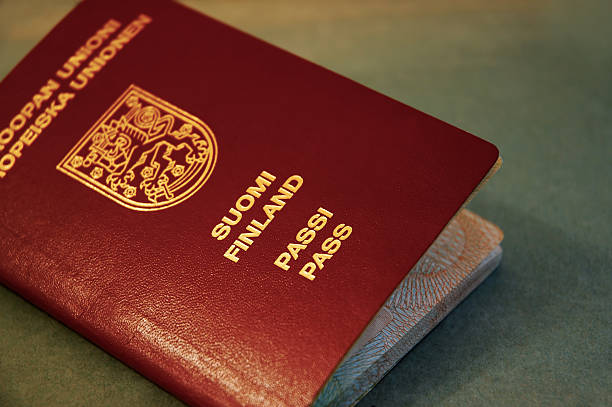
(Image courtesy of yojik via iStock)4
Deportations speed up
The civics exam reached Parliament alongside two other immigration bills the same day. One takes aim at deportation.
The proposal would accelerate removals of rejected asylum seekers. It would also let authorities issue entry bans on national security grounds, including cases tied to suspected terrorism.
Those bans could apply to Finland alone or across the 29-country Schengen area. That gives the measure reach well beyond Finland’s own borders and plugs it directly into the bloc’s shared enforcement tools.
EU pact reshapes asylum
The third proposal folds the EU Pact on Migration and Asylum into Finnish law. The pact moves the bloc toward a shared asylum system across member states.
It also opens the door to handling claims elsewhere.
“The pact will, in the future, make it possible to transfer asylum procedures to a safe third country outside the EU,” Rantanen said. “That is, of course, a very significant reform.”
The change would reach undocumented migrants already in Finland. Authorities would have to screen them to work out whether they pose a security risk before any further steps.

(Image courtesy of Andy Barbour via Pexels)
Border systems feel shift
Finland is one of 29 countries running the EU’s Entry/Exit System (EES), which has been fully live since April 10. It will also be part of the European Travel Information and Authorization System (ETIAS) when that launches in the last quarter of 2026.
The civics test targets long-term residents rather than short-stay visitors, so it does not plug directly into those border platforms. The deportation bill is a different story.
Entry bans issued under the new rules would be enforced through records that EES keeps on refused entries and overstays. A ban decided in Helsinki could therefore block a traveler at any external Schengen crossing.
The EU pact’s screening requirement leans on the same border tech. ETIAS vets visa-exempt travelers before they arrive, and EES logs each entry and exit.
This gives authorities a data trail to draw on when assessing risk inside the country.
Applicants face longer climb
For a would-be Finnish citizen, the pipeline now looks longer than it did a few years ago. Short-stay visits get logged at the border, long-term residence requires clearing income and integrity rules, and naturalization adds the civics exam on top.
Each layer narrows the funnel. That tracks with the memorandum’s expectation that applications will drop below last year’s 14,067 approvals.
Critics of the package have yet to file formal responses in Parliament. Rantanen has framed the bills as an effort to tie citizenship more closely to participation in Finnish society rather than to cut numbers on their own.
Finland tightens gate
The three proposals point in one direction: a longer road to a Finnish passport and a faster exit for those refused one. Each bill now moves into parliamentary review.
The start date remains set for early 2027, if lawmakers give the green light.