
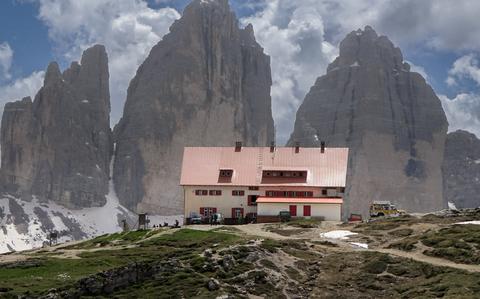

Rifugios date back to the late 1800s when mountaineering clubs began building shelters for climbers. (Kimberly Kephart)
If you’ve spent any time researching hiking in the Dolomites, you’ve come across the word rifugio and paused. Is it a hotel? A hostel? Somewhere in between?
The short answer is it’s a mountain hut.
The better answer is it’s one of the best ways to experience the Dolomites.
After hiking Alta Via 1, Alta Via 2, the Palaronda Trek and the MADE Trek, I’ve spent plenty of nights in rifugios. Here’s what you can expect.
History of Rifugios
Rifugios date back to the late 1800s when mountaineering clubs began building shelters for climbers. Today, many are still managed by the Club Alpino Italiano (CAI), alongside family-run huts that serve the same purpose: to offer refuge in the mountains.
Several rifugios are rooted in World War I history when these mountains were part of the front line between Italian and Austro-Hungarian forces. Places like Rifugio Achille Papa along the Strada delle 52 Gallerie near Vicenza and Rifugio Lagazuoi above the Falzarego Pass sit amid tunnels and trenches where soldiers once took shelter.
A Multilingual, Cultural Crossroads
The Dolomites sit at the intersection of Italian, Austrian and Ladin heritage, and you’ll feel that immediately.
Many rifugios have more than one name. Rifugio Genova is also known as Schlüterhütte. Rifugio Firenze is known as Regensburger Hütte in German and Utia de Ncisles in Ladin.

Expect dorm-style rooms, shared bathrooms and limited outlets. (Kimberly Kephart)
Menus, trail signs and conversations shift between languages, and that mix shows up in the food. You might have pasta one night and canederli (bread dumplings) the next. South Tyrolean cuisine blends Italian and Austrian influences with deep Ladin roots.
Hiking or Skiing into a Rifugio
Most rifugios are remote by design. You don’t just pull up, you hike in. Or in winter, you might ski in, as you would to Rifugio Scotoni, which has one of the best grillmasters in the Dolomites!
Reaching a rifugio feels like an accomplishment. And when you finally see one tucked into the mountains, it hits.
Not Luxury Stays
Most rifugios are not luxury stays, and that’s the point.
Expect dorm-style rooms, shared bathrooms and limited outlets. Some offer private rooms, but they book fast. You’ll usually be given blankets and sometimes slippers, but don’t rely on that. Bring your own flip flops to obey the Hutten Ruhe!
Water is Limited
This is where expectations matter. Water in the mountains is scarce. At higher huts, like Rifugio Pradidali in the Pale di San Martino, showers aren’t guaranteed.
If they are available, you’ll likely pay for a token that gives you a quick one- to two-minute rinse. Other times, there’s no shower at all.
And just a reminder, try not to take “showers” with the water from the sink. It’s considered rude and not quite courteous.
Food at a Rifugio is a TREAT
Rifugio food is hearty and surprisingly good. Think pasta, polenta, soups and local specialties, followed by dessert and a drink.
Dinner is served at a set time and shared at communal tables, which quickly becomes part of the experience.
And yes, you can order a cappuccino at 2,000 meters. Sometimes it even comes in a bowl, as it did for me at Rifugio Calvi!
It’s Social—Even if you’re Solo
Rifugios are naturally social.
You’ll talk to people. Share routes. Compare hikes. It happens without trying.
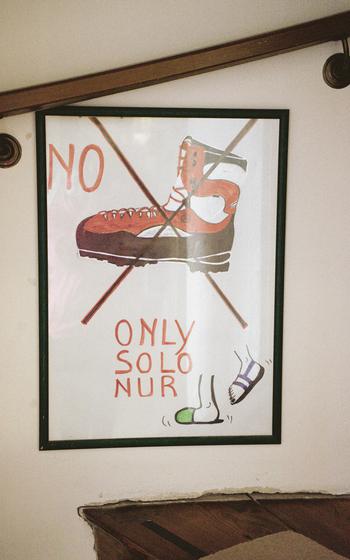
Rifugios fill quickly, especially along the popular routes like Alta Via 1 and Alta Via 2. (Kimberly Kephart)
Sometimes that looks like swapping stories over dinner. Other times, it’s pulling out a deck of UNO and asking if that lone solo traveler or the German couple in the corner want to play.
On a fall trip to Croda Da Lago, my friends and I ended up playing with a large group of people staying in the rifugio. Then, we all headed to a sauna and cold plunge surrounded by golden larches.
Booking and What it Costs
Don’t wait till the last minute to book your rifugio. You’ll want to be on it, sometimes six months in advance.
Rifugios fill quickly, especially along the popular routes like Alta Via 1 and Alta Via 2. Reservations are typically made by emailing the hut directly through their website. Some have better systems than others. If you don’t hear back for a while, know that this is normal.
You usually wire money to the hut, so this can create a bit of an issue. Sometimes going through booking platforms like Bookatrekking eases the stress of it all. Someone is there to do all the work for you!
Pricing varies, so always confirm it directly. Most stays are booked on a half-board basis (Mezze Pensione), which includes dinner and breakfast. Some offer full board as well.
If you’re a member of the CAI or an affiliated alpine club, you may qualify for a discount.
While most rifugios are simple, a few come with extras such as saunas; access to those cost more.
Disconnect and Chill a Little
Wi-Fi is limited or non-existent. Bring a game, a journal or just join in a conversation that’s already happening. The whole point of this is to take in where you are.
Why Staying in a Rifugio is Worth it
Staying in a rifugio is a way to connect to others, to the landscape and to culture. It’s something I have come to cherish, and something I look forward to every summer and fall.
Expect a mix of options when it comes to sleeping arrangements. Sometimes you get lucky and have room for yourself, like I did on the MADE Trek at Rifugio Tolazzi and Rifugio Calvi. Other times, you’re in a shared, co-ed dorm.
Just be prepared, you might see a little more than you expected.
And once you experience it, it’s hard to imagine hiking in the Dolomites any other way.

Staying in a rifugio is a way to connect to others, to the landscape and to culture. (Kimberly Kephart)
Editor’s Note: This article was written by a member of the local military community, not an employee of Stars and Stripes. Neither the organization nor the content is being represented by Stars and Stripes or the Department of War.