
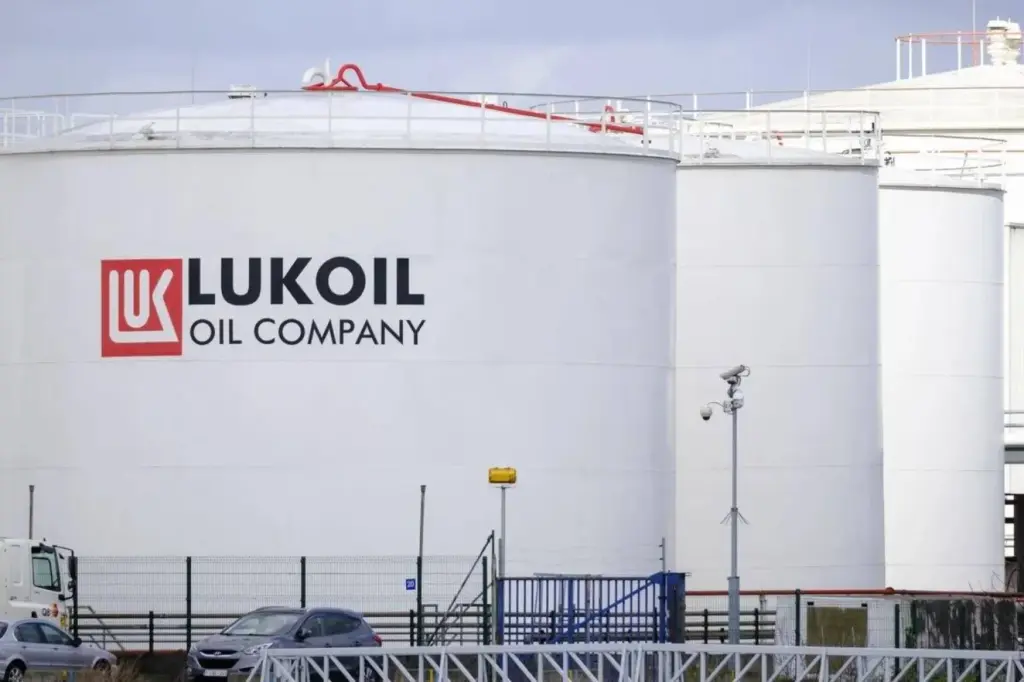
Washington, DC – In a move reflecting the geopolitical and financial complexities imposed by sanctions on Russia’s energy sector, the US Treasury Department announced an extension of the deadline for international energy companies to finalize acquisitions of Lukoil’s international assets.
Under the new decision, companies have been given an extension until May 30, 2026, instead of May 1.
Sanctions pressure and revenue freeze
This decision comes amid ongoing pressure from Washington on Moscow, with sanctions forcing Lukoil, Russia’s second-largest oil producer, to put its vast international portfolio up for sale. This portfolio is valued at approximately $22 billion.
These assets include strategic projects ranging from giant oil fields and refineries to fuel stations spread across several continents.
The United States imposes “extremely strict” conditions on the sales, prohibiting the Russian side from receiving any direct payments. Instead, the proceeds from the transactions are deposited into frozen bank accounts under strict US supervision to ensure they are not used to finance the Russian war effort.
Iraq at the heart of the oil conflict
Attention is particularly focused on Russian assets in Iraq, with the American company ExxonMobil emerging as one of the most prominent interested parties among more than 12 potential buyers. The Iraqi market is considered the linchpin in this forced divestment, due to the Russian company’s vital investments there, most notably the West Qurna-2 oil field in Basra province.
The West Qurna-2 oil field is considered one of the world’s largest giant oil fields. Lukoil began developing it in 2010, with actual production commencing in 2014. Its strategic importance lies in its massive production capacity, ranging from 400,000 to 470,000 barrels per day. For this reason, it is considered a cornerstone of the Iraqi economy and its oil exports.
Challenges of negotiation and the fifth extension
This extension, the fifth of its kind since last October, clearly indicates the complexity of the legal and financial negotiations. Beyond the enormous market value, acquiring companies face challenges related to the national sovereignty of the asset host countries, such as Iraq. These countries could also be affected by a change in operator identity from Russian to American or other Western entities, in addition to legal concerns regarding the potential future repercussions of sanctions.
If the acquisitions are successful, it will represent a major shift in the global energy landscape, leading to the complete exit of one of Russia’s largest players from strategic markets. This will grant Western companies greater influence in Iraq’s giant oil fields, potentially reshaping the balance of power within OPEC.