Only 22 percent of Israeli ninth graders met the requirements of the English language curriculum in Israel, according to results from exams conducted last year by the National Authority for Educational Measurement and Evaluation (RAMA).
The poor 2025 results released on Thursday sparked widespread concern over the state of Israel’s education system, amid several years of disruptions to learning, including the COVID-19 pandemic, teachers’ strikes and wartime closures.
Only 9% of students at Arabic-speaking schools met the English language requirements, compared to 27% in Hebrew-speaking schools, according to the results of the standardized test given to all ninth-grade students.
The worst results were observed in southern Bedouin communities, with 86% of students demonstrating low levels of English proficiency, and only 1% meeting the curriculum requirements.
In their first participation in the exams, only 7% of Haredi students met the English requirements, compared to 16% in the national religious system and 31% in the Hebrew secular system.
Seventy percent of students said their parents placed a high value on the study of English. However, no connection was found between the parents’ approach and their children’s performance.
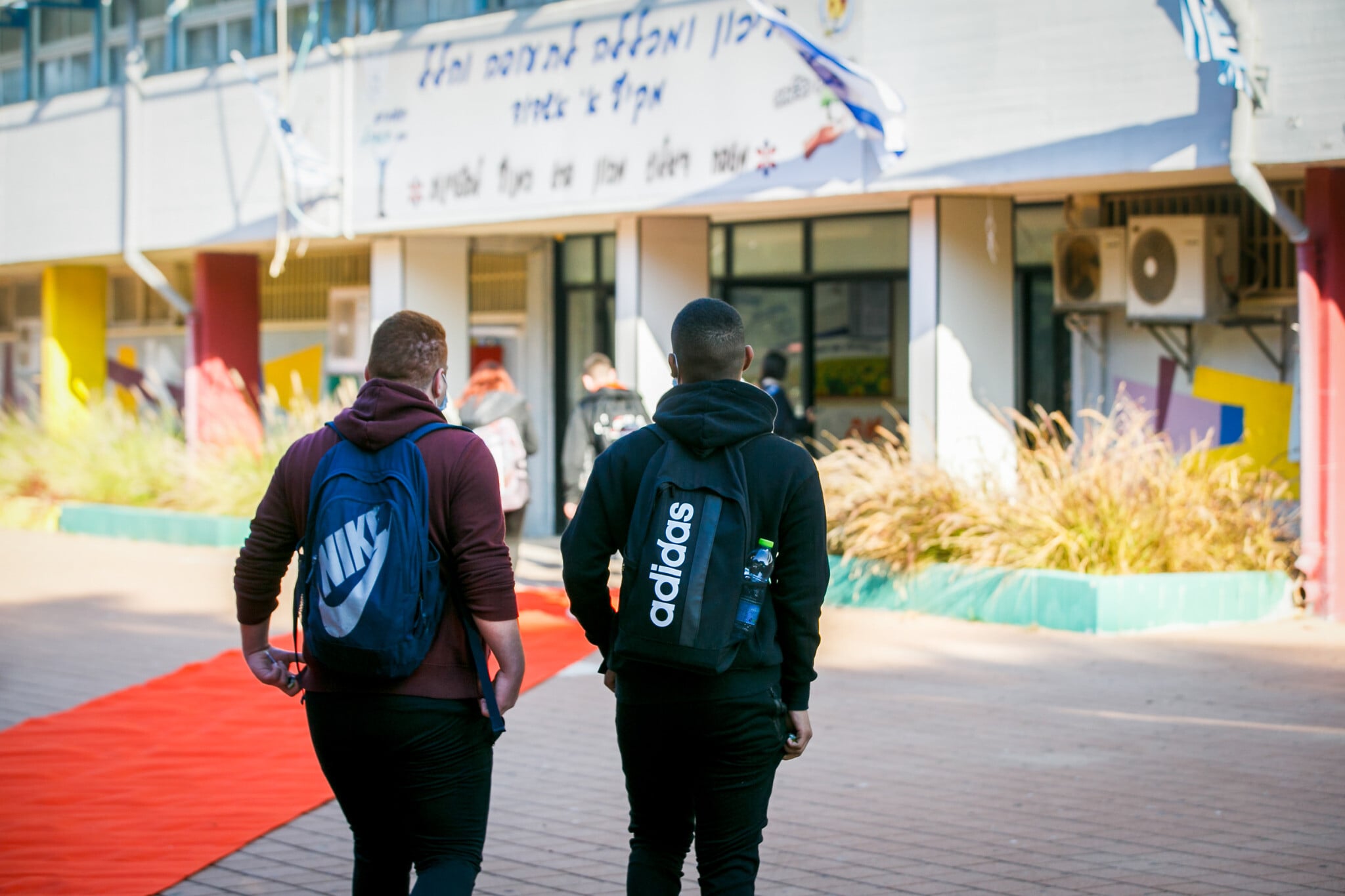
Israeli students arrive to school, at a high school in the southern Israeli city of Ashdod, November 29, 2020. (Flash90)
English has been taught less in schools since 2020, with five hours a week of lessons at most, curricula have been frequently changed, and there is an acute shortage of English teachers, according to RAMA.
In tests in their mother tongue, only 38% of ninth graders met the requirements — 19% of students at Arabic-speaking schools and 44% in Hebrew-speaking schools.
All sectors saw performance gaps based on students’ socio-economic status. In Arabic-speaking schools, a gender gap was also found, with girls performing better, on average, than their male counterparts, according to the Haaretz daily.
Three hundred and eighteen schools, and a total of 30,256 students, took part in the tests. It was the first time the tests had been held since the 2018-19 school year.
The content of the exams was changed in the meantime, however, so a direct comparison of the newer results to the previous ones was not possible.