
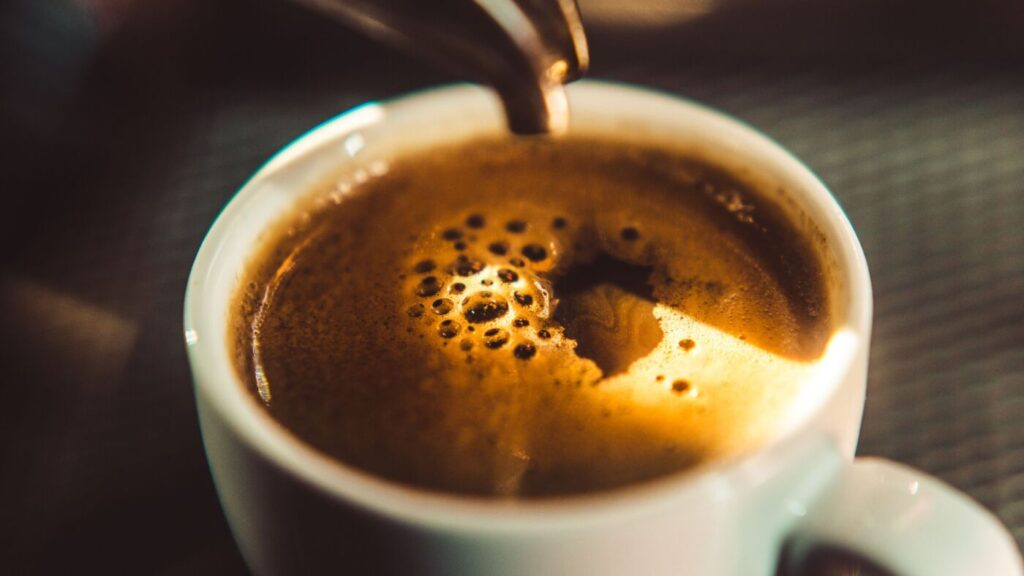
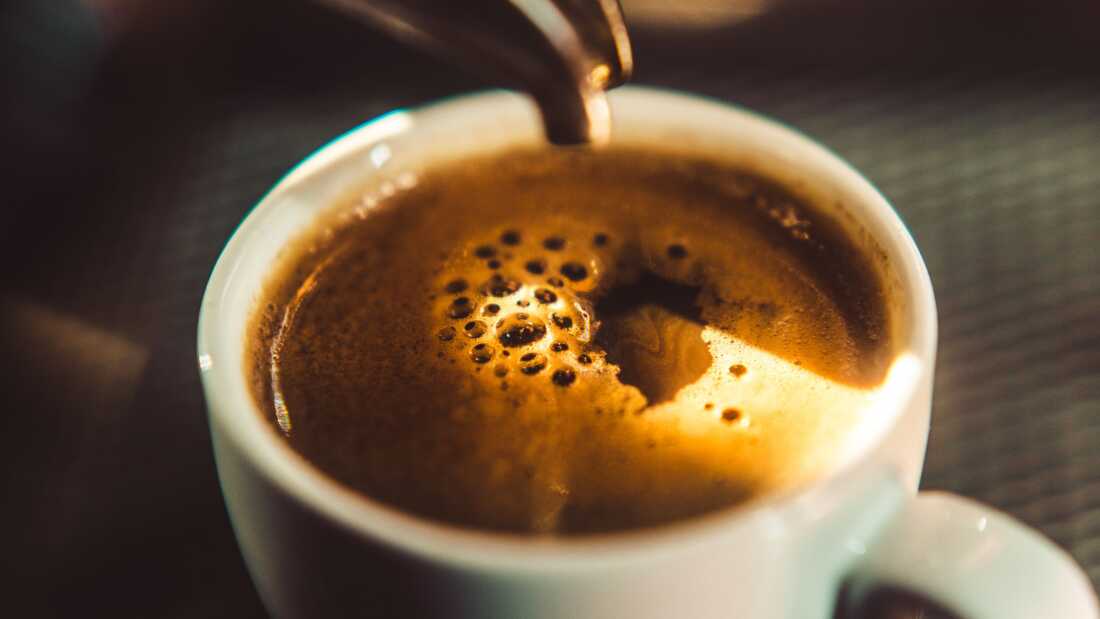
How do you measure the flavor variations in a cup of coffee? Researchers at the University of Oregon tried using a tool that’s commonly used to measure the charge in batteries.
Guido Mieth/Getty Images
hide caption
toggle caption
Guido Mieth/Getty Images
Ask any coffee aficionado, and they’ll tell you: A good cup is about more than the beans. The flavor is affected by lots of things – the roast and fermentation of the beans, the coarseness of the grind, the brewing temperature and even the chemicals in the water used to brew it.
But there are very few quantitative ways to assess all the flavor variations. Current industry standards measure the concentration of coffee, but they often miss qualities like the acidity, brightness and fruitness. Scientists at the University of Oregon are trying to change that using a tool called a potentiostat that’s often used to measure the charge in batteries.
“You’re just basically sticking two pieces of conductive metal into coffee,” says Christopher Hendon, chemistry professor and former competitive coffee circuit coach. “The coffee acts as a resistor, and at different voltages you have different molecules reacting with that applied voltage.”
In other words, running an electric shock through a cup of coffee gives chemists a quantitative assessment of acid levels and intensity – how dark the roast is, as well as how strong the coffee could taste. In a test the scientists ran, this method was at least as good as human experts at telling when a roast wasn’t up to par.
Interested in more food and beverage science? Email us your question at shortwave@npr.org and we may turn it into an episode!
Listen to every episode of Short Wave sponsor-free and support our work at NPR by signing up for Short Wave+ at plus.npr.org/shortwave.
Listen to Short Wave on Spotify and Apple Podcasts.
This episode was produced by Hannah Chinn and Jeff Pierre. It was edited by Rebecca Ramirez and Christopher Intagliata. Tyler Jones checked the facts. The audio engineer was Cena Loffredo.