
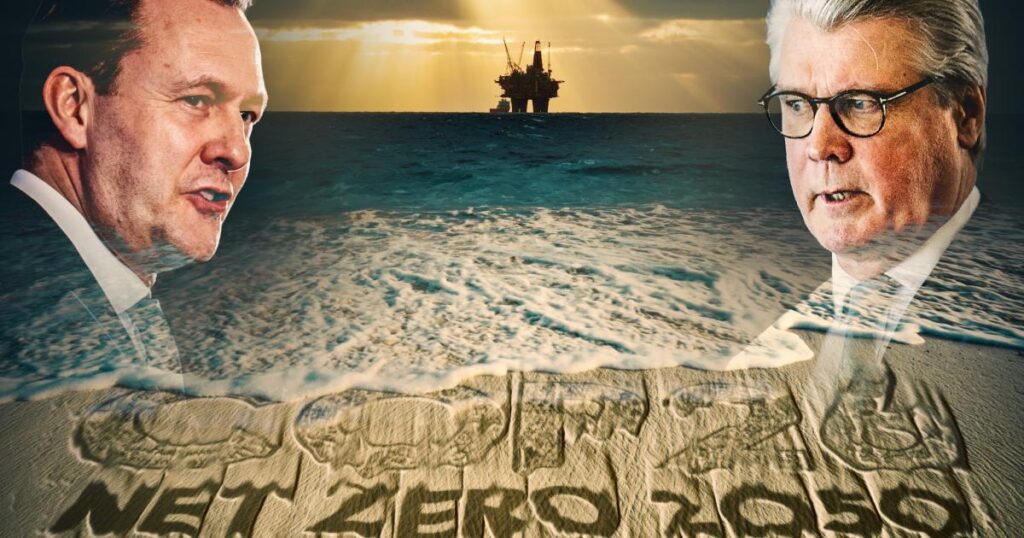
Climate may not quite be a c-word in this election, but without a doubt the tone has changed around this key issue. How did Conservative realism become so small-minded? And whatever happened to the SNP‘s grand aspirations of fight aginst climate change, the ‘world-leading’ target boasts of 2021?
It’s not just the Scottish Conservatives, but many of the other parties appear to have gone relatively quiet on the issue, and then there is Reform, the party of ‘net stupid zero’ whose Scotland leader in the recent STV leaders debate, called out “net zero nonsense”, and is fielding some candidates who espouse climate denialism.
Across the board, in 2026 election manifestos, there is, according to an Institute for Public Policy Research (IPPR) Scotland analysis, less mention of climate compared to 2021.
This is perhaps not surprising given that a YouGov poll of the issues Scots care about showed the economy, health and immigration as key leaders, and the environment trailing low on the list, not far behind Independence.
But there is research that suggests some of this quietening on climate may be misplaced. A March 2026 report by IPPR’s UK office found, “Politicians across the spectrum are out of step with public opinion on net zero. Media coverage of net zero is more than two and a half times as negative as public sentiment, creating an elite feedback loop.”
We can see that trend, perhaps, in these manifestos. According to IPPR Scotland, there is a “dispiriting retreat from the consensus across 2021 manifestos that Scotland should play an ambitious role in the global fight against climate change”. Even the Scottish Greens, have used the term slightly less.
Partly, Dave Hawkey, senior research fellow at IPPR Scotland notes, this is because Scottish Government were “bruised by what happened with the climate targets” and the fact that having set “a stretching target for 2030 and then not put in place the policies to achieve that”, they had to drop the target.
“Obviously, Covid got in the way of being able to do things, but I think one of the things that we argue, is that their target setting process wasn’t backed up with the kind of detail that parliamentarians needed to be able to actually understand what it was they were signing up for.”
That meant, he says, that, for “some of the more difficult policies like reducing vehicle kilometres by 20%, or a million homes switching off fossil fuels to clean heat by 2030, given the difficulty of securing agreement needed, progress wasn’t made”.
But there are wider issues affecting climate debate in this election too. There are also, he notes, “global headwinds against climate action, with the change in US administration and the way that that has challenged the global processes that were driving at least the rhetoric of decarbonisation”.
This shift has taken place against a backdrop of energy price shocks. Between 2021 and now, there have been wars in Ukraine and now in the Middle East, and two energy price crises The result is, as Alex Cole-Hamilton has said, that this is a cost-of-living election. Both cost-of-living and energy security, barely seen in past manifestos, dominate current net-zero-related debate.
Meanwhile, although progress on renewables has accelerated, we are now crashing through 1.5°C target of the Paris Agreement. Earlier this year, renowned climate scientist Professor James Hansen, declared the 2°C limit “dead”. And, for those who imagine that Scotland might escape the worst of climate impacts, there has been the news in the past few weeks, which could leave Scotland’s climate veering between hot summers and -30°C winters.
READ MORE:
You would think this would be a time for more climate leadership. But little of it has entered what has been a myopic election debate.
At the extreme of this shift, is Reform, the party of the ‘net stupid zero’ slogan, who want to scrap the net zero target. Their manifesto (which doesn’t mention the word climate at all), declares that they want to “rehabilitate North Sea gas as our primary energy system.”
Meanwhile, what is more surprising, as the IPPR observes, is that we have a Conservative party manifesto that even gives room to “fringe talking points, like Scotland being too small to make a difference”.
Its manifesto argues that the Scottish Government’s 2045 target “would require that households across Scotland spend much more on expensive heating systems and costly new electric cars” and be “ruinous for our agriculture sector as it requires a culling of animals and far less meat consumption, on top of the premature closure of our oil and gas industry.”
Even in the manifestos of the Liberal Democrats , SNP and Labour, IPPR Scotland observes, mentions of climate between 2021 and 2026 manifestos found, have “fallen considerably”. Labour mentions climate a mere five times, and net zero also five times. Compare with ‘growth’ which has 37 mentions.
Is a retreat from climate, and emphasis on its costs, a vote winner? There are many polls that tell us that people do care about the climate. A recent Diffley survey for UK-wide campaign group Uplift revealed that nine out of ten Scots care about climate change to some degree, with only one in ten saying they don’t care at all.
Analysis by Climate Barometer, which operates a tracker of MP and public opinion, shows the political and media discourse and the public conversation about zero emissions targets have become “disconnected”.
Then there is the IPPR UK research, which found, “Crucially, climate policy is not driving voter defections. Only 4 per cent of Labour-to-Reform switchers cite climate or net zero as a reason for changing their vote. However, the analysis identifies a significant gap between public opinion and politicians’ perceptions. MPs are underestimating support for net zero, with Conservative MPs understating public backing by around 18 percentage points.”
Polling has also shown that few people are voting for Reform because of it stance on net zero. A More in Common survey showed that only one in 10 people vote for the party because of it – though this may be an ever shifting field.
All in all, it seems that climate and net zero are not the headline vote-winners, in an election that is more about the economy.
(Image: BBC)
And if we look at some net zero related issues? Recent nationally representative polling, commissioned by EnergiRaven and conducted by Censuswide among 2,330 UK adults, found strong support for heat networks across the political spectrum – including among Reform and Conservative voters.
Or course, Scotland has its own issues around net zero which inform this debate, among these job-loss from North Sea oil and gas and the heavy lifting the country is doing in terms of the energy transition. The recent BBC Question Time in Aberdeen showed the palpable anger around failure of the just transition, but it also a desire to tackle the climate crisis.
Climate may not be a top vote-winner, despite being described by Anas Sarwar in the recent STV Leaders Debate as the key challenge of our time, but it is nevertheless an issue many voters care about. In that sense there is still space for leadership on these matters, for calls to hope and ambition, even whilst acknowledging the limitations of progress on issues like just transition.
Parties need not be scared. Yes, we are in the midst of an energy price crisis, but finding answers for the long term, rather than a knee-jerk stories around a return to great oil extraction, mirages that can never sort the predicament we are in now., has to be part of the debate. More ambition, less noise.