
On March 23, 2010 President Barack Obama signed the Patient Protection and Affordable Care Act — usually referred to either as the Affordable Care Act or as Obamacare — into law. Joe Biden, then the vice president, could be overheard whispering “This is a big fucking deal.” And it was.
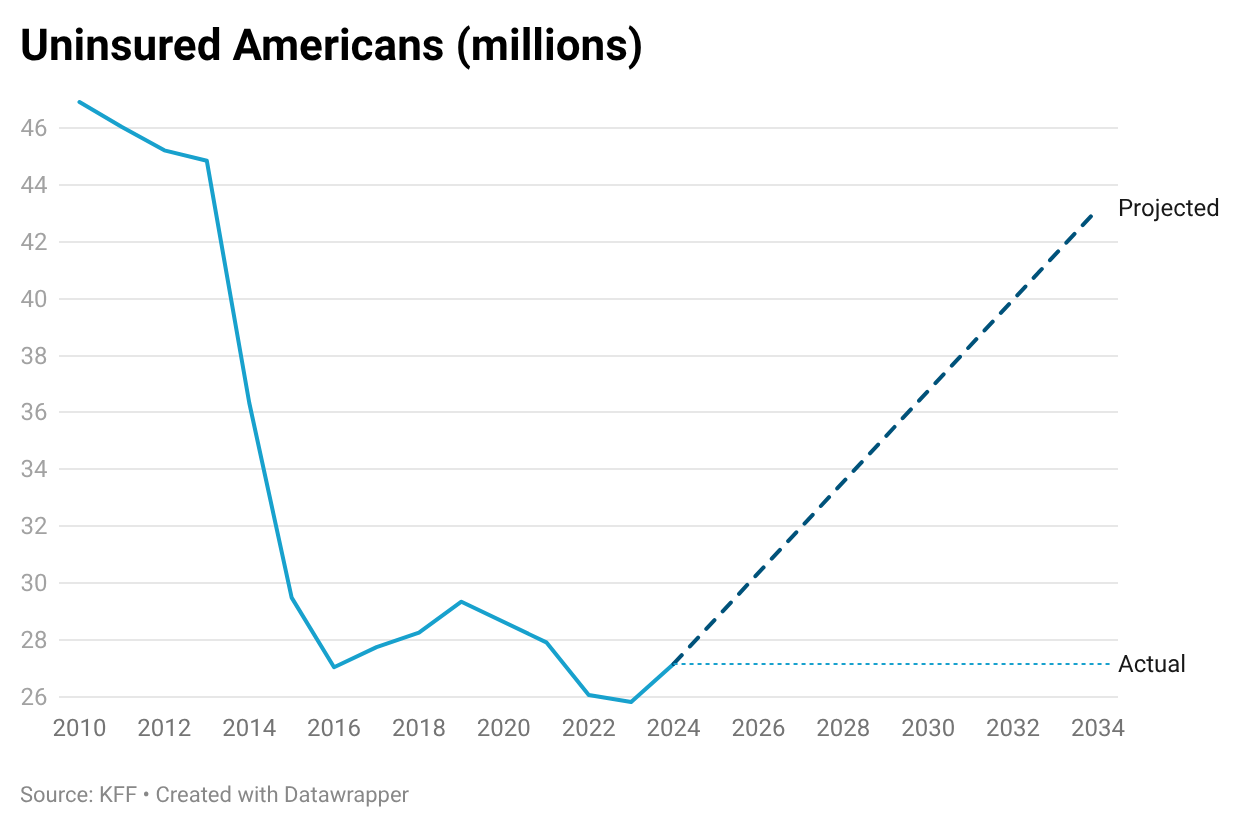
The ACA, which went into full effect in 2014, created a system of subsidies and regulations designed to make health insurance available to many Americans who had previously been left out. It worked: In 2010 there were 47 million uninsured people in America, but by 2016 this number had dropped to 27 million. This still fell short of the universal health insurance that every other advanced nation has, but it was real progress.
In 2017, during his first term, Donald Trump tried to destroy the ACA, replacing it with the American Health Care Act — legislation that would have eliminated most of the provisions that expanded health insurance under Obama.
At the time the Congressional Budget Office projected that the G.O.P.’s replacement bill would nearly double the number of Americans without health insurance, increasing the total uninsured population by 23 million and undoing all of the progress achieved under the ACA.
However, the attack on Obamacare failed by one vote in the Senate, and the ensuing public backlash against the G.O.P. delivered a large victory in the 2018 midterms to the Democrats. After these developments many observers assumed that the ACA had become a more or less permanent feature of American life.
Such assessments, however, failed to take into account the deep hostility of the U.S. right toward policies that expand access to healthcare. As we’ll see, this hostility goes back generations. And the second Trump administration has taken actions that the CBO projects will add 16 million people to the rolls of the uninsured by 2034.
How did we get here? And now what? Today’s primer will analyze the political economy of U.S. healthcare since the 1940s and the combination of danger and opportunity created by the current crisis.
Beyond the paywall I will discuss the following:
-
US health care on the eve of Trump II
-
80 years of US health politics
-
The Obamacare story
-
The new assault on healthcare