
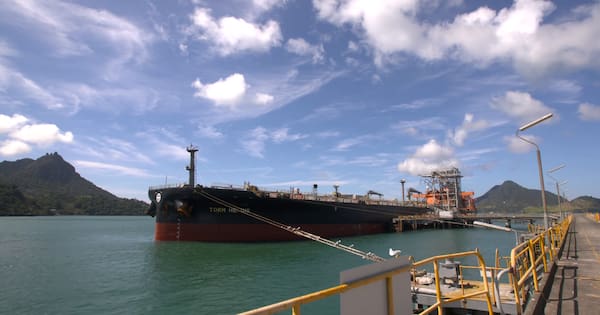
Energy officials are identifying fuel tankers heading for New Zealand for the first time, as fresh stock data shows diesel and jet fuel reserves have increased significantly.
Today’s release from the Ministry of Business, Innovation and Employment (MBIE) delivered mostly good news ahead of Prime Minister Christopher Luxon’s appearance at the official signing of New Zealand’s so-called “food-for-fuel” deal with Singapore.
The MBIE data published this afternoon showed diesel stocks rose from 46 to 52 days’ cover and jet fuel climbed from 49 to 58 days’ cover over the period ending April 29.
Petrol stocks remained largely unchanged, dipping slightly from 52.8 to 52.6 days’ cover.
A ministry spokesperson said the significant increase in diesel and jet fuel was the result of several large shipments that had recently embarked for New Zealand, with the supply chain “operating smoothly”.
Most of the gains came from vessels outside New Zealand’s exclusive economic zone (EEZ), which extends 200 nautical miles off the coast. It comes after a period of declining offshore and on-water stocks.
On-water data includes stock on ships that are up to three weeks away.
Diesel stocks on water outside the EEZ jumped from 14.1 to 22 days’ cover, while jet fuel surged from 15.6 to 27.3 days’ cover.
In-country stocks held relatively steady across all three fuel types, with petrol at 34.9 days’ cover, diesel at 27.1 and jet fuel at 31.4.
Fuel importers had provided “good confidence” through confirmed orders to mid-June, with planned orders extending into July, according to MBIE.
A spokesperson said there had been no reports of material issues with future shipments and there was “currently no need for New Zealanders to change how they buy fuel”.
Around a third of New Zealand’s refined fuel comes from Singapore, and two-way trade between the countries is worth $11 billion a year.
Luxon landed in Singapore this morning to sign off on the comprehensive strategic partnership struck last October. The agreement has been considered crucial as global supply chains remain severely disrupted by the crisis in the Middle East.
It includes assurances that essential supplies will continue to flow between the two nations, with Singapore keeping New Zealand stocked in fuel and New Zealand keeping Singapore stocked in food.
Ships named for the first time
In a new move, MBIE for the first time published the names of individual vessels carrying fuel, saying it had worked with fuel companies so the information could be released.
Three ships were within the EEZ – the CC Ningbo, Grand Winner 3 and TP Endurance.
Oil prices yesterday hovered near their most expensive levels since the conflict began. (Source: 1News)
Nine were outside the zone: the Esteem Discovery, Esteem Endeavor, Gem Emerald, Maersk Crete, Pacific Sunstone, Sea Odyssey, Sea Orca, STI Opera and STI Virtus.
The ministry cautioned the list was “a snapshot at a point in time”, noting ships were usually on the move, and schedules could change frequently due to weather, port congestion and loading requirements.
Officials also had cautionary words for amateur fuel monitors.
MBIE warned that publicly available ship tracking services using automatic identification system (AIS) data did not provide a reliable picture of fuel supply movements.
“These are generally most reliable when vessels are operating in or near coastal waters, where ground-based receivers provide stronger coverage and ships are closer to ports.
“Further offshore, automatic identification system coverage relies on satellite data, which can be delayed or intermittent and is often restricted or unavailable in free or open source tracking services.
1News Verian poll finds three quarters of respondents believe road user charges should be temporarily reduced. (Source: 1News)
“As a result, free ship tracking tools usually only display vessels close to shore and may show limited information, such as only the next port of call (for example Fiji), even where this is just a stopover on the way to New Zealand.
“AIS data also does not confirm a vessel’s cargo, and reported routes and timings can change due to weather, port congestion, or loading and unloading requirements.
“While helpful as a reference, publicly available AIS data does not provide a complete, consistent, or verified picture of fuel supply movements.”
But MBIE said it would not publish ship-level consignment details, saying fuel importers had provided the information in confidence.
“Protecting this confidentiality ensures we continue to get the most detailed system-wide information possible,” a spokesperson said.
“This allows us to monitor the fuel supply as New Zealanders expect.”
Fuel stocks data was next due to be updated on Wednesday.