
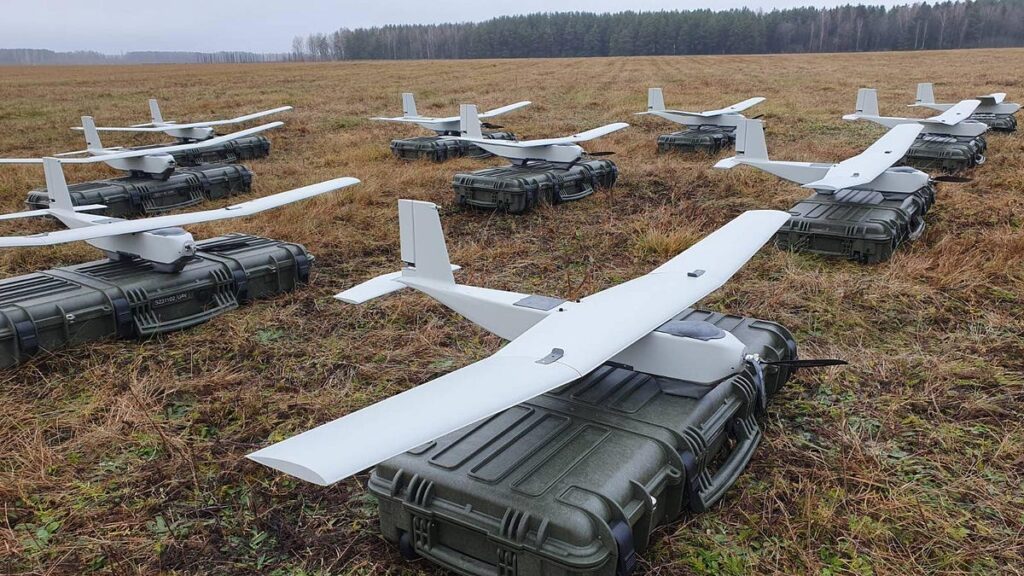
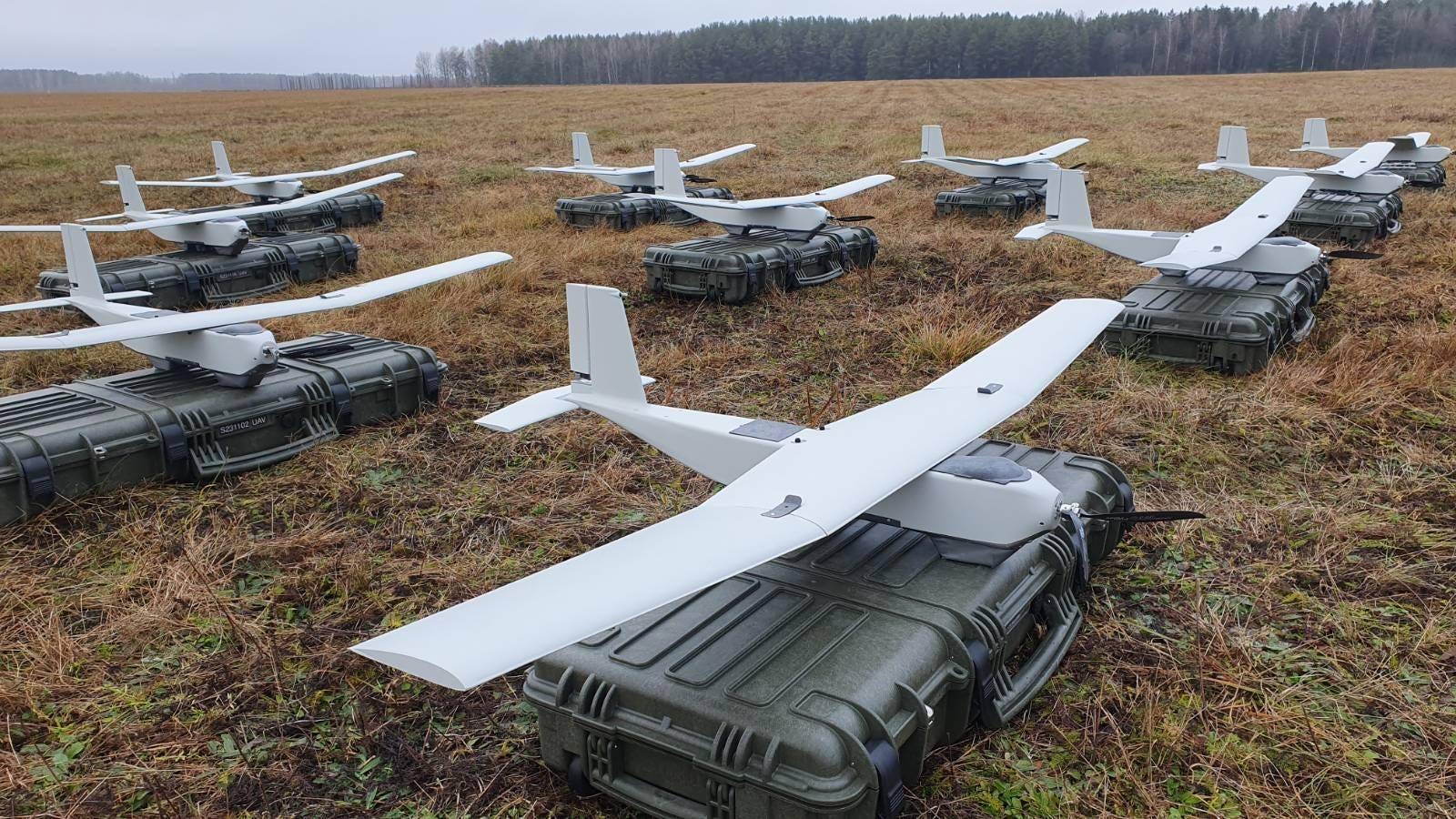
Ukraine is not only scaling its own drone production—it is also helping trusted partners test and refine their systems under real combat conditions. A growing number of international companies are turning to Ukraine for battlefield validation. The Lithuanian firm Granta Autonomy initially worked directly with Ukrainian military units and now supplies drones to Ukraine as part of Lithuania’s contribution to the Drone Capability Coalition.
Based on my personal experience, I would note that very few international partners fully understand Russia’s imperialistic mindset and support Ukraine in the same way as the Baltic states.
I’m sharing this article based on my conversation with the company’s CEO, Gediminas Guoba, and other open-source reporting on the performance of their drones. With this article, I hope other companies will be inspired and motivated to deepen their cooperation with Ukraine!
How Granta Autonomy Got into Ukraine
Granta Autonomy is a Lithuanian engineering company producing three main types of systems: the Hornet XR reconnaissance drone, FPV drones, and loitering munitions. Their flagship product, the Hornet XR, is a lightweight, fully autonomous UAV designed for ISTAR missions. It can operate for up to 3 hours over distances of up to 160 km.
The company’s engagement with Ukraine began in 2022, when it initially worked through international funds supporting Ukrainian defence efforts. However, early experience showed that simply supplying drones was insufficient, so the firm shifted toward direct engagement with Ukrainian end users.
Companies seeking to develop relevant systems must go to Ukraine and work directly with operators. Remote engagement is ineffective.
After conducting official demonstrations with Ukraine’s MoD and receiving positive feedback, the company proceeded to frontline testing.
According to Gediminas, this cooperation relies on trust built through personal relationships. However, if a system fails to demonstrate real value in combat, those connections quickly disappear.
This direct engagement proved decisive. Strong battlefield performance led to increasing demand for Hornet XR from Ukrainian forces, reinforcing the importance of iterative testing and feedback loops.
Today, Granta Autonomy’s systems are deployed across dozens of Ukrainian brigades, with deliveries already reaching the thousands.
End-User Feedback
Early battlefield feedback directly shaped the evolution of Granta Autonomy’s systems. “In 2022, when we delivered our first batch, it was the second-generation Hornet, with a range of 10–12 kilometers,” the CEO of Granta Autonomy explained. However, Ukrainian operators quickly questioned its value: commercial systems like DJI Mavic drones offered a similar range, raising doubts about the added benefit of fixed-wing platforms.
This feedback led to the company’s first major adjustment—significantly extending the operational range of Hornet XR. The next iterations increased the range to around 30 kilometers, while flight endurance was expanded from approximately 80 minutes to up to three hours.
Gediminas told Resilience Media that the most important thing for defence innovators is to be honest with themselves: if something does not work, it simply does not work—and you need to do whatever is necessary to improve the product.
“That was the case in the beginning—there were many questions and issues, and we still have them,” he notes. “But having a company presence in Ukraine—people, engineers, and support on the ground—is also crucial. Sending UAVs across borders takes a lot of time and paperwork.”
My introduction to Granta Autonomy began with the report on the field testing of their systems, published in Ukraine’s specialized resource, Militarnyi.
In August 2025, the company submitted its proposal to test the Hornet XR to the 7th Corps, which had been assigned a sector at one of the hottest points on Ukraine’s front line, the Pokrovsk agglomeration. The Corps always needs to hedge against supply disruptions in case the centralized defence procurement system fails.
The pilots conducted a flight and carried out reconnaissance, and the reported performance was excellent: strong resistance to electronic interference, reliable image transmission, and solid range. The Hornet is simple and user-friendly, hand-launched, and resistant to hard landings. It “forgives” minor pilot errors, features advanced non-standard control protocols that allow it to operate effectively under electronic warfare conditions, and its camera easily switches between day and night modes.
Following feedback from the 7th Corps, the Lithuanian developers further refined the automation of the ground control station.
The company’s latest innovation is its vertical take-off and landing X-Wing loitering munition, unveiled in 2025 and also tested in Ukraine. The strike drone carries a four-kilogram multi-purpose anti-armor and fragmentation warhead and will be integrated with Ukrainian-made components, including navigation electronics.
The loitering munition’s Datalink solution is jamming-resilient, operates in S-band/C-band, and is compatible with most ground-station software.
How Has the Battlefield Changed Since 2022
The evolution of drone warfare since 2022 has been rapid. The number and diversity of drone types have increased significantly, alongside major improvements in their capabilities.
At the same time, the speed of technological iteration is uneven. Hardware evolves relatively slowly, while software development drives most of the rapid innovation. Granta Autonomy reports software update cycles of approximately three weeks.
Recent battlefield developments have also shifted priorities in system design. Following Russia’s improvements in radar capabilities, reducing detectability and enhancing survivability against counter-drone systems have become critical.
Today, key requirements include drones’ ability to operate in heavily jammed, GPS-denied environments, as well as improved sensing capabilities—particularly in optics and multi-camera configurations. For loitering munitions, precision remains a central performance metric.
Components Production and Partnerships
Granta Autonomy is also a critical component manufacturer. From the outset, they closely examined Ukraine’s experience to identify which components could be sourced locally or produced at scale.
At the same time, certain dependencies remain difficult to eliminate. Motors, for instance, are still primarily sourced from China. However, Granta Autonomy is critical of this reliance, noting that “buying from China is effectively feeding a potential adversary.” As a result, the company has been actively working to reduce external dependencies wherever possible.
Today, most core components are already produced in Lithuania, including electronics and airframes. Batteries, while still partly sourced internationally, are increasingly available from non-Chinese suppliers. Notably, the company has fully localized the production of key subsystems: electronics are manufactured in-house, and radio communication systems are developed domestically.
The company develops its own autopilot software, ground control stations, communication systems, and payload integration. According to Forbes, Granta Autonomy developed vision-based navigation, which, combined with other sensors, allows drones to compare scenery with stored maps and find their way with high precision without a satellite signal.
NATO and the War Realities
NATO countries remain behind Ukraine in how drones are used on the battlefield. Gediminas Guoba argues that all countries—including the Baltic states—need to urgently expand their drone fleets and adapt to the pace of technological change demonstrated in Ukraine.
He also noted a visible shift in how drones are perceived within European militaries. “Two or three years ago in Lithuania, the attitude was: we are not going to use drones,” he recalls. Today, that has clearly changed—drones are now present in virtually every military exercise, and soldiers are increasingly familiar with their use.
In February 2026, Lithuanian defence units demonstrated Hornet XR during a visit by Danish and Lithuanian leaders to National Defence Volunteers and Riflemen’s Union forces.
Gediminas noted that although unmanned systems are becoming more user-friendly and many drones are now simpler to operate, the role of skilled operators remains important. Currently, there is no alternative but to invest in building operator capacity at scale. Effective use still depends on continuous training and regular flight experience, particularly given the pace at which tactics and technologies evolve.
While I do not like describing Ukraine as a testing ground, it is nonetheless impossible to ignore that any country seeking to develop capabilities for modern warfare against the same adversaries must obtain battlefield feedback and innovate accordingly.
In this context, there are multiple opportunities to test military products in Ukraine—either through the official Brave1 “Test in Ukraine” program or through other partnerships, particularly by working directly with military units.
Read some of my most recent newsletter editions:
-
“Our Goal Is to Replace All UAV Operators”: Ukraine’s Swarmer on Responsibility in Swarm Tech – link;
-
Hell’s Kitchen: Drone Munitions in Ukraine – link;
-
Can Ukraine Get Rid of Chinese Cameras? – link;
-
Training Drone Operators in Wartime Ukraine: Dronarium Academy – link.
Also, don’t forget to get a VIP subscription to read my new product – Ukraine Drone Brief – a 2-page weekly report with the key developments in unmanned warfare in Ukraine and Russia.