
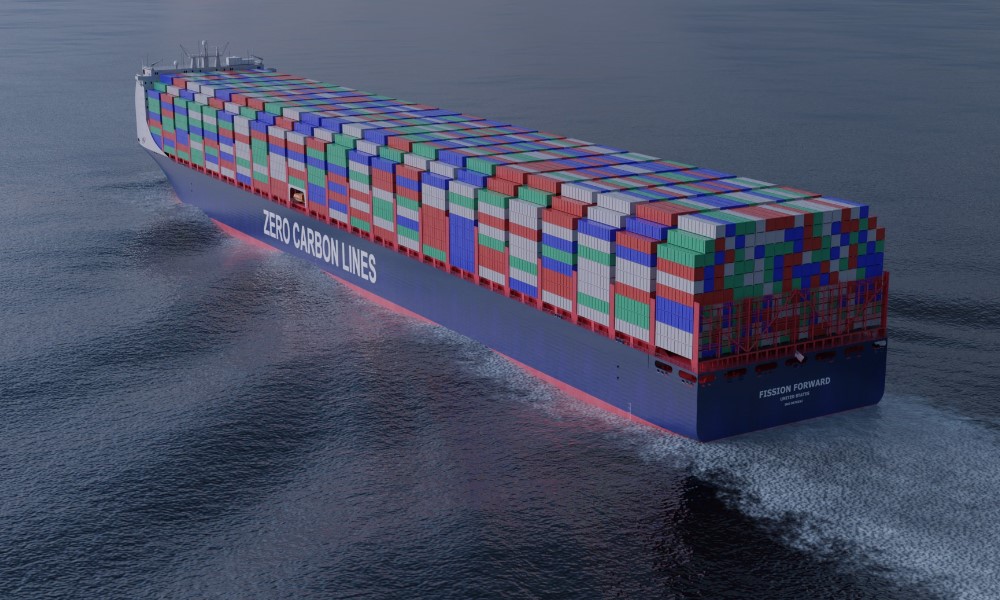
The Trump administration has launched a formal initiative to develop small modular reactors (SMRs) for commercial shipping, instructing the Maritime Administration to canvass industry and innovators on how nuclear propulsion could be deployed across American fleets at scale.
Transportation secretary Sean Duffy announced the initiative on Thursday. MARAD has issued a request for information seeking input on how to make SMR technology commercially viable for merchant shipping, covering everything from reactor design and cost reduction to regulatory frameworks, port access and workforce development.
The initiative targets six areas: deploying high-power energy to allow ships to travel farther and faster; cutting fuel costs through nuclear propulsion; reinforcing American supply chains and energy independence; identifying scalable deployment methods across entire fleets; integrating SMR production into US shipyards with new credentialing standards; and establishing the liability, insurance and inspection frameworks needed for seamless port access before construction begins.
“Under President Trump’s leadership, the US is reclaiming its rightful place as a global sea power,” Duffy said. “By partnering with industry experts and outside-the-box thinkers to develop a strong SMR model, we will deliver a state-of-the-art energy source that cuts costs and bolsters national security.”
MARAD administrator Stephen Carmel struck a more technical note, signalling that the administration understands the scale of the transition involved. “To successfully introduce SMRs, we must view this through a system-transition lens rather than just as a technology demonstration,” he said. “We are seeking critical insights on how the government can help reduce systemic uncertainty, align regulatory structures, and enable the market conditions necessary for private capital and operators to scale these groundbreaking technologies.”
MARAD will work with the US Coast Guard, the Nuclear Regulatory Commission and the Department of Energy on the initiative, supplementing the RFI process with public workshops, listening sessions and technical exchanges.