Turkey became the ninth country known to possess an intercontinental ballistic missile, with a surprise revelation at an arms show this week, raising alarm in Israel at a time of escalating tensions between the two regional powers.
The Nato country presented the Yildirimhan missile, which has a stated range of 6,000 kilometre (3,728 miles) and can carry a warhead of up to three tonnes, at an event in Istanbul. Defence experts see the weapon as another landmark step within a wider military build-up based on the rapid expansion of Turkey’s domestic defence industry.
Ankara’s military has also revealed new models of shorter-range rockets and missiles, such as the Tayfun, while its Baykar drones – made famous in Ukraine – are in global demand.
Shorts – Quick stories
Scroll to previous short

Scroll to next short
The six reasons your partner might cheat
Cheating is still the number one cause of divorce, and one in five Brits admit to doing it.
But what are the main drivers of infidelity?
 ‘If she feels unappreciated by me, sex is off the agenda,’ says the reader (Photo: Getty)
Why your partner might cheat

They want a way out
Sex and relationship therapist Cate Campbell says exit affairs are one of the three “big reasons” she sees.
Fear of commitment
This often happens when a person doesn’t feel good about themselves, or have a fear of being found out.
 ‘Fathers, it seems, are still expected to put work first and family second’ (Photo: Getty Images)

Senior husband and wife having relationship difficulties – stock photo. (Photo: Getty)
A mid-life crisis
Transitions like moving house, new jobs or becoming parents makes cheating more common.
Why your partner might cheat
They’re getting too close to a colleague
This dynamic is usually an unhappy man who confides in a woman in a work context, and it switches from a supportive friendship into an affair.
 Side view of affectionate happy couple sitting in the cozy cafe. – stock photo. (Photo: Getty)
 ‘Although problems with sex are very common, very few people come for help,’ says one GP (Photo: Getty)
They want something new in bed
Desires change – consiously or not and people may believe they want something different, or to experiment.

Elderly woman sitting alone in her living room – stock photo. (Photo: Getty)
WHY YOUR PARTNER MAY CHEAT
They feel lonely
Nobody stays the same in a relationship – and if we’re not communicating that to each other, it can be disconnecting.
Susie Masterson, a relationship therapist, says when people feel undervalued, or stretched too thin in day-to-day life, they can look at their relationship and realise it isn’t filling the gaps.
How to recover from an affair
Infidelity doesn’t have to be the end of a relationship
- Psychotherapist Esther Perel says in her book The State of Affairs that affairs can actually save a relationship, by forcing us to address deep-rooted issues and come back stronger.
- Campbell says couples should be having conversations about infidelity and what it means to them.
- “Often it’s not the affair that ends the relationship, but the fallout – and the way it’s managed. Which is why it’s useful to get some therapy if you can,” she adds.
Think you know all the signs of heart problems? Some might be myths rather than fact…
These are the beliefs to be wary of, according to Dr Abdul Mozid, a consultant cardiologist at Nuffield Health Leeds Hospital.

‘Getting out of breath is just a sign of getting older’
 Caption: Senior man laying down on the sofa, watching tv and holding the remote control.
Photographer: PicTour Studio
Provider: Getty Images
Source: iStockphoto
- While ageing can contribute, breathlessness is also a common early warning sign of heart disease.
- When the heart cannot pump efficiently, fluid can build up in the lungs, making simple activities difficult.
- If it occurs while laying down, or while doing minimal activity, it should never be ignored.

LIFESTYLE
4 min read
‘Sleep has little effect on the heart’
 There are ways to get a better night’s sleep (Photo: Maskot/Getty/Digital Vision/Copyright Maskot Bildbyr?)
Poor or fragmented sleep increases stress hormone levels, raises blood pressure, disrupts glucose metabolism and promotes inflammation — all of which contribute to cardiovascular disease.
Good-quality sleep is not a luxury; it is a pillar of cardiovascular health alongside diet and exercise.
‘Exercise gives you a healthy heart’
You can ‘out-exercise’ metabolic stress
 A young Indian woman sits on a couch at home, holding her hand over her heart, grimacing as she feels severe pain in her chest – stock photo. (Photo: Getty)
This is not true. A poor diet high in saturated fats, refined sugars and salt promotes high cholesterol, diabetes and hypertension, regardless of your activity levels.

Analysis
3 min read
Other heart health myths to ignore
Only “bad” cholesterol matters
While HDL cholesterol may be associated with lower risk in some contexts, it does not provide total immunity to heart problems. Managing LDL levels remains crucial as part of your overall health.
 (Photo: Jacob Wackerhausen/Getty).
 Midlife depression. Sad upset middle aged woman at home, feeling lonely. Aging anxiety and loneliness concept – stock photo. (Photo: Getty)
It’s just anxiety
Women are more likely to present with less “classic” heart attack symptoms, such as fatigue, nausea, jaw pain or back discomfort. If symptoms are new or persistent, cardiac issues must be considered.
‘Heart disease is an older person problem’
Heart disease remains the leading cause of death in women, yet risk is often underestimated. Symptoms may be subtle and attributed to life stage or stress.
Recognising these unique risk enhancers is vital to earlier diagnosis and prevention.

The older couple has a conflict. Upset mature woman, quarrel with her husband. Relationship crisis – stock photo. (Photo: Getty)
 Caption: BERLIN, GERMANY – AUGUST 13: Symbolic photo on the topic of problems in a relationship. An older woman and an older man are sitting at home on August 13, 2024 in Berlin, Germany. (Photo Illustration by Thomas Trutschel/Photothek via Getty Images)
Photographer: Thomas Trutschel
Provider: Photothek via Getty Images
Source: Photothek
Why eating eggs five times a week could
cut Alzheimer’s risk
People who eat eggs more regularly could have a reduced risk of developing Alzheimer’s disease, a new study suggests.
 Caption: A detail of cracked egg falling into the pan as woman holds egg shells in both hands.
Photographer: SimpleImages
Provider: Getty Images
Source: Moment RF
What does the study show?
Having eggs at least five times a week suggests a…
27%
lower risk of developing Alzheimer’s, compared with those who rarely or never eat them.
The research followed nearly 40,000 adults aged 65 and over for an average of 15 years.
980,000
People are estimated to be living with dementia in the UK, with Alzheimer’s the most common cause.
This is forecast to rise to 1.4m by 2040 as the population ages.
What’s so special about eggs?
Photographer: Andrew Brookes
Provider: Getty Images/Image Source
Source: Image Source
Copyright: Copyright Andrew Brookes
A no-brainer
Eggs contain choline, which the body uses to make acetylcholine, a chemical involved in memory and learning.
Nutritious and delicious
Eggs contain lutein and zeaxanthin, the yellow-orange pigments in food which could act as antioxidants.
 (Photo: Laurie Ambrose/Getty).

Caption: Eggs are seen in a carton on Monday, April 13, 2026, in Portland, Ore. (AP Photo/Jenny Kane)
Photographer: Jenny Kane
Provider: AP
Source: AP
Egg-ceptional
They also provide some omega-3 fatty acids, which have been linked with cognitive function.
HEALTH
The potential cause of common type of stroke uncovered
 Caption: Closeup of elderly Asian man visiting neurologist explaining stroke risk using artery model ??? discussing brain health and blood pressure
Photographer: PonyWang
Provider: Getty Images
Source: E+
Researchers have pinpointed the potential cause of a type of stroke suffered by about 35,000 people in the UK every year.
The discovery could explain why widely used treatments don’t work, and could pave the way for new options.
What does the study say?
- Lacunar strokes – triggered by damage to tiny blood vessels – are caused by the widening of arteries in the brain, researchers say.
- This is unlike ischaemic strokes, which are caused by a blocked blood vessel.
- This could explain why usual treatments, such as anti-platelet drugs, which stop blood clots from forming in the arteries, do not work.
- Lacunar strokes can lead to problems with thinking, memory, movement and dementia.

Divorce Diaries
5 min read
New treatments are needed
Researchers at the University of Edinburgh and the UK Dementia Research Institute tested and tracked 229 people who had a lacunar or mild non-lacunar stroke. Patients with widened arteries were four times more likely to have a lacunar stroke.
 Scientists argue that ‘holistic’ approach is needed to brain disease prevention and treatment as the world faces a dramatic rise in cases of stroke, dementia and other conditions. (Photo credit: FRED TANNEAU/AFP/Getty Images)
 A retired infection control nurse says it isn’t possible to “hand wash” your way out of the quad-demic.
She says hospitals need better ventilation and mask wearing to tackle the crisis (Photo: Jeff Moore/PA Wire)
This explains why conventional blood-thinners don’t work and highlights the need for new therapies to target the underlying microvascular damage.
Stroke research ‘chronically underfunded’
Stroke research is chronically underfunded, with less than 1% of total UK research funding spent on the condition…Yet these findings illustrate the value of research and the potential it has to change the lives of stroke patients.
MAEVA MAY, STROKE ASSOCIATION

Caption: Embryologist performing embryo cleaning under microscope in Petri plate after IVF next day in real laboratory
Photographer: Natalia Lebedinskaia
Provider: Getty Images
Source: Moment RF
Copyright: www.natasha-lebedinskaya.ru

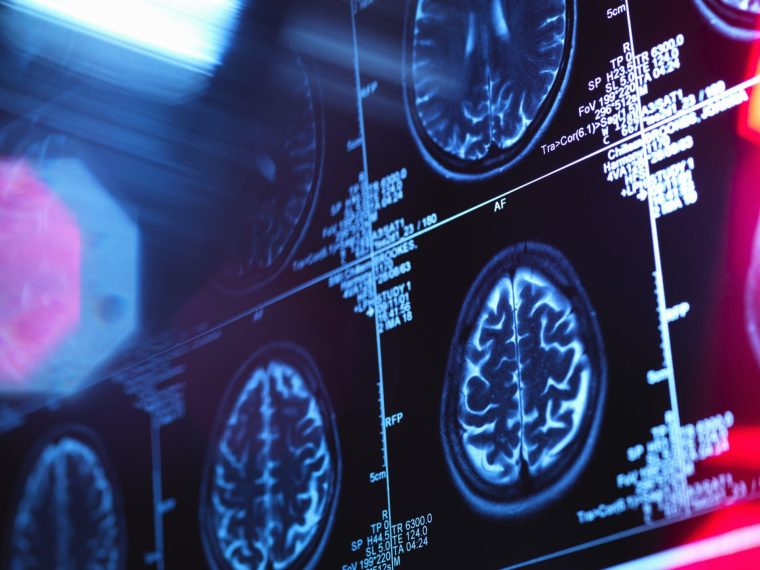
Alzheimer’s can be seen on brain scans (Photo: Tek Image/Getty)
HEALTH
The at-home test that can predict Alzheimer’s risk
Scientists have developed an at-home test which can predict a person’s risk of Alzheimer’s disease, according to a study led by the University of Exeter.
It involves a finger-prick blood test and an online brain assessment to help identify people at the highest risk.
How does the test work?

Caption: Cropped shot of young woman using blood test kit at home while doing health check and consultation online. Home finger-prick blood test.
Photographer: Oscar Wong
Provider: Getty Images
Source: Moment RF
Blood test
Finger-prick blood tests look for biomarkers, p-tau217 and GFAP, which have been linked to Alzheimer’s disease.
Online brain tests
Scientists look at the blood test alongside computerised cognitive testing to identify risk.
 Students are offered free laptops as an incentive for joining universities (Photo: PA)

Caption: File photo dated 18/05/17 of an elderly man holding a walking stick. Drugs that are said to slow the progression of Alzheimer’s disease “make no meaningful difference to patients” while increasing the risk of swelling and bleeding in the brain, according to a new review. The effects of the medicines on those with early-stage Alzheimer’s and dementia were “either absent or consistently small”, researchers said. Issue date: Thursday April 16, 2026. PA Photo. Photo credit should read: Joe Giddens/PA Wire
Photographer: Joe Giddens
Provider: Joe Giddens/PA Wire
Source: PA
Prioritise patients
The test results can be used to prioritise high-risk people for further testing and treatment.
At-home tests to ‘revolutionise’ diagnosis
Finger prick blood tests could revolutionise dementia diagnosis – they offer a low cost, scalable way to identify people who may be at higher risk of Alzheimer’s disease and who should be offered further checks.
DR SHEONA SCALES, ALZHEIMER’S RESEARCH UK

Scientists have long been trying to understand the root cause of Alzheimer’s (Photo: Andrew Brookes/Getty Images)
Fridge or cupboard?
This is your definitive guide on where and how to store your foods at home to maximise the quality and shelf life, from ketchup and butter to nuts and jam.

Where to store the basics
- Keeping butter in the fridge maximises food safety and freshness.
- Ketchup and mayonnaise can be stored in the cupboard but once opened, are best in the fridge.
- Bread shouldn’t be refridgerated due to the starch molecules. A bread bin at room temparture, or an airtight container is best.

LIFESTYLE
6 min read
How and where to store food items
There is a fine line between ripe or matured and spoilt.
Jam
Keeping it in the fridge will help it last longer.
Eggs
Storing them at a constant cool temperature, preferably in the fridge, will keep them safe to eat.
Berries
Keeping them in the fridge slows down mould growth and keeps them fresh.

LIFESTYLE
5 min read
Where to store your food

Caption: Fresh organic tomato closeup .
Photographer: Maria Korneeva
Provider: Getty Images
Source: Moment RF
Tomatoes
Ripe ones should be kept on the counter uncovered if you’re going to enjoy them in the first few days after purchase.
Potatoes
They need to be in a dry, dark place like a cupboard. Exposure to light or moisture can rot the skin.
 When you cook potatoes the right way they go from being a health burden to a health hero (Photo: Getty)

Caption: A Hand holding a bit brown banana
Photographer: bauwimauwi
Provider: Getty Images
Source: iStockphoto
Bananas
12°C is best, as they will ripen quicker if they are too warm, so a darker space with no direct sunlight is ideal.
Fridge or cupboard?
- 1Apples are best in cool to cold temperatures so the salad compartment of the fridge is ideal to keep them crunchy.
- 2At room temperature lemons stay good for a week but in the fridge it stretches to two.
- 3Ripe avocados should go in the fridge to slow down the ripening process but if they’re firm, a warm sunny spot is best.
- 4Soy sauce, due to the high levels of salt, is best in the cupboard – even once opened.
Where to store your food
Nuts
Nuts are fine in the cupboard but keeping them in the fridge in an airtight container helps prevent spoilage.
 Caption: Cookie jar, tea, wine, nuts, books, lit candles and Christmas decorations on the table. Cozy Christmas hygge at home. Selective focus.
Photographer: Jelena990
Provider: Getty Images
Source: iStockphoto

Garlic bulbs (Photo: Emma Dahl/RHS)
Garlic
This suits dry, dark places so a cupboard is ideal.
Onions
Low temperatures can transform the starches of the onion into sugars, making it soft, and potentially mouldy.
 Close up shot of man chopping onions during cooking class – stock photo. (Photo: Getty)

Co-op is confident it’s stores will be ‘back to normal’ within days (Photo: Chris J Ratcliffe/Reuters)
NEWS
The supermarket using invisible spray to combat shoplifting
Co-op has been secretly marking frequently shoplifted groceries with a special forensic spray to tackle the resale of stolen goods.
Here’s how the invisible spray works, and how the company hopes it will make shoplifting less profitable.
What’s the story?
Co-op has been marking items with an invisible spray that contains a unique forensic code linked to the shop where it was originally sold, according to Retail Gazette.
 Retail theft on the increase – woman stealing in UK supermarket. (Photo:
Andrey Popov/Getty Images
Copyright: Copyright (C) Andrey Popov
 Caption: A shopper walks along an aisle inside a Tesco supermarket in Manchester, Britain, February 5, 2026 REUTERS/Phil Noble
Photographer: Phil Noble
Provider: REUTERS
Source: REUTERS
Co-op has invested £250m in store security, including body-worn cameras for staff, reinforced kiosks for items such as spirits and tobacco, and shelf fixtures designed to stop thieves sweeping products into bags.
How does the scheme work?
Where?
The scheme has been trialled in Manchester and London and will be rolled out across the UK.
Which items?
High-risk items such as alcohol, laundry detergent and confectionary have been sprayed.
Why?
The aim is to help Co-op and the police identify where stolen products are being resold, making theft less profitable.

NEWS
2 min read
Are you ready for a change?
One career expert shares the surefire signs you’re ready for the next step in your career, and how to turn fear into excitement for new opportunities.

The research
Our research shows almost half of all workers (45 per cent) are ready for a complete career transition, but 49 per cent feel stuck on what to pursue next. The rapid shifts brought about by AI can be intimidating, but it will also create opportunities…
CHARLOTTE DAVIES, LINKEDIN UK CAREER EXPERT

Young woman at her first job interview with the owner of a coffee shop – stock photo. (Photo: Getty)
Signs you’ve outgrown your role

(Photo: Getty).
It’s an energy drain
If you’re clocking in and out with zero energy, that could be a sign of burnout by boredom.
You’re not learning
If you can handle all tasks on autopilot, you are not challenging yourself. Instead you’re operating purely on muscle memory.
 Education, laptop and typing with student friends in library of university together for learning or study. Computer, development or growth with serious men and women on college campus for scholarship – stock photo. (Photo: Getty)

(Photo: DMP/Getty Images).
You don’t feel valued
It can be extremely demotivating, and if it occurs consistently, it’s a strong signal that it might be time to consider moving on.
Your brain has started a side project
 Caption: Side hustles
Photographer: swissmediavision
Provider: Getty Images
Source: E+
When you are seeking out professional development and learning opportunities elsewhere that should be happening at work, it’s a huge signal that you need a job that keeps up with your ambition.

LIFESTYLE
7 min read
You don’t see a path to promotion
 Medium shot of businessman leading meeting in office conference room – stock photo. (Photo: Getty)
If you go into a meeting asking for a growth plan or a promotion roadmap and all you get are vague promises and non-committal language, that’s actually your answer: they aren’t planning for your potential.
A manager who truly values you should be able to list specific training, projects or goals to get you to the next level.
What to do next
You don’t need to make drastic moves.
- The very first step is to diagnose the root cause if things feel unsettled, and don’t just assume it’s the job itself.
- Find someone trustworthy to talk to. This isn’t a complaint session, it’s about getting perspective.
- Refresh your LinkedIn profile and start reviving your in-person network.
- Thinking of a new field? Check out a short course or certification to ‘test the waters’ before jumping.
Turkish security specialists suggest much of this urgent development is happening with Israel in mind, following a series of devastating wars in the region and veiled threats from Israeli officials.
Ali Burak Daricili, a veteran of the Turkish intelligence services and former advisor to prime ministers, and now a professor of international relations at Bursa Technical University, suggests the sudden revelation of the Yildirimhan is a “message to Israel” and a “strong deterrence” against potential Israeli aggression.
Ali Bakir, a specialist on the Turkish military and professor of international affairs at Qatar University, said the country had broader security concerns but “Israel has imposed itself on this agenda”.
Relations between the two regional powers have declined rapidly in recent years after a period of close partnerships ended in the 2000s. That partnership extended to intelligence sharing, arms sales and joint military exercises.
Tensions have erupted over Israel’s treatment of Palestinians. Turkey’s President Recep Tayyip Erdoğan has compared Israeli prime minister Benjamin Netanyahu to Adolf Hitler, while the Israeli leader has accused the Turkish autocrat of massacring ethnic Kurds.
 New model Turkish drones on the TCG Anadolu warship (Photo: Murat Sengul/Anadolu/Getty)
Turkey has also fostered relations with Hamas while Israel has forged ties with Greece and Cyprus. Regional ambitions, meanwhile, have collided in Syria, where Israeli forces targeted sites Turkey had designated for military bases.
Prominent public figures in Israel, including Naftali Bennett, a strong contender to be the next prime minister, have described Turkey as the “new Iran” – Israel’s current major threat in the region.
Turkey’s foreign minister, Hakan Fidan, responded that Israel “cannot live without an enemy” and that it was “seeking to declare Turkey the new enemy”.
A senior Israeli official, who did not wish to be identified, stopped short of echoing Bennett’s statement, but said Turkey’s military build-up was a “huge concern” and claimed that the country was taking a “dangerous” turn due to the influence of radical Islamist elements. They compared this to the influence of the Islamic Revolutionary Guards Corps in Iran.
The Turkish military overhaul goes beyond missile and drones. A first aircraft carrier is said to be ahead of schedule and could be completed by next year, and the Turkish air force is assembling a fleet of home-made Kaan fighter jets to supplement purchases of foreign aircraft such as Typhoons from the UK.
Yaakov Amidror, an Israeli former military intelligence chief and now a military analyst at the Jewish Institute for National Security of America (Jinsa), said that Turkey’s moves are a concern for Israel.
“When we see what the Turks are doing, we don’t understand them,” he told The i Paper. “We don’t understand why they need long-range missiles, why they build such a huge navy…. It’s a very dangerous situation.”
Amidror said that recent defence assessments called for increased intelligence gathering on Turkey, and that its military build-up could compel Israel to take steps to preserve its “qualitative military edge” – a policy of maintaining superior technology to its regional rivals.
 Naftali Bennett, a strong contender to be the next Israeli prime minister, has described Turkey as the ‘new Iran’ (Photo: Ronen Zvulun/AFP/Getty)
Israel has a “more sensitive” security doctrine after the 7 October, 2023, Hamas attacks, Amidror said, which requires action to pre-empt potential threats across the region, such as in Syria, where both Israel and Turkey have a military presence and competing agendas.
While Israel has sought to maintain a “buffer zone” around the occupied Golan Heights in southern Syria, and conducted regular interventions in surrounding areas, Turkey has called for the country’s territorial integrity to be respected under the new government, while also keeping soldiers in the north of Syria to combat Kurdish militants.
Amidror said the risk of a clash with Turkish forces would depend on their actions. He added: “I hope we would not be so stupid not to have (contingency) plans.”
At the same time, Turkey’s Nato membership is a notable deterrent to a clash, said Alper Coskun, a former Turkish diplomat now at the Carnegie Endowment for International Peace. But Coskun added that there was also a need for Turkish self-reliance at a time of upheaval and uncertainty.
“Turkey knows its overall deterrence and defense is boosted through Nato membership,” he said. But, “Ankara also knows that if and when push comes to shove, its safest bet is to also complement the benefits of alliance membership with strong indigenous capabilities and operational autonomy”.
According to Coskun, Erdogan’s government is combining defence development with political positioning, including maintaining friendly relations with US President Donald Trump, who has urged Netanyahu to “be reasonable” with Turkey.
 Damaged homes in Damascus, Syria. Turkey and Israel have competing interests in the war-torn country. (Photo: Ghaith Alsayed/AP)
However, hawkish elements in Washington DC think the US could ultimately back an Israeli attack on Turkey, if tensions continue to escalate.
Michael Rubin, a former Pentagon official and Turkey analyst at the American Enterprise Institute, believes that US and Israeli intelligence agencies are already tracking Turkish leaders for potential decapitation strikes, as with Iran.
And the threshold for conflict could be crossed if Turkey’s military development is perceived as an intolerable threat to Israel, he said.
“Turkey’s build-up represents a growing threat,” Rubin told The i Paper. “If any state wants to counter that threat, they have an incentive to act with surprise. Given Erdogan’s rhetoric and his increasing hostility to Israel, at some point Israeli officials are going to conclude war is inevitable and the best possible outcome would be an attempt at decapitation.”
Nato membership is likely to be of limited value in that scenario, he added, suggesting that other members might be reluctant to come to Turkey’s aid on the basis of Nato’s Article Five mutual defence pact.
“Article Five is less a barrier to conflict than Turkey and its partisans may believe,” he said. “Article Five does not automatically kick in; Nato members have to agree to it. And because Nato is consensus-driven, whether Nato would invoke mutual defence is really an open question.”

