
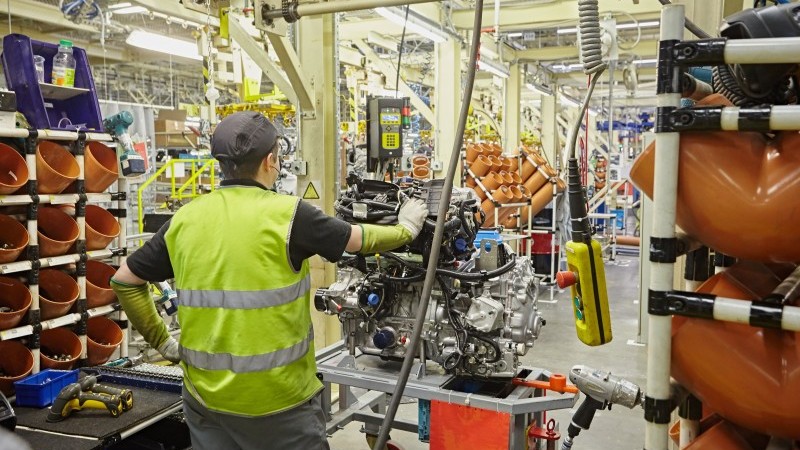
Looking ahead, not only has the outlook for German industry – and for the entire economy – worsened again, but the war in the Middle East and soaring energy prices have again exposed the fact that Germany is one of Europe’s largest net importers of energy. Some 6% of its oil imports stem from countries in the Middle East. The so-called energy-intensive industries in Germany account for some 17% of industrial gross value added and employ just under one million people. Even worse, the longer the blockade of the Strait of Hormuz lasts, the higher the risk that German industry could not only be hit by higher energy prices but also by new supply chain disruptions. And finally, don’t forget the latest US tariff threat. Some 25% tariffs on European automotives would clearly be another hit for an already battered industry.
This rather sombre outlook is confirmed by production expectations being at a 12-month low. At the same time, however, dropping inventories and increasing order books over the last few months should still provide a cushion against a too sharp drop in production. Still, some note of caution is needed, particularly when interpreting yesterday’s strong increase in industrial orders: while at first glance, it could be seen as a sign of strength, it could also simply be companies having learnt their lessons from 2020 and 2022, quickly trying to pile up new inventories in anticipation of new supply chain frictions.
All in all, this morning’s industrial production data suggests that the stuttering of one of Germany’s most important growth engines worsened with the start of the war in the Middle East. Given that energy prices continued to soar in April and risks of supply chain disruptions increased, any near-term improvement in industrial production looks very unlikely.