
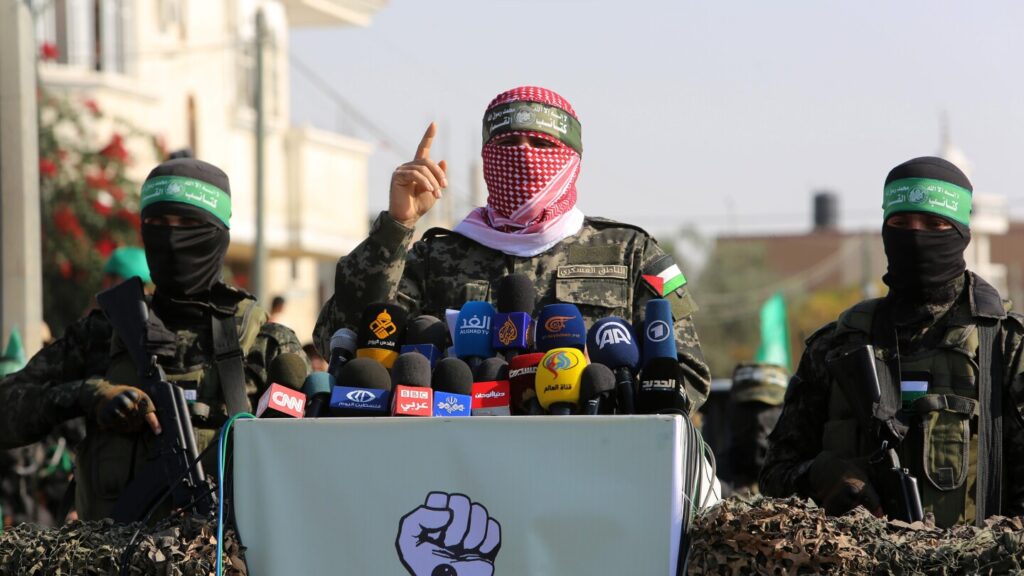
Hamas understands something Israel often forgets: the first draft of history matters. After an explosion, airstrike, or casualty claim, Hamas-linked channels move fast, providing a number, assigning blame, and circulating carefully-crafted images. By the time Israel finishes confirming facts, Hamas’s version of events has moved through newsrooms and social media and become accepted narrative by non-governmental organizations and diplomats.
Israel responds with caution; officials verify, lawyers review, and various agencies coordinate. That process may provide more accurate information, but it also produces critical delay. In the first hours after an incident, delay creates a vacuum, which Hamas and its allies fill.
In the first hours after an incident, delay creates a vacuum, which Hamas and its allies fill.
Israel is not alone in this failure. Western democracies separate operations from after-action reports. Soldiers act first, and public affairs officers explain later. That sequence may have worked when news moved slowly; however, it does not work in the age of the internet and 24/7 cable and satellite news coverage. Officials react to what they believe happened, not always to what later evidence proves, and once news organizations, activists, and international bodies adopt the first account, corrections seldom reverse policies based on false information.
The United States has seen the same problem in Iraq, where early reports from Haditha shaped global perceptions of American conduct long before the full record emerged. In Afghanistan, civilian casualty claims after airstrikes often moved faster than official clarification. By the time investigations concluded, the political damage was done. Washington learned that the truth can arrive too late to shape the story. In 2005, Newsweek published a sensational story alleging U.S. interrogators had flushed pages from the Qur’an down the toilet. Outrage led to riots in several Middle Eastern and South Asian cities, the response to which led to several deaths. Only afterward did Newsweek retract the story. The damage, however, was done and the perception motivated militants targeting Americans, enabling them to justify their terrorism.
Israel faces the same challenge, but with greater intensity as Hamas fights a public relations war on top of its kinetic one. Western audiences hear claims about civilian suffering, while regional audiences hear defiance and resistance, and supporters hear calls of martyrdom.
Israel faces the same challenge, but with greater intensity as Hamas fights a public relations war on top of its kinetic one.
Israel and other liberal democracies fall into a bind because they cannot engage in the same propaganda and trade accuracy for speed. Instead, they must build systems that combine speed and accuracy to release provisional information quickly and update it continuously. For example, Israel might have a single public channel for incident updates, rapid release of imagery, time-stamped casualty assessments, and clear explanations of what is known, what remains unverified, and what is being investigated. Silence should not be the default.
Israel and other Western democracies must also prepare better. Israel knows accusations it will face after almost any operation: inflated casualty figures, claims of deliberate targeting, charges of disproportionate force, and allegations that later prove incomplete or false. These claims should not catch officials by surprise. Every Israeli or U.S. spokesman or diplomat should have legal arguments about proportionality, for example, at their fingertips.
This lesson applies to any democracy fighting enemies that exploit civilians, information, and lawfare. Iraq and Afghanistan demonstrated the cost of slow clarification, while Gaza shows the cost of allowing an adversary to speak first. In modern war, perception means more than reality. Timing matters, lest false narratives ossify into conventional wisdom.