
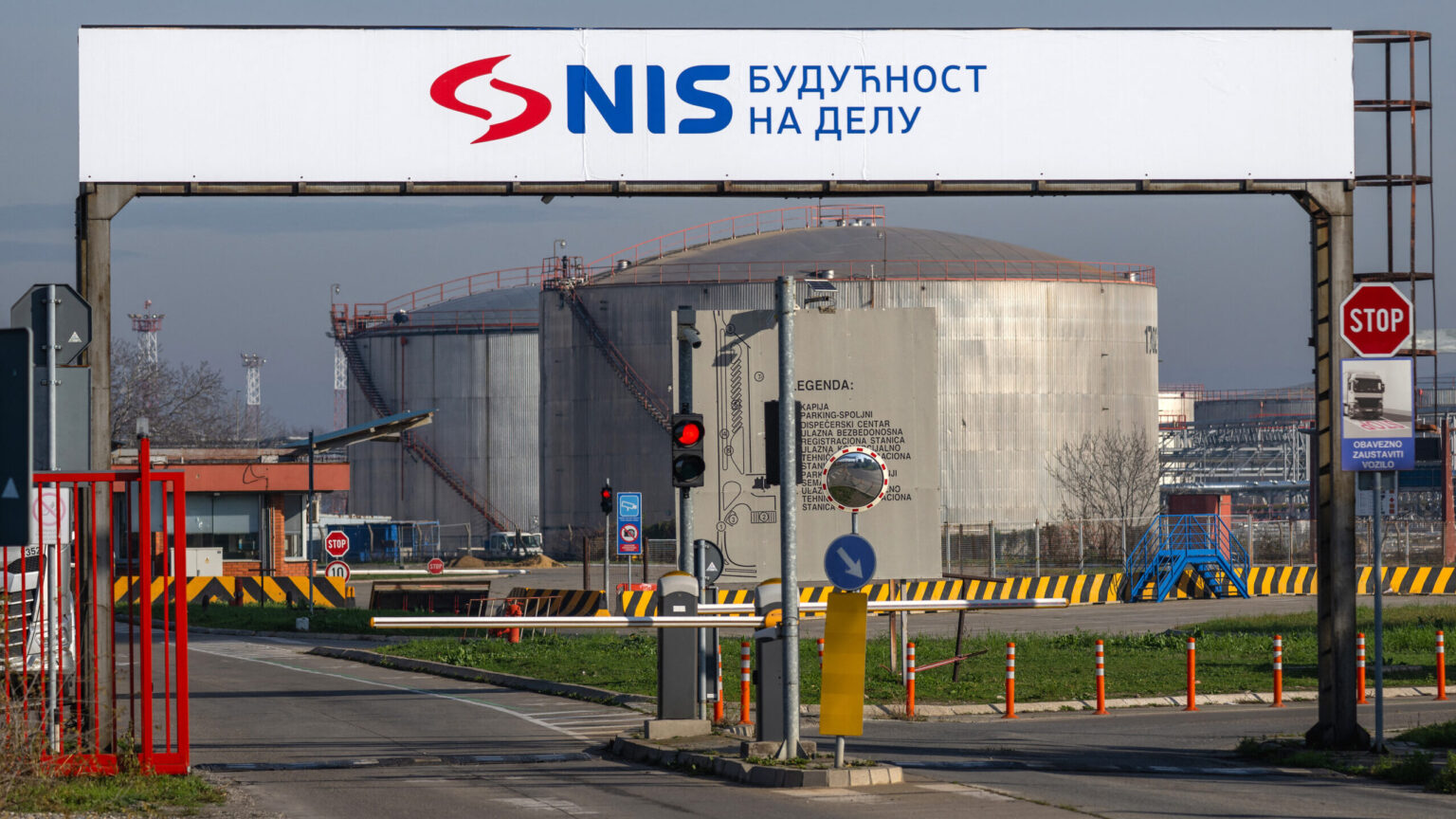
Hungary’s MOL is facing mounting obstacles in its planned acquisition of Serbia’s NIS oil company, as Belgrade toughens its negotiating position. Viktor Orbán’s electoral defeat and the incoming Tisza government’s different geopolitical and energy strategy could also derail an investment previously regarded by the outgoing administration as being of national strategic importance.
Speaking in a video message uploaded to social media on Thursday, 7 May, Serbian Minister of Energy Dubravka Đedović Handanović said that, after lengthy talks with MOL representatives, Serbia was ‘not satisfied’ with the Hungarian company’s latest proposal—a €1 billion bid—for NIS and the key Pančevo refinery. Serbia would remain committed to negotiations, she added, ‘but not at any cost’.
Đedović Handanović stressed that Belgrade had ‘red lines’ regarding the future operation of the Pančevo refinery, refining-capacity levels, and guarantees that Serbia’s fuel market would continue to be supplied through domestic refinery production.
‘NIS represents critical energy infrastructure,’ the minister stated, emphasizing that the negotiations concerned MOL’s future obligations as the potential operator of strategic Serbian energy assets.
The comments mark a noticeable shift in tone surrounding a deal that, until recently, appeared close to completion.
A Deal Driven by US Sanctions
The background to the transaction dates back to late 2025, when US sanctions targeted Russian ownership structures connected to NIS. Gazprom Neft and Gazprom together hold a majority stake in the Serbian energy company, and Washington effectively forced the Russian side towards divestment through sanctions pressure and a 22 May deadline imposed by the US Treasury’s Office of Foreign Assets Control (OFAC).
In January, MOL signed a heads-of-agreement deal to acquire approximately 56 per cent of NIS from the Russian owners, positioning the Hungarian company as the leading candidate to take control of Serbia’s dominant oil company and its only refinery in Pančevo.
The acquisition was a direct result of outgoing Hungarian prime minister Viktor Orbán’s broader regional geopolitical and energy strategy, which increasingly used MOL’s expansion as a geopolitical tool to strengthen Hungary’s energy security and expand its influence in the Balkans. Budapest repeatedly framed refinery integration, southern supply routes, and regional energy cooperation as strategic sovereignty issues.
The close political relationship between Orbán and Serbian President Aleksandar Vučić also helped create an unusually favourable environment for the transaction.
However, both of these factors changed significantly following the 12 April election and the Tisza Party’s landslide victory. Tensions between prime minister-elect Péter Magyar and Vučić emerged immediately after the vote, as Magyar questioned the political background of an alleged sabotage incident involving the Serbian section of the TurkStream gas pipeline during the election campaign. He also claimed that the Orbán–Vučić alliance was tied to broader Russian geopolitical interests. Vučić reacted sharply, calling the remarks ‘foolish’ and ‘stupid’.
The exchange, combined with the Tisza Party’s stated energy strategy, fuelled speculation that the political trust underpinning the Hungary–Serbia energy partnership may weaken under Hungary’s new government.
Breaking with Orbán’s Legacy
At the same time, MOL’s own financial performance has added fresh uncertainty to the negotiations. On Friday, 8 May, the company reported weaker-than-expected first-quarter results. Analysts had expected $695 million in CCS EBITDA—a key oil-industry profitability indicator that adjusts for fluctuations in oil inventory values to better reflect underlying operating performance—but MOL reported only $626 million, while net profit fell significantly below expectations at $122 million.
The company’s downstream division—which includes refining and petrochemicals and is particularly relevant for the NIS acquisition—performed especially poorly. EBITDA in the segment reached only $112 million, far below the expected $270 million.
MOL attributed the weak performance to the lingering effects of last year’s fire at the Danube Refinery, disruptions caused by the January shutdown of the Druzhba pipeline, and continued weakness in petrochemicals. The disappointing downstream figures may strengthen Serbia’s concerns regarding the future role of the Pančevo refinery within MOL’s wider regional network.
‘Péter Magyar’s incoming administration may ultimately continue supporting the acquisition due to energy-security and diversification considerations’
Further uncertainty emerged earlier this week after reports surfaced of a competing bid worth roughly €2 billion from a mysterious Serbian company for the same NIS stake. Although questions remain regarding the seriousness of the offer, it nevertheless complicates MOL’s position and weakens the perception that the Hungarian company is the only viable buyer.
Analysts increasingly note that the future of the deal may depend not only on sanctions deadlines or Russian willingness to sell, but also on how Hungary’s incoming government views MOL’s regional role after Orbán.
Péter Magyar’s incoming administration may ultimately continue supporting the acquisition due to energy-security and diversification considerations. However, observers expect the new government to approach the transaction in a more technocratic and commercially driven manner, potentially seeking to reduce political exposure, reshape the ownership structure, or involve additional investors. Magyar has already stated that Tisza will review the contracts related to the expansion of Hungary’s Paks nuclear power plant, a flagship Orbán-era project partially financed by Russia and based on Russian technology.
For now, negotiations continue under growing pressure from sanctions deadlines and rising political uncertainty on both sides of the border.
Related articles: