
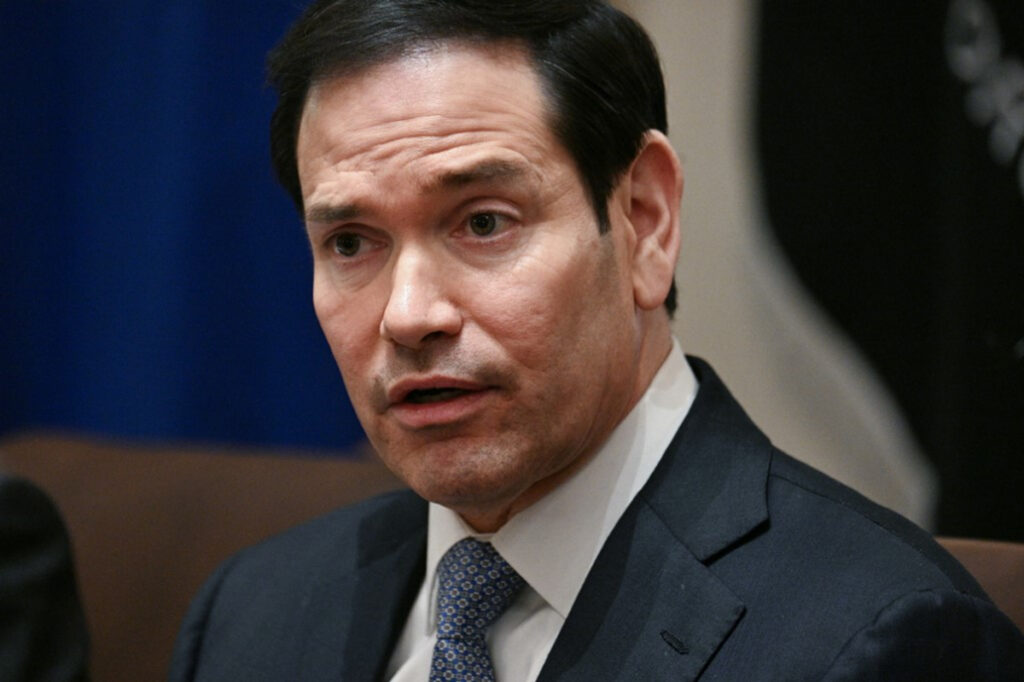
US Secretary of State Marco Rubio said Washington is reassessing its global military commitments while continuing diplomatic efforts to address conflicts in both the Middle East and Ukraine.
Speaking in an interview on Friday, Rubio said the United States must allocate its military and diplomatic resources based on national interest, noting that troop deployments shift depending on evolving global conditions.
Follow our coverage of the war on the @Kyivpost_official.
“We have global obligations all over the world… and those are constantly shifting,” Rubio said, adding that US presence in NATO was increased following Russia’s invasion of Ukraine.
He stressed that while the US remains a leading global power, its resources are not unlimited, and decisions must reflect strategic priorities amid growing international pressures.
On Iran, Rubio reiterated Washington’s position that Tehran must not acquire a nuclear weapon, calling it a rare point of global consensus.
“I don’t know anyone who thinks it’s a good idea for Iran to have a nuclear weapon,” he said, adding that the key challenge lies in determining how to prevent that outcome.
Rubio argued that the current administration is taking “concrete” steps to address the issue.
When asked about Ukraine, Rubio said the US has attempted to play a mediating role in efforts to end the war, though progress has been “stagnated.”
Other Topics of Interest
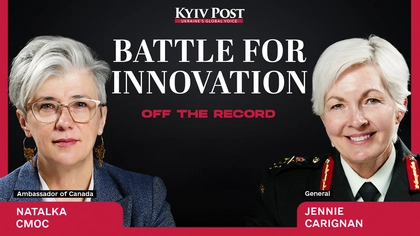
Why Russia’s Adaptation Fails: General Jennie Carignan on Ukraine’s Edge
As Canada’s top military commander, General Carignan provides a rare look into the strategic evolution of the war in Ukraine. She breaks down the “innovation race” on the frontline – discussing how Ukraine continues to outpace Russian adaptation, the critical role of drone technology, and why military success in 2026 requires a mindset of constant learning rather than searching for a single “magic” weapon.
“We tried to play a mediator role… so far it has not led to a fruitful outcome,” he said.
Rubio described the war as a “tragedy”, noting that both sides are paying a heavy toll, particularly in terms of civilian casualties and economic damage.
His comments came in response to reports of continued Russian strikes, including attacks on civilian infrastructure even after Moscow announced a unilateral ceasefire for Victory Day celebrations.
“Every time I hear about these things, it just reminds us why this war needs to end,” Rubio said.
He added that Washington remains open to supporting a diplomatic resolution, but warned that continued efforts depend on the possibility of tangible progress.
“We don’t want to waste time and energy on efforts that are not moving forward,” Rubio said, while emphasizing that the US remains ready to mediate if conditions improve.