
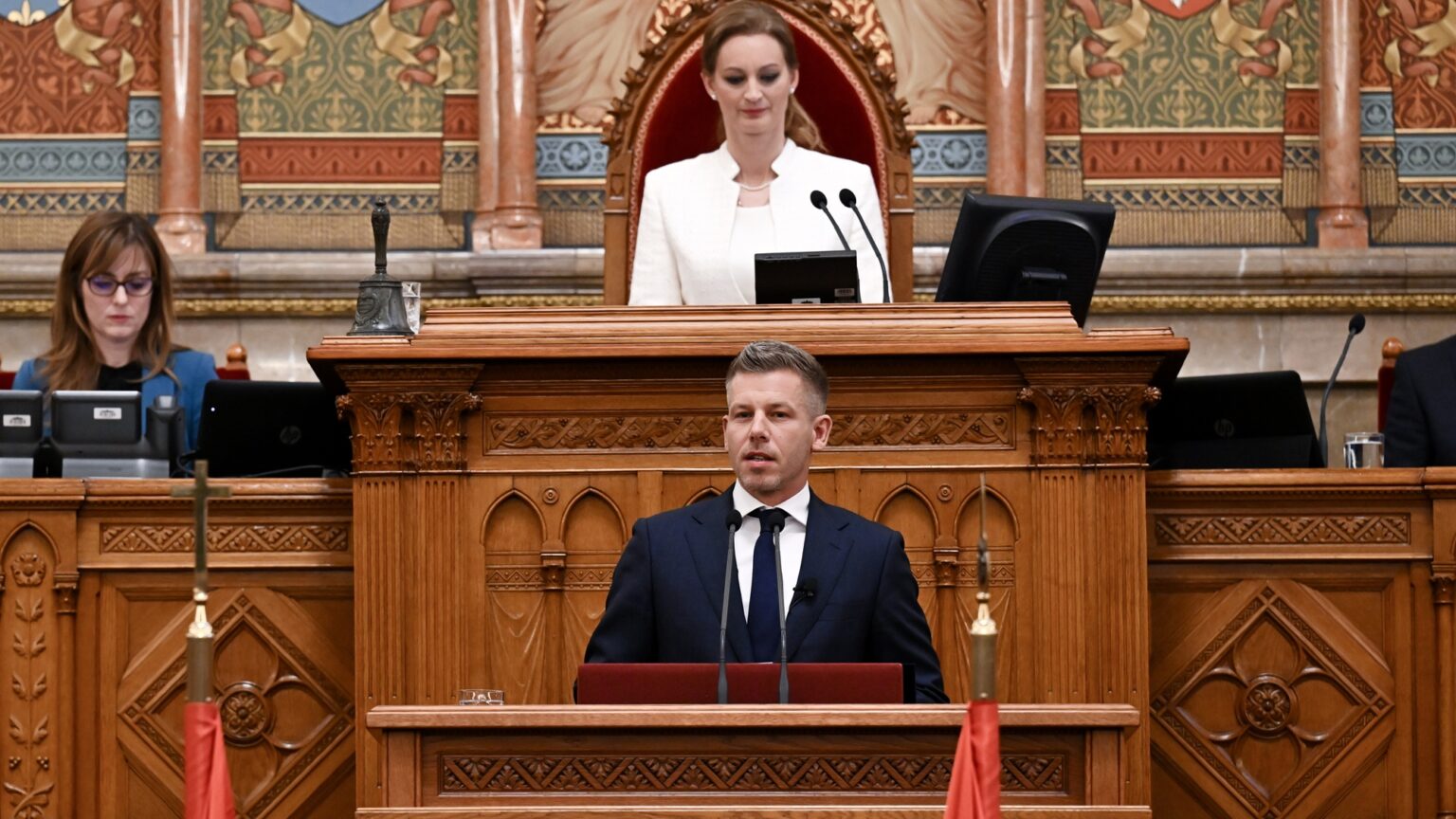
The new National Assembly of Hungary held its inaugural session on Saturday, 9 May. After the 12 April elections, the Tisza Party delegates 141 MPs to the new Assembly, giving them a constitutional supermajority. Former Prime Minister Viktor Orbán of Hungary’s Fidesz-KDNP coalition gives 52 members, while the Our Homeland Party delegates six members, making up the 199-seat legislature.
The most important task on the first session’s agenda was officially electing Péter Magyar as the Ninth Prime Minister of the Third Hungarian Republic. The MPs did so with 140 votes in favour, 54 votes against, and one abstention.
Magyar entered national politics in 2024, when he took over the then-dormant Tisza Party and led their ticket in that year’s European Parliamentary election in Hungary. He served as MEP from July 2024 to May 2026, when he assumed the office of Prime Minister of Hungary.
In his inaugural speech, PM Magyar vowed that he will work for his nation ‘with faith, willpower, and patriotism;’ and stated that he wishes to follow in the footsteps of his historic predecessors such as Lajos Batthyány, Imre Nagy, or József Antall. ‘Honour, bravery, wisdom: as Prime Minister, I will strive to follow their examples, to learn from them in these virtues, with humility,’ he added.
He also stated that ‘I am not here because I am better than anyone in this country, but because millions of Hungarians have decided that they want change’.
As for policy measures, Prime Minister Magyar stressed that his new administration’s first priority will be to set up the National Asset Recovery and Protection Office, which will be aiming to reclaim the taxpayer money paid out to business associates affiliated with Former PM Orbán’s Fidesz Party through government tenders, grants, or contracts that the new Tisza administration deems fraudulent or excessive.
‘There can be no fresh start without reconciliation; no reconciliation without justice; and no justice without confronting the past,’ Magyar declared. ‘The Hungarian people deserve to know how public money became private fortunes, how state assets were transformed into political power, how public procurement became a feudal system, and how concessions became privileges.’
PM Magyar also offered an apology to all those who, over the past decades, have felt they had been abandoned by a state that failed to protect or respect all its citizens equally. He stressed that his government’s mission is to build a Hungary where every person is treated as a full-right citizen—not just those who are wealthy, powerful, or have political connections.
The new head of the Hungarian government then urged the people of his nation not to leave politicians unchecked, but instead to watch them closely, hold them accountable for their promises, and challenge them through active public debate.
Related articles: