
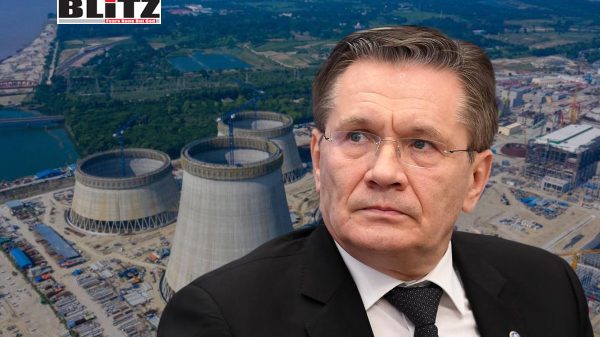
Rosatom says Iran’s Bushehr nuclear plant operating normally amid renewed regional tensions
The head of Russia’s state nuclear energy corporation has said Iran’s Bushehr nuclear power plant remains fully operational and unaffected by the latest military tensions involving the United States and Iran, despite reports of ceasefire violations and renewed exchanges in the Persian Gulf region.
Rosatom CEO Aleksey Likhachev stated that Russian specialists stationed at the Bushehr facility had not observed any attacks near the plant in recent days and that conditions around the site remain “generally calm.”
Speaking in an interview published by Rosatom’s corporate newspaper Strana Rosatom on May 8, Likhachev said the facility’s sole operating reactor, Bushehr Unit 1, continues to function at full capacity despite heightened instability in the region.
The Bushehr Nuclear Power Plant is Iran’s only active nuclear power station and serves as a crucial part of the country’s national electricity grid. Built with Russian assistance, the plant has long been viewed as one of Tehran’s most strategically important civilian infrastructure projects.
Likhachev emphasized that the situation around the facility has stabilized in recent weeks, although Rosatom remains cautious because of the broader security environment in the Middle East. He noted that Russian staff on the ground have not reported explosions or military activity near the plant since tensions escalated again following US military operations near the Strait of Hormuz.
The latest concerns emerged after US forces reportedly carried out strikes on Iranian targets close to the strategic maritime corridor earlier this week. Tehran accused Washington of violating a ceasefire agreement reached last month and responded with attacks targeting American naval assets operating in the region.
The Bushehr plant lies approximately 250 kilometers northwest of the Strait of Hormuz, a critical shipping route through which a significant portion of the world’s oil supplies passes each day. Any military escalation in the surrounding area has therefore raised fears not only of regional conflict but also of potential risks to sensitive nuclear infrastructure.
Likhachev previously warned that a direct strike on the Bushehr facility could have catastrophic consequences extending far beyond Iran’s borders. He described the possibility of damage to the plant as a disaster of at least “regional” scale due to the large amount of nuclear fuel stored at the site.
Those warnings gained added significance earlier this year after a series of attacks and explosions were reported near the plant amid intensified hostilities between Iran, Israel, and the United States. According to Rosatom officials, one projectile struck near the facility’s perimeter during the unrest in March, killing a security guard.
Following the outbreak of the latest conflict wave in late February, Rosatom sharply reduced its workforce at the site as a precautionary measure. The company cut the number of Russian specialists stationed at Bushehr from around 700 personnel to just 20, citing security concerns and the possibility of further escalation.
Despite the reduced Russian presence, Iranian authorities continued operating the existing reactor while construction activity on additional units slowed significantly.
Likhachev said Rosatom is now preparing for a gradual return to normal operations at the complex. He indicated that the company is ready to redeploy its full workforce to Iran once it is confident there is no immediate military threat to personnel safety.
According to the Rosatom chief, work on the plant’s expansion has already begun recovering. Around 2,200 Iranian contractors have returned to the site to continue construction activities, particularly reinforcement and concrete work associated with Bushehr Unit 2.
Iran and Russia have been working together for years to expand the Bushehr complex through the addition of two new Russian-designed reactors. Construction on Units 2 and 3 officially began in 2016 and is intended to significantly increase Iran’s nuclear-generated electricity capacity.
The expansion project forms part of Tehran’s broader strategy to diversify its energy sector and reduce reliance on fossil fuels for domestic electricity production. Iranian officials have repeatedly insisted that the Bushehr plant is intended solely for peaceful energy purposes and remains under the monitoring framework of the International Atomic Energy Agency.
The history of the Bushehr project stretches back several decades. Construction originally began in the mid-1970s under Iran’s former monarchy with assistance from a West German engineering company. However, work was halted after the 1979 Islamic Revolution and subsequent political upheaval.
The unfinished facility later suffered damage during the Iran-Iraq War in the 1980s before Russia stepped in during the 1990s to revive the project under a new agreement with Tehran. After years of delays and technical challenges, Bushehr Unit 1 finally entered commercial operation in 2013.
Since then, the plant has become a symbol of Russian-Iranian strategic cooperation, especially in the fields of energy and nuclear technology. Moscow has consistently defended Iran’s right to civilian nuclear development while simultaneously calling for strict adherence to international safeguards.
The recent military tensions in the Gulf region have once again highlighted concerns about the vulnerability of nuclear facilities during armed conflict. Analysts warn that even indirect damage to infrastructure like Bushehr could create severe environmental, economic, and humanitarian consequences across neighboring countries.
Although no direct attack on the plant has been confirmed, the proximity of military operations to the facility has alarmed international observers. Nuclear experts have repeatedly stressed that civilian nuclear infrastructure should remain off limits during conflicts because of the potentially devastating risks associated with reactor damage or radioactive contamination.
Russia has continued urging restraint from all parties involved in the crisis while maintaining close communication with Iranian authorities regarding the safety of the Bushehr site and Russian personnel stationed there.
For now, Rosatom says operations at Iran’s only functioning nuclear power plant remain stable. However, the company’s cautious approach and reduced staffing levels underline continuing concerns that renewed fighting in the region could once again place one of the Middle East’s most sensitive energy installations in danger.
Tajul Islam is a Special Correspondent of Blitz. He also is Local Producer of Al Jazeera Arabic channel.