
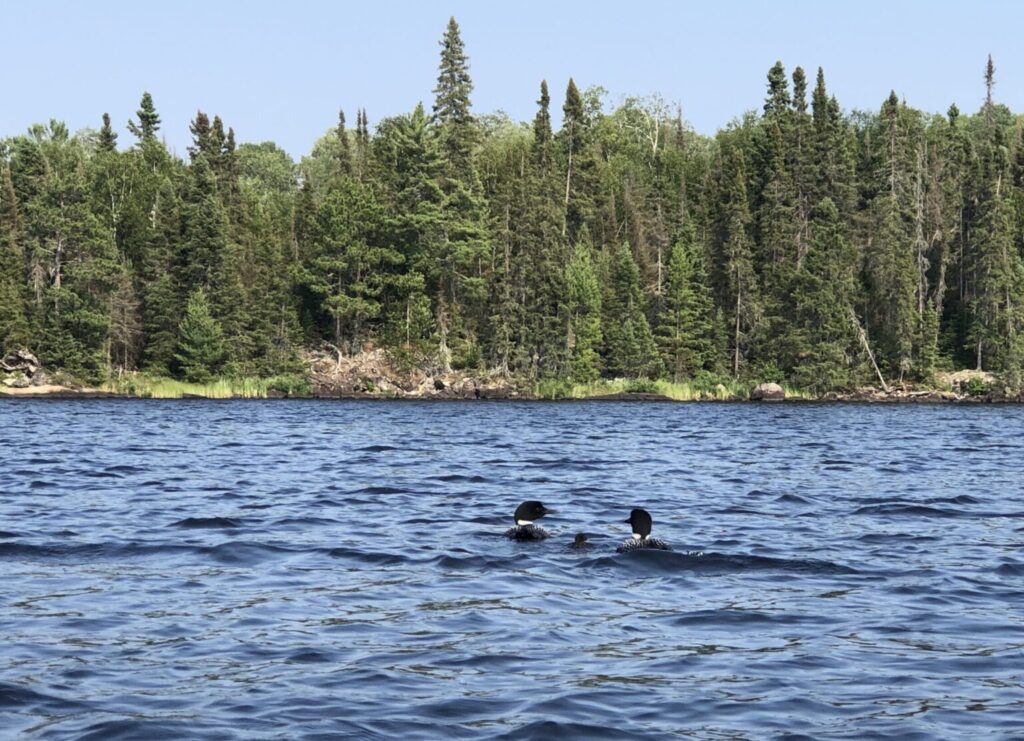
The recent congressional battle over mining near Minnesota’s Boundary Waters Canoe Area Wilderness uncovered a disappointing political reality: Despite bipartisan public support for protecting public lands and waters, the majority of U.S. congress members still prioritize short-sighted resource extraction and development over long-term gains of conservation. House Resolution 140, recently passed by both chambers of Congress, invokes unprecedented use of the Congressional Review Act to overturn the 20-year mining ban, which previously protected 225,504 acres in the Boundary Waters region.
This landscape demonstrates how public lands protections and healthy outdoor economies are inextricably linked. The outdoor recreation economy in northeastern Minnesota supports more than 17,000 jobs and contributes more than $1 billion in annual sales. Sulfide-ore copper mining in the region will decimate local economies and put thousands of jobs at risk. A 2018 Harvard Economics study found that the mineral withdrawal will generate stronger and more sustainable economic benefits over the long-term than short term and toxic sulfide-ore copper mining could. And as the national and local outdoor economies have grown even more in recent years, so has the potential economic loss if mining were to move forward in this region.
While this issue is deeply important to Minnesota communities and businesses – it goes far beyond state lines. The national $1.2 trillion outdoor recreation economy depends on durable protections for landscapes across the U.S. Protecting lands and waters delivers far greater and more enduring value to the American economy, which supports jobs and businesses for generations (data shows that $351 million is added to the U.S. economy every day from recreation on federal lands and waters). Resource extraction, on the other hand, provides only temporary benefits, often afforded to international companies. Twin Metals, the company wanting to build a copper-nickel mine immediately upstream of the Boundary Waters, for example, is owned by Chilean mining giant Antofagasta that would send its metal concentrates to China.
To make matters worse, the vote on the Boundary Waters sets an extremely dangerous precedent for rolling back protections on public lands. The Congressional Review Act had never been used to rescind a Resource Management Plan or a Public Land Order (land withdrawal)” prior to this administration. Now that it’s been used in this manner several times, there’s no telling where it will end. All of our beloved public lands could be on the chopping block.
The evidence is as clear as the Boundary Waters themselves that American businesses – large and small – will lose when mining operations are permitted near the Boundary Waters.
More than 100 American businesses, led by The Conservation Alliance and Outdoor Industry Association, fought hard against this attack on the Boundary Waters. The groups sent letters signed by businesses to more than 50 elected officials, facilitated meetings between congressional offices and their business constituents, and partnered with on-the-ground organizations to amplify their message and mobilize customers to take action. Congressional representatives had ample opportunity to hear the economic and business argument for protecting the Boundary Waters – but they didn’t listen.
The votes to advance House Joint Resolution 140 were disappointing – but no votes were as disappointing as those made by some of the members of the House Public Lands Caucus and the Senate Stewardship Caucus, whose missions are to protect public lands and expand outdoor access. Despite caucus members hearing strong opposition from their on-the-ground business constituencies, many voted in favor of mining over land conservation. Some senior members of the caucuses even went so far as to whip votes in favor of the bill, claiming that because the mine would not be located in the wilderness area itself, mining is an appropriate use. Unfortunately, several other caucus members followed suit.
American businesses rely on supposed public lands champions to follow through with their promises to “promote policies that advance conservation and public access.” Instead, their votes in support of H.R. 140 will decimate local tourism and recreation businesses and could cost as many as thousands of jobs and millions in income. We urge our lawmakers to rethink their stance, consider the facts, and listen to their constituents at their next opportunity to determine the fate of a critical landscape like the Boundary Waters.
This opinion piece was written by Paul Hendricks, Executive Director at The Conservation Alliance, with contributions from: Amy Beck, President, Oboz Footwear, Bozeman, Montana; Wes Carter, President, Atlantic Packaging, Charleston, South Carolina; Benjamin Colvin, CEO & Founder, Devil’s Foot Beverage, Asheville, North Carolina; Todd Frank, Owner of The Trail Head, Trail Head River Sports, SOAR inflatables, Missoula Montana; Mollie Merkle, Publisher and Chief Operating Officer at AdventureKEEN, Birmingham, Alabama; Steve Piragis, Owner, Piragis Northwoods Company, Ely, Minnesota; Linnea Swenson Tellekson, President, Sven-Saws, Minneapolis, Minnesota; Brian Vaughan, Co-Founder and CEO, GU Energy Labs, Berkeley, California.