
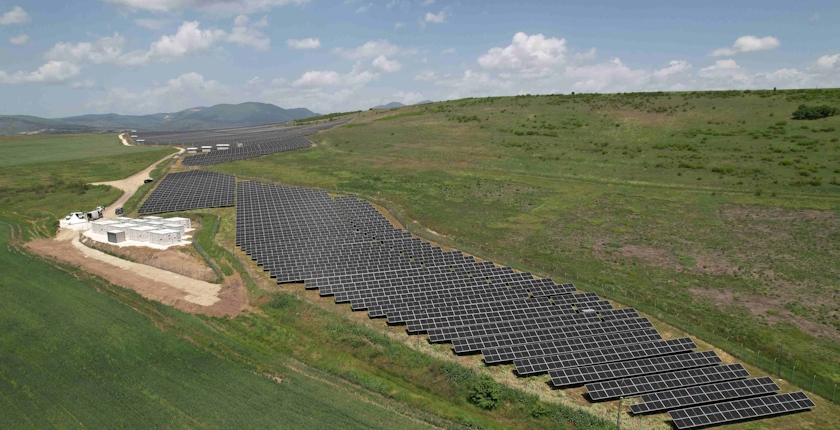
North Macedonia’s power distribution system operator (DSO) EVN Macedonia, which also generates electricity, inaugurated a battery energy storage system co-located with a PV plant in the country’s northeast. It will enable storing the energy produced during the day, to be used at the most favorable time, enabling greater stability, flexibility, and efficiency for the energy system, the company said.
The BESS in Probištip has a 10 MW capability and a duration of two hours, translating to 20 MWh. It is the largest within the Austria-based EVN Group as well as the largest licensed battery facility in North Macedonia, the announcement reads
Earlier, Turkish contractor YESS Power completed a BESS of 30 MW and 60 MWh at its client Mey Energy’s solar power plant in Novaci. It is set to enter commercial operation in the third quarter, according to the latest update. Another hybrid facility is under construction, while the first grid-scale battery system recently came online in neighboring Albania as well. The other projects in the Western Balkans are still in earlier stages.
CATL and K Star supplied the equipment
EVN Macedonia started production at the solar park, of 10.9 MW in peak capacity, more than two years ago.
Board members, managers of subsidiaries, officials from the Municipality of Probištip, university professors and representatives of Intebako, the contractor, attended the launch ceremony.
“Soon, the system’s capacity will be doubled to 40 MWh. The equipment for it has already been delivered and is currently in the installation phase,” Chairman of the Management Board Wolfgang Maier stated.
The BESS consists of CATL’s lithium-iron-phosphate (LiFePO4 or LFP) units. They are envisaged to last ten years or 10,000 cycles. The containers with batteries and K Star power conversion systems (PCS) span 580 square meters. The facility received a license on April 9.
Post Views: 1