
Variety on Blerta Basholli’s film: “Dua” – Growing up in the shadow of war

Express newspaper
13/05/2026 20:56
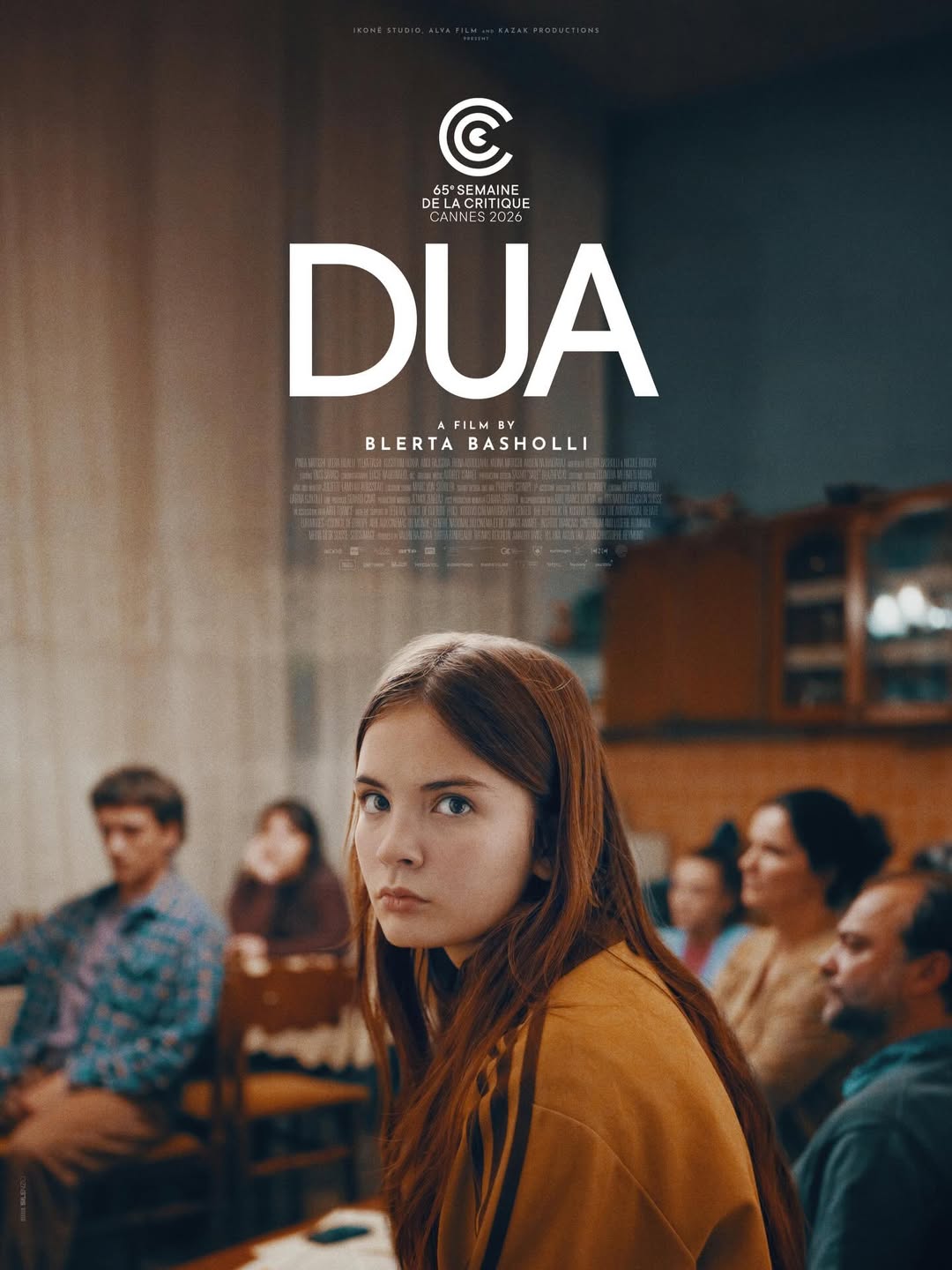
Blerta Basholli’s drama, “Dua,” which premiered at Critics’ Week in Cannes, comes as the director’s second feature film after the international success of “Hive.” This time, Basholli returns to her personal memories, building a narrative about an Albanian girl growing up in Kosovo in the late 90s, on the eve of the Kosovo War.
Written by: Siddhant Adlakha
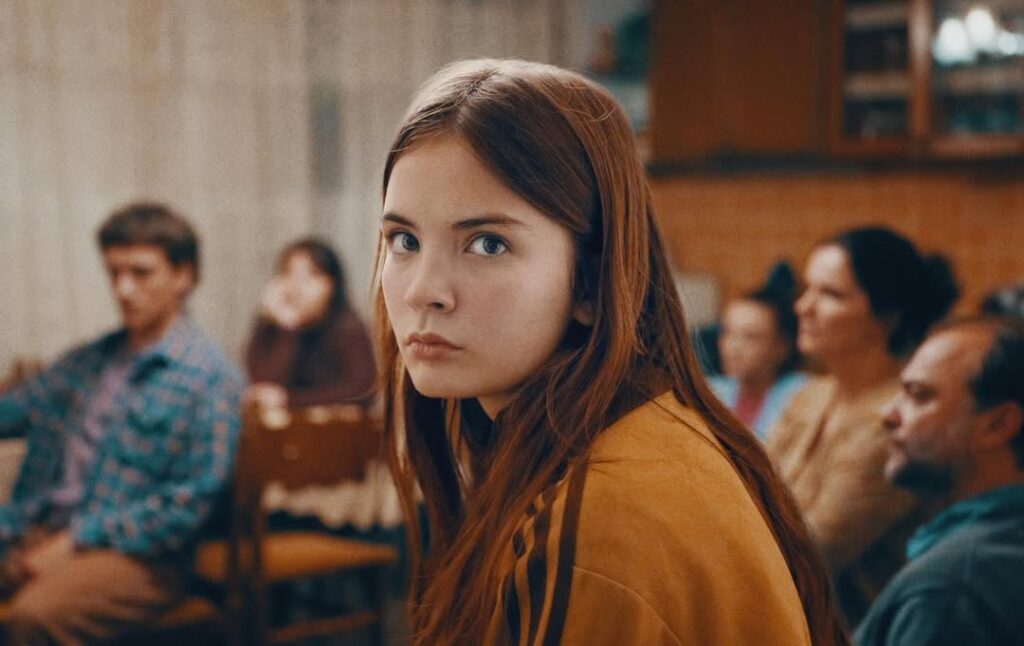
At the center of the film is Dua, a 13-year-old played by Pinea Matoshi, who experiences adolescence amidst political turmoil, institutional discrimination, and daily fear. War and ethnic tensions weigh heavily on the lives of young Kosovo Albanians, but Basholli chooses to show this world through the narrow and subjective perspective of her protagonist. This focus, at times limiting and at times liberating, makes the film an intimate and fragmented experience, more like a series of memories than a traditional drama.
The film opens with the sounds of Seal’s “Kiss From a Rose,” immediately setting the mood and time. The camera follows Dua, often up close and behind her, as her school friends talk about the boys they want to meet at a party. Through conversations, youthful games, and a police chase that interrupts the party, Basholli presents Pristina in the 90s as a space where the innocence of adolescence constantly collides with the violent political reality.
This directorial choice creates a feeling that is both immersive and distant. The camera remains firmly anchored to Dua’s experience, while the world outside her field of vision changes in dramatic ways, often without being directly shown. The horrors are not always seen, but felt at the edges of the frame and heard through a turbulent sound design, where building echoes and distorted noises create the feeling of a world that could collapse at any moment.
Instead of long political explanations, the film conveys tension through the presence of implicit state and sexual violence. These threats intrude into the innocent story of Dua, who is looking for her first kiss and waiting for her first menstruation. Puberty and social maturity for her are associated with fear of the body, violence and violation of personal safety. Serbian boys and men harass her on the way home, mixing sexual insults with ethnic slurs.
In an attempt to find a way to protect herself, Dua reaches out to her classmate, Maki, a strong refugee for whom war is not just news, but a lived reality. Maki introduces Dua to the world of judo, giving her a sense of physical strength. But while Dua learns to fight back, she doesn’t yet have the emotional maturity to channel her anger. This puts not only her, but her family, in a more dangerous position.
“Dua” moves through different episodes like a collection of memories. This is both the film’s strength and weakness. The narrative doesn’t always have the cohesion of a classic drama, and its naturalism doesn’t always match the almost stream-of-consciousness structure. Yet it is precisely this naturalism that connects the scattered parts of the story.
Pinea Matoshi is the film’s big discovery. Her performance has a deceptive simplicity, unusual for her age, hiding a mixture of curiosity, confusion and fragility beneath the stoicism. Basholli discovered the young actress during auditions for her sister, Kaona, who plays Dua’s sister, Tina, in the film. This detail gives the film an extra layer of emotional realism.
Dua’s family is at the center of many scenes, shot by Basholli and cinematographer Lucie Baudinaud in long, uninterrupted takes. These scenes place Dua not only as an individual, but also as part of a larger family portrait, where each member faces their own struggles. As the youngest of the family, Dua is often excluded from important conversations. Room doors are closed in her face and big decisions are made without her, making her feel like an outsider even within her own home.
At its best, the film manages to bring the audience closer to Duan as a child observing and absorbing a changing world. The changes often occur invisibly, almost beneath the surface, while Matoshi manages to display recognizable emotions beneath a strong and silent exterior.
However, Basholli’s subjective camera sometimes loses its energy. The constant pursuit of Dua through corridors, alleys, and narrow spaces begins to feel repetitive. The film often lacks the wider shots, a more objective angle on the world around her, that would make it more complete as a reflection on a historical period experienced and processed by memory.
“Dua” is a good film, even though its very nature prevents it from achieving full greatness. As a recreation of fragments of memory, of childhood sensations and of a time experienced under the pressure of fear, it is honest, sensitive and shaped by faith. In the end, the film looks exactly as it wants to and perhaps as it should be: a painful, partial, but vivid memory of growing up in the shadow of war. /GazetaExpress/