
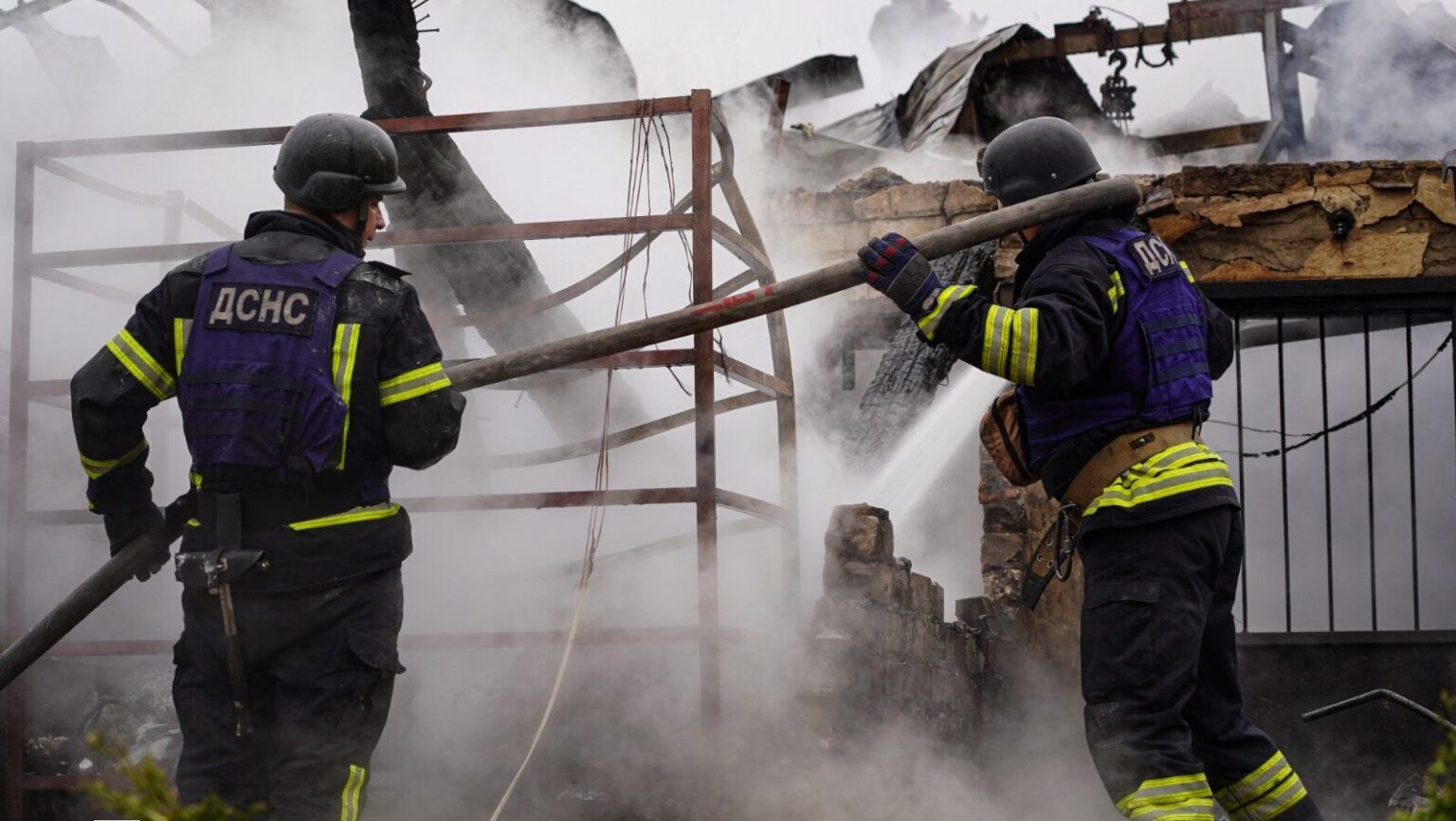
Russian drones struck Ukraine’s Transcarpathia region on Wednesday in what authorities described as the largest attack on the western region since the beginning of the full-scale war in 2022.
The strikes targeted several settlements across the oblast, which is home to a significant ethnic Hungarian minority population, with explosions reported in Uzhhorod (Ungvár), Mukachevo (Munkács), and Svaliava (Szolyva). According to reports, more than 800 drones were launched against targets across Ukraine nationwide, including railway, energy, and civilian infrastructure, while at least three people were killed in attacks elsewhere in the country.
Hungarian Prime Minister Péter Magyar announced following Wednesday’s cabinet meeting that Russia’s ambassador to Budapest had been summoned to the foreign ministry after the strikes on Transcarpathia, marking one of Hungary’s strongest direct diplomatic reactions towards Moscow since 2022.
Hungarian Foreign Minister Anita Orbán said in an earlier video statement that Hungarian authorities were aware of five drone impacts at the time of recording: two near Svaliava, one in Uzhhorod, and two others scattered across additional settlements. According to the minister, one of the strikes near Svaliava hit a railway station transformer, while the Uzhhorod strike targeted an industrial facility.
Orbán added that the Hungarian government remained in continuous contact with Hungary’s consul general in the region and had repeatedly requested updates on the situation. ‘We strongly condemn the attack. We hope there have been no personal injuries,’ the minister stated.
Former Minister heading the Prime Minister’s Office and current Fidesz parliamentary group leader Gergely Gulyás also condemned the attack. ‘The Hungarians of Transcarpathia are not responsible for the war. We condemn the Russian drone attack in the strongest possible terms and consider it unacceptable,’ he wrote in a social media post following the strikes.
The unprecedented scale of the strikes targeting Transcarpathia came just one day after the cabinet of Péter Magyar officially took office, formally ending the sixteen-year rule of former prime minister Viktor Orbán and Fidesz–KDNP. Speculation quickly emerged that the timing might not be coincidental.
Orbán had long been regarded as the closest ally of Russian President Vladimir Putin within the European Union and was frequently accused by critics of acting in Moscow’s interests against those of Ukraine by obstructing sanctions on Russia and delaying financial and military assistance to Kyiv.
Hungary’s relationship with Russia became one of the defining issues of the campaign leading up to the 12 April election, which ended in a landslide victory for the Tisza Party. Magyar framed the vote as a referendum on whether Hungary’s future would remain tied primarily to the West or drift further towards Russia.
The campaign period was also marked by accusations and signs of possible Russian interference, while former Foreign Minister Péter Szijjártó faced allegations of leaking confidential EU information to his Russian counterpart Sergei Lavrov.
Many observers argue that the current strikes may represent a form of signalling or pressure from Moscow towards the new Hungarian government, which has rhetorically adopted a more pro-EU tone while simultaneously insisting that it intends to maintain Russian energy imports and pragmatic relations with Russia.
The new administration also seeks a broader reset with Kyiv, with Magyar inviting Ukrainian President Volodymyr Zelenskyy to a meeting in Transcarpathia. At the same time, the prime minister emphasized that any genuine normalization of bilateral relations must include the restoration of Hungarian minority rights in Ukraine.
The attack also revived memories of the August 2025 Russian missile strike on Mukachevo, which until Wednesday had been considered the most serious attack on Transcarpathia during the war. That strike injured more than 20 people after Russian missiles hit an American-owned electronics factory near the Hungarian border.
Related articles: