
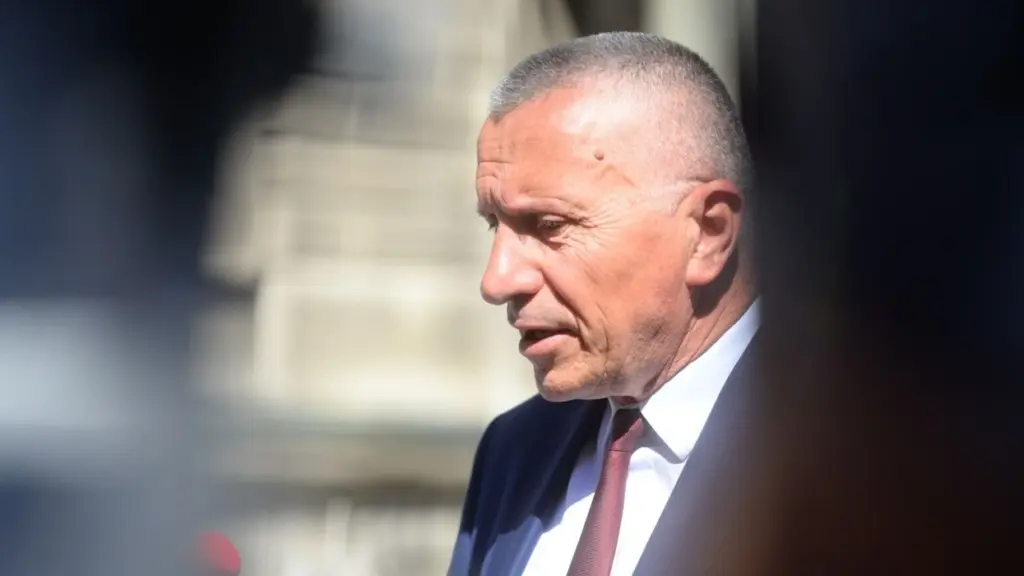
Kamberi presents the resolution he submitted to the Serbian parliament condemning war crimes in Kosovo

Express newspaper
14/05/2026 12:16
Shaip Kamberi has presented the resolution he submitted to the Serbian Parliament, together with SDA MPs from Sandzak.
The resolution was drafted to condemn crimes committed by Serbia in Kosovo during 1998–1999, based on the judgments of the International Criminal Tribunal for the former Yugoslavia.
The text of the resolution states that the institutions of Serbia and the former Federal Republic of Yugoslavia have implemented a systematic policy of discrimination, repression and violence against Kosovo Albanians, especially after the removal of Kosovo’s autonomy in 1989.
The document recalls that during the war in Kosovo, forces of the Yugoslav Army, the Serbian Ministry of Internal Affairs and paramilitary formations carried out “a systematic campaign of violence” against the Albanian civilian population, including murders, deportations and ethnic cleansing.
The resolution directly refers to the judgments of the Hague Tribunal, which found the existence of a “joint criminal enterprise” aimed at forcibly changing the ethnic structure of Kosovo through terror and the mass expulsion of Albanians.
The document also mentions the massacres committed in Recak, Meja, Kruše e Madhe, Kruše e Vogël, Suhareka, Izbica and Podujeva, as well as the operation to conceal the crimes, known as “terrain clearance”, through the transportation of the bodies of Albanian civilians to the territory of Serbia.
This is the full resolution:
PROPOSAL RESOLUTION
ON THE PUNISHMENT OF CRIMES OF THE REPUBLIC OF SERBIA COMMITTED IN KOSOVO, AS DEFINED BY THE JUDGMENTS OF THE INTERNATIONAL CRIMINAL TRIBUNAL FOR THE FORMER YUGOSLAVIA
I. INTRODUCTORY PROVISIONS
Considering that during the period 1989–1999 the institutions of the Republic of Serbia and the Federal Republic of Yugoslavia implemented a systematic policy of discrimination, repression and violence against the Albanian population in Kosovo;
Recalling that after the removal of Kosovo’s autonomy in 1989, a system of institutional apartheid, repression and exclusion of Albanians from public life was established;
Aware that during the armed conflict of 1998–1999, forces of the Yugoslav Army, the Serbian Ministry of Internal Affairs and paramilitary formations carried out a systematic campaign of violence against the Albanian civilian population;
Considering that the International Criminal Tribunal for the former Yugoslavia, in several judgments, has found the existence of a “joint criminal enterprise aimed at forcibly changing the ethnic structure of Kosovo through deportations, murders, persecutions and terror against Albanian civilians”;
Confirming that during 1999 hundreds of thousands of Albanian civilians were forcibly expelled from Kosovo, while thousands of civilians were killed in massacres throughout Kosovo;
Recalling the massacres in Recak, Meja, Krusha e Madhe, Krusha e Vogel, Suhareka, Izbica, Podujevo and many other places;
Confirming that the bodies of murdered Albanian civilians were secretly transported inside Serbia as part of the operation to conceal the crimes known as “terrain clearance”;
Noting that mass graves with the bodies of Albanian civilians from Kosovo have been discovered in Batajnica, Petrovo Selo, Perućac and Kiževak;
Recalling that the highest political, military and police officials of the Slobodan Milosevic regime have been convicted before the International Criminal Tribunal for crimes against humanity and violations of the laws and customs of war in Kosovo;
Convinced that the denial of war crimes and the glorification of convicted war criminals represents a serious obstacle to the democratic development of Serbia and reconciliation in the region;
PEOPLE’S ASSEMBLY OF THE REPUBLIC OF SERBIA:
- CONDEMNS the systematic crimes, persecutions, murders, deportations and ethnic cleansing of the Albanian population of Kosovo, committed during 1998–1999 by forces of the Yugoslav Army, the Serbian Ministry of Internal Affairs and paramilitary formations;
- NOTES that the judgments of the International Criminal Tribunal for the former Yugoslavia have established crimes against humanity, including deportations, forcible transfers, murders, persecutions and forced expulsions of Albanian civilians in Kosovo;
- STATES that a joint criminal enterprise existed, which aimed to forcibly change the ethnic structure of Kosovo through terror and the mass expulsion of the Albanian population;
- CONDEMNS the concealment of crimes through the secret removal of the bodies of killed civilians and their burial in mass graves on the territory of Serbia;
- RECALLS that mass graves with the bodies of Kosovo Albanians have been found in Batajnica, Petrovo Selo, Perućac and Kiževak;
- CONDEMNS any denial of war crimes, relativization of judgments of international courts and glorification of convicted war criminals;
- REQUESTS from the competent state bodies of the Republic of Serbia the full opening of military, police and state archives relevant to war crimes, enforced disappearances and mass graves related to the conflict in Kosovo;
- DEMANDS the continuation of investigations into all mass graves, the finding of the mortal remains of missing persons and the full clarification of the fate of missing civilians;
- DEMANDS that the families of the victims be assured the right to truth, justice and institutional recognition of their suffering;
- INVITES the institutions of the Republic of Serbia to clearly distance themselves from the policies of the nineties and to accept the facts established by the judgments of international courts;
- STRESSES that dealing with the past represents a moral, legal and civilizing obligation of every democratic society;
- STRESSES that lasting peace and reconciliation in the region are not possible without the recognition of all victims and the acceptance of the truth about the crimes committed;
- CONDEMNS the sexual violence and war rape committed against Albanian civilians during the conflict in Kosovo, recognizing them as serious violations of international humanitarian law and of the dignity of the victims;
- INVITES the competent institutions of the Republic of Serbia to fully cooperate with international and regional mechanisms to clarify the fate of missing persons and identify the responsible structures and individuals;
- CALLS for the adoption of educational, institutional and social measures that will contribute to preventing the denial of crimes, hate speech and the repetition of the violent policies of the nineties;
- NOTES that the acceptance of the facts established before international courts represents an important precondition for the democratic development, regional trust and European future of the Western Balkans, as well as for lasting peace between the Albanian and Serbian peoples;
- STRESSES that the admission and conviction of crimes does not represent a punishment of the citizens of Serbia, but a punishment of the policies, structures and individuals responsible for the crimes determined by the judgments of international courts.