
In the ecological landscape of the 21st century, the proliferation of plastic waste has evolved into a formidable global challenge. The traditional linear model of “take-make-dispose” is pushing marine and soil ecosystems toward the brink of collapse. Landfills consume precious land resources and risk long-term leachate contamination, while conventional incineration is often criticized for its carbon intensity and the release of hazardous atmospheric pollutants.
Amidst this dilemma, the rise of Pyrolysis Technology marks a profound shift in mindset—from mere “waste management” to “resource refining.” This process is more than an industrial technique; it serves as a bridge between the chemical industry and a green future, designed to transform human plastic footprints into a circulating life force.
1. Molecular Alchemy: The Thermochemical Conversion Mechanism
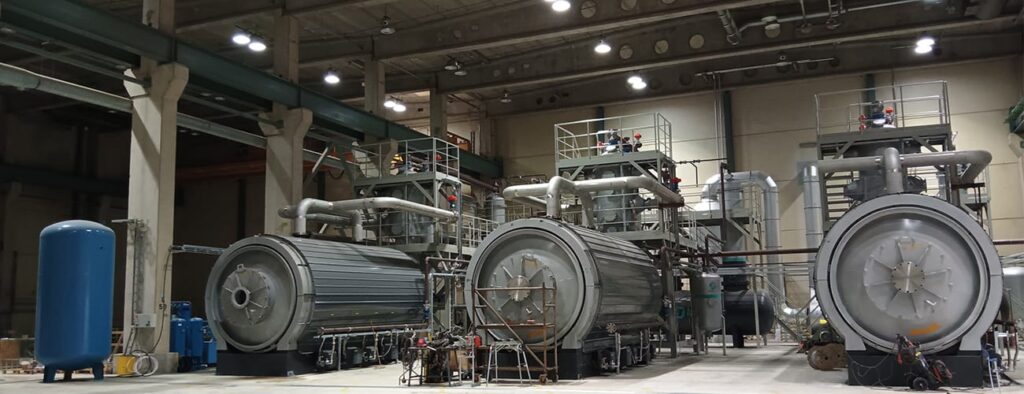
The essence of pyrolysis is an “elegant deconstruction” of high-molecular-weight polymers. Within the sealed chambers of a modern plastic pyrolysis plant, post-consumer and industrial plastics undergo a thermochemical metamorphosis in an oxygen-free or oxygen-deficient environment.
Unlike crude combustion, pyrolysis utilizes controlled thermal energy to sever the chemical bonds of polymers such as Polyethylene (PE), Polypropylene (PP), and Polystyrene (PS), reorganizing them into shorter-chain hydrocarbons. This process ingeniously avoids the conditions required for the formation of dioxins and other toxic substances.
- Physical Transformation: Solid waste is converted into gaseous hydrocarbons, liquid oils, and solid residues (char).
- Energy Conservation: The chemical energy embedded within the plastic is preserved and concentrated rather than destroyed, allowing for a strategic redistribution of energy density.
2. Precision Governance: Environmental Safety Fortified by Advanced Engineering
The core competitiveness of a modern facility lies in its extreme operational precision. To ensure resource efficiency and eliminate secondary pollution, contemporary production lines integrate several frontier engineering technologies:
- The Art of Temperature Control: Reactors are typically locked within a precise range of 350°C to 500°C. Utilizing advanced sensor networks and AI-driven algorithms, the system regulates thermal distribution in real-time, ensuring uniform heating and significantly enhancing the purity of the target outputs.
- Continuous Operation: Compared to traditional batch processing, modern continuous feeding systems allow for 24/7 uninterrupted processing. This not only increases throughput but also drastically reduces unit energy consumption through integrated heat recovery systems.
- Deep Emission Purification: Equipped with multi-stage dust removal, desulfurization, and condensation recovery units, the process ensures that emission indicators are far superior to international environmental standards, achieving a “zero-distance” harmony between industrial production and the ecosystem.
3. Pyrolysis Oil: The “Liquid Gold” Reshaping Energy Paradigms
The primary output—Pyrolysis Oil—is the most commercially compelling achievement of the circular economy. Rather than a simple fuel, it is a highly flexible energy carrier:
- Industrial Thermal Substitute: With a high calorific value, pyrolysis oil can directly replace traditional heavy oil or diesel in industrial boilers and heating systems for ceramics or cement manufacturing.
- Chemical Feedstock Loop: Through deep refining and hydrograding, pyrolysis oil can be reintroduced into steam crackers to produce new plastic monomers, achieving the ultimate goal of a “plastic-to-oil-to-plastic” closed-loop cycle.
- Power Conversion: In remote areas or industrial zones with energy deficits, this oil can be converted into electricity to support local infrastructure, reducing reliance on the long-distance transport of fossil fuels.
4. The Double Dividend: Ecological Restoration and Value Creation
Deploying pyrolysis projects is not just an act of environmental responsibility; it is the opening of an economic path toward green growth. This transformation brings significant multi-dimensional benefits:
The Ecological Dimension
- Mitigating Microplastic Leakage: By efficiently recovering low-value plastics, the process cuts off the source of microplastics entering the biological chain, protecting global biodiversity.
- Carbon Reduction: Compared to direct incineration or the extraction of virgin petroleum, the pyrolysis recycling workflow significantly lowers the greenhouse gas emission intensity.
The Economic Dimension
- Assetizing Waste: It transforms “negative assets”—which once required high landfill fees—into marketable fuel oil, combustible gas, and carbon black, creating direct financial returns.
- Generating Green Employment: The entire chain, from collection and pre-treatment to operation and refining, provides a wealth of high-tech green jobs for local communities.
5. Future Horizons: The Infinite Potential of Catalysis and Design
Looking ahead, pyrolysis technology is evolving toward higher efficiency, lower thresholds, and greater intelligence.
The maturity of Catalytic Pyrolysis allows for lower reaction temperatures while precisely directing the output toward high-value chemicals. Furthermore, modular and containerized design concepts allow pyrolysis units to be deployed at the source of waste, drastically reducing logistics costs and the associated carbon footprint.
As nations align with global plastic treaties and “Carbon Neutrality” goals, pyrolysis has transitioned from an experimental alternative to an indispensable pillar of the mainstream circular economy.
Conclusion
From the end-point of waste to the starting point of resource regeneration, modern pyrolysis solutions redefine the relationship between humanity and matter with scientific rigor and reverence for nature. It proves to the world that “waste” is merely a resource in the wrong place. Through technological empowerment, we can transform the shadow of plastic pollution into a surging force for sustainable development. This is not only a profound gift back to the Earth but the only path toward a truly circular civilization.